The character of war is evolving in ways that demand a dramatic reorganization of the US Army’s order of battle. Adversaries have developed antiaccess and area-denial systems, at depth and scale, that are explicitly designed to prevent US forces from deploying to, maneuvering in, and sustaining in expeditionary theaters. These architectures combine long-range fires, air defenses, electronic warfare, space denial, and cyber capabilities to construct integrated standoff defenses that can stymie American power projection. At the center of this array, an emerging panoply of drone platforms now saturates the environment, providing persistent reconnaissance, precision fires, and information warfare amplification. To prevail in these conditions, the Army must align organization, concept, and strategy with a reimagined divisional structure that can maximize emerging technologies to execute multidomain operations in the most challenging of scenarios.
To fulfill the vision of the Army Warfighting Concept, the service should move past dated armored, Stryker, infantry, and airborne categorizations to reorganize its combat forces into four divisional types according to logic of purpose: recon-strike divisions, assault divisions, consolidation divisions, and sustainment divisions. Each would be optimized for distinct roles within corps or joint force commands, providing reimagined ability to synchronize unmanned strike and protection systems in ways that empower increasingly vulnerable brigade combat teams to win in close combat. Adapting traditional maneuver theory to innovations in artificial intelligence, systemic automation, and adaptive thinking, it would enable the Army to defeat standoff networks and ensure freedom of maneuver across increasingly contested landscapes.
However, the unrealized potential of this reorganization must be balanced with enduring realities of continuity and change in warfare that will challenge planning assumptions and cultural biases. First, even as the Army modernizes to maintain land warfare primacy, it must recognize the reality that conflicts are often defined by attrition and battle damage that overwhelms preconflict notions of decisive operational maneuver. Second, the reorganization of divisions as the primary unit of action, according to tactical purpose, must include preparation to execute dynamic formation reconstitution while under enemy fire. As General Donn Starry argued after observing the destruction of the 1973 Arab-Israeli War, multistar echelons must prepare to adopt “extraordinary measures” required to “quickly restore a depleted unit to an acceptable level of combat effectiveness” to ensure “timely regeneration of the force.”
Historical Precedent: German Blitzkrieg, 1940
The German blitzkrieg invasion of France in 1940 demonstrated how specialized divisions could attack according to a synchronized logic of purpose to defeat the most fortified theater defense in the world. Novel panzer divisions, serving as armored spearheads ahead of motorized infantry divisions and larger infantry field armies, led the offensive by first moving through the Ardennes Forest and then penetrating a seam in the French border defenses just north of the vaunted Maginot Line. By leading with combined arms teams that included unprecedented combinations of mobility, firepower, and protection, the Wehrmacht achieved both operational shock and strategic surprise. The velocity of the panzer attacks enabled rapid river crossings, deflected air counterattacks, interdicted operational reserves, and achieved enough depth to rapidly paralyze Allied strategic decision-making.
Following the armored breakthroughs, German motorized and foot infantry divisions followed to secure the gains and secure the rapidly elongating line of communication. While worrisome gaps appeared between the advancing tanks, marching infantrymen, and logistical trains, the riflemen managed to reduce initially bypassed strongpoints, establish control over decisive points, and consolidate tactical gains while sustainment elements frantically shuttled ammunition and fuel westward to the Panzers. This integrated approach, despite stark differences in mobility that challenged synchronization of timing and tempo, allowed the lead German forces to maintain momentum behind the Luftwaffe’s devastating aerial offensive. Despite the ever-present risk of culmination, the novel order of battle created a functionally designed sequence: armor for breakthrough, infantry for exploitation and consolidation, and logistical trains for endurance.
This improbable offensive through the heart of France’s vaunted line of fortifications created opportunity for an unexpected breakout and rapid march to the English Channel. Fast-moving Panzer teams under aggressive commanders such as Heinz Guderian and Erwin Rommel exploited the success of the Luftwaffe’s air campaign to pursue retreating French forces, sever lines of communication, and create a series of operational encirclements. The trajectory of the Wehrmacht’s advance, though constrained by the German high command’s risk aversion, isolated the most capable French and British field armies in northeastern France and Belgium to compel a desperate evacuation at Dunkirk. Germany’s stunning defeat of the Allied armies in just six weeks—enabled by a fleeting alignment of technology, organization, concept, and strategy—shocked the world and ushered in a new era of combined arms and joint warfare.
By contrast, the Russo-Ukrainian War has revealed a distinct lack of ability to employ divisions and corps to execute operational maneuver with expanded theater impact. The Russian invasion in 2022 attempted to synchronize a centripetal campaign featuring converging land and maritime offensives, but faltered when infantry could not secure gains, sustainment proved dysfunctional, and armor could not advance in the face of devastating drone and antiarmor strikes. However, the Ukrainian Army’s own armored counteroffensive the next year likewise met with disaster along the Zaporizhzhia front when it could not breach the Russian defense in depth and achieve operational breakout. The two sides became locked in an attritional contest when they could not synchronize reconnaissance, breach, assault, consolidation, and sustainment efforts with offensive drone technologies and mobile protection to bring large-scale movement to the increasingly positional battlefield.
Given the high likelihood that the US Army would, in the event of a future conflict, confront the same challenges that both Ukraine and Russia have faced, change is necessary. And a reorganization of combat forces into divisions based on logic of purpose offers a way to overcome these challenges.
Recon-Strike Divisions: Penetrating the Shield
The reorganization of Army divisions thus begins with designing highly mobile spearheads that can penetrate a twenty-first-century drone-enabled defense while fielding a mobile air defense capability to protect subordinate elements. Recon-strike divisions would form the vanguard of attacking corps during offensive operations and maintain security zones during defensive efforts, serving as the Army’s premier formations for deep maneuver and systematic dislocation. Integrating light armor, mechanized infantry, special operations forces, and long-range fires into fast-moving attack groups, they would identify, degrade, and dismantle enemy antiaccess and area-denial architecture through the integration of advanced sensors, long-range fires, electronic warfare, space-based enablers, and swarms of unmanned systems. Leveraging deception and surprise, their primary focus would not be seizing ground, but rather piercing the enemy’s defensive networks to enable exploitation.
To achieve this, recon-strike divisions would employ an unprecedented drone and missile arsenal to execute counterreconnaissance, defeat enemy air defenses, and shape conditions for brigade-level fire and maneuver. Unmanned systems, ranging from small multirotor systems to exquisite strike frames, would saturate contested areas to destroy enemy radars, fires systems, and logistics nodes. Simultaneously, these mobile teams, which would include a platform requirement to be able to traverse most load-bearing civilian bridges while incorporating robust tactical bridging assets, would protect advancing formations with next-generation air defenses and deception systems designed to neutralize enemy drones and attack aircraft. This dual approach, reflecting a convergence of manned and unmanned capabilities at echelon, would create a self-contained and highly mobile attack force capable of breaching, penetrating, and dislocating enemy defenses.
Recent conflicts underscore this need for a specialized division with an unprecedented ability to employ advanced technologies to both attack and protect while maneuvering at depth. In Nagorno-Karabakh in 2020, Azerbaijani forces employed unmanned systems and precision strike to paralyze and defeat Armenian armored forces with debilitating effect. On the steppes of Eastern Europe, the Ukrainian Army has employed a novel fusion of networked sensors with drone, missile, and artillery delivery systems to defeat repeated Russian armored offensives. These outcomes suggest that only a dramatically redesigned division, optimized with an unprecedented density of drone, protection, and bridging capabilities to enable subordinate brigade maneuver, can not only execute survivable offense, but attack at speed to create opportunity for exploitation, reduction, and consolidation by follow-on divisions.
Assault Divisions: Achieving Dominance
Once recon-strike divisions dislocate and paralyze enemy defenses, the mission turns to decisive fire and maneuver to defeat threat operational centers of gravity. Assault divisions, which would task-organize against specific threat and terrain profiles while featuring greater general-purpose application, would attack to exploit openings, advance into geographic depth, and destroy enemy reserves. Simultaneously, they would possess the durability and strength to defend in depth and fortify lodgments and forward perimeters. Assault divisions, balancing mobility, firepower, and protection with capacity to negotiate attrition and battle damage, could tailor combinations of heavy and medium armor; mechanized, motorized, light, and airborne infantry; cannon and missile fires; and attack aviation with heavy attack drones and mobile air defense in order to create versatile commands with premium lethality and resiliency.
These divisions would provide the Army’s hammer to shatter adversary ability to resist and to compel battlefield decision while retaining capacity to execute a wider span of defensive, counterinsurgency, and domestic support missions. Fulfilling the institution’s timeless national imperative to, “close with and destroy enemy forces, defeat enemy formations, seize critical terrain, and control populations and resources,” their ability to task organize and enable combinations of heavy, motorized, light, and airborne forces would provide both the echeloned firepower and organic adaptability to accomplish a variety of tactical actions ranging from urban assault to desert maneuver to jungle and mountain warfare. While assault divisions, similar to recon-strike divisions, would incur requirements for organic mobile air defense to ensure survivability, they would also include robust engineer assets to enable construction and mobility capacity.
The logic of assault divisions builds on robust historical precedent while preserving the Army’s unique mandate to provide mass, versatility, and resiliency for joint force commands in major campaigns and wars. In World War II, American mechanized cavalry groups, benefiting from air and ground fires ahead, created conditions for armored and infantry divisions to attack, reduce, and defeat entrenched German formations. During Operation Desert Storm, the coalition air campaign and advancing armored cavalry regiments attacked to create favorable conditions for a variety of armored, mechanized, and light infantry divisions to destroy the Iraqi Army. Despite the historical contexts, the enduring implication remains clear: The Army requires assault forces that can apply dominating fires, negotiate attrition, and ensure decisive outcomes within a rapidly changing operational environment that will challenge tactical assumptions.
Consolidation Divisions: Securing Gains
American wartime experiences have proven that tactical victories mean little if they cannot be consolidated into enduring strategic success. Consolidation divisions, as tailorable forces featuring combinations of security forces, combat advisors, civil affairs, construction engineers, and counterinsurgency operators, with an armor and artillery reserve in support, would specialize in securing liberated terrain, protecting populations, enabling humanitarian services, and securing lines of communication. These formations would integrate closely with US agencies and nongovernmental organizations to create multifaceted efforts designed to avoid the mistakes of Iraq and Afghanistan. With a mandate to stabilize rear areas during and after conflict with specialized training, education, equipment, and cultural familiarization, consolidation divisions would provide strategic endurance that the Army requires to achieve lasting success.
However, these novel formations would operate as more than just constabularies or peacekeepers; they would combine cultural acumen with the latest drone, surveillance, and support technologies to monitor rear areas, track and defeat enemy remnants, prevent humanitarian disasters, and secure critical infrastructure. They would employ counterdrone defenses to protect supply depots, rear-area headquarters, and population centers from long-range attack while coordinating with corps and joint force commands to facilitate transition and stabilization activities. Synchronizing their operations with recon-strike and assault divisions, consolidation divisions would provide the critical backstop to ensure that forward combat forces are enabled to maintain tempo and cohesion within a fully integrated battlefield framework.
Consolidation divisions would play a critical role in partnering with allies and partners to build and project additional combat power and achieve lasting stability. Similar, but not identical, to the roles of the European Civil Affairs Division in Europe during World War II and the US Constabulary in West Germany during the early Cold War, their novel task organization and integrating purpose would fill a long-standing gap in the US Army order of battle: a general officer headquarters with substantial resources dedicated to consolidating gains during and after large-scale combat. This would allow higher commands to fulfill a crucial requirement, to “plan and prepare for the execution of military governance before, during, and after combat operations” while avoiding “ad hoc” approaches that led to setbacks in past conflicts.
Sustainment Divisions: Enabling Endurance
Combined arms maneuver in the future operational environment saturated with intelligence-surveillance, and reconnaissance platforms will require resilient logistics that operate with organic protection. Sustainment divisions, as cohesive teams that possess structural ability to echelon logistics capabilities from theater to tactical levels, would modernize the Army’s ability to project and sustain combat power across all contested domains. Relying upon their own mobile air defense protection, they would control tactical distribution, medical support, theater maintenance, and mortuary affairs across battlefield depth, ensuring that combat divisions retain the required endurance to persevere and win in challenging circumstances. In an era when adversaries will increasingly target logistics with long-range fires, cyber disruption, and unmanned systems, the creation of cohesive and self-reliant sustainment divisions would allow Army forces to mitigate disruption and maintain operational tempo.
These divisions, similar to their recon-strike and assault counterparts, would maintain internal capacity to prevent drone strikes on the networks of supply convoys, logistical depots, and field repair facilities that enable expeditionary operations. Dispersed protection networks—featuring autonomous screen and sentry platforms designed to both enhance and economize security—would prove essential for ensuring that fuel, ammunition, and medical assets could operate with enough dispersion to avoid the fragility of just-in-time logistics while negating the vulnerability of the iron mountain concentration. Moving beyond a defensive mindset, sustainment divisions would employ motorized infantry, light armor, and special operations forces, in concert with a phalanx of offensive drones, to conduct proactive convoy overwatch, route reconnaissance, and rapid strike against ambushes or raiding parties. In this way, unmanned systems would enable, but not replace, ground forces as both shield and sword of the Army support echelons.
The operational requirement to ensure survivable sustainment operations thus requires complete reorganization of the Army’s order of battle around divisional commands with ability to integrate resilient support and protection across both echelon and geographic depth. Seeking to avoid the Russian Army’s dramatic failure in 2022, where its invading columns culminated due to lack of provision, the reorganization would echo how the Red Ball Express enabled the US Army’s inexorable advance across France in 1944. This would include resupply with unmanned and autonomous delivery platforms to redefine the physics of supply distribution. As Major General Michelle Donohue, commander of the US Army Sustainment Center of Excellence, has explained, “The future logistics fight will rely on autonomous resupply, resilient networks, artificial intelligence–driven predictive sustainment, and multidomain integration.”
Reimagining Army Divisions
Given the transparency and lethality of the rapidly evolving threat environment, the US Army risks obsolescence unless it can reform its legacy divisions and brigades into drone-empowered fighting structures that are optimized for twenty-first-century combat. Ominous trends toward an increasingly attritional and positional battlefield, exemplified by recent conflicts in Nagorno-Karabakh and Ukraine, suggest that a revamped order of battle is required to ensure capacity for initiative and offensive. By restructuring divisions into recon-strike, assault, consolidation, and sustainment commands, the landpower institution can fulfill the promise of the Army Warfighting Concept to survive and dominate on future battlefields. As argued by Chief of Staff of the Army General Randy George, the Army’s focus on “continuous transformation” means “iteratively adapting and evolving how we fight, how we organize, how we train, and how we equip.”
However, the requirement to reorganize Army divisions with organic drone protection and long-range fires does not negate the timeless requirement for infantry and armor to seize and hold terrain to ensure achievement of strategic aims. Regardless of the obvious influence of unmanned systems, sensor saturation, and ubiquitous precision strike on the current operational environment, historian T. R. Fehrenbach’s timeless quote remains prescient: “You may fly over a land forever; you may bomb it, atomize it, and wipe it clean of life—but if you desire to defend it, protect it, and keep it for civilization, you must do this on the ground.” This means that any divisional reorganization that includes drone, robotic, autonomous, or artificial intelligence enhancements must be conceived around enabling ground force maneuver against entrenched enemy positions, as opposed to creating intelligence, surveillance, and reconnaissance structures that lack the combat power to fight with decisive effect.
The resulting creation of recon-strike, assault, consolidation, and sustainment divisions offers increased potential for the Army to decisively contribute to joint and multinational campaigns. Reimagined formations could provide premier ability to penetrate defenses, defeat threats, consolidate gains, and sustain operations in expeditionary settings. Developing counterdrone protection at the division level would facilitate multidomain integration while enabling brigade combat teams to survive and fight on future battlefields. As artificial intelligence, robotic autonomy, and unmanned systems influence the character of warfare, ground forces must not only accommodate but capitalize on these changes with innovative rearming and restructuring. If the US Army demonstrated marked ability to adapt in past eras, future challenges will require a similar level of inspiration in order to win, against all odds, in the crucible of combat.
Lieutenant Colonel Nathan Jennings is the executive officer to the provost of Army University at Fort Leavenworth, Kansas. He served combat tours in Iraq and Afghanistan, is a graduate of the School of Advanced Military Studies, and holds a PhD in history from the University of Kent. Jennings is a member of the Miliary Writers Guild and is a LTG Dubik Writing Fellow with Army University Press.
The views expressed are those of the author and do not reflect the official position of the United States Military Academy, Department of the Army, or Department of Defense.
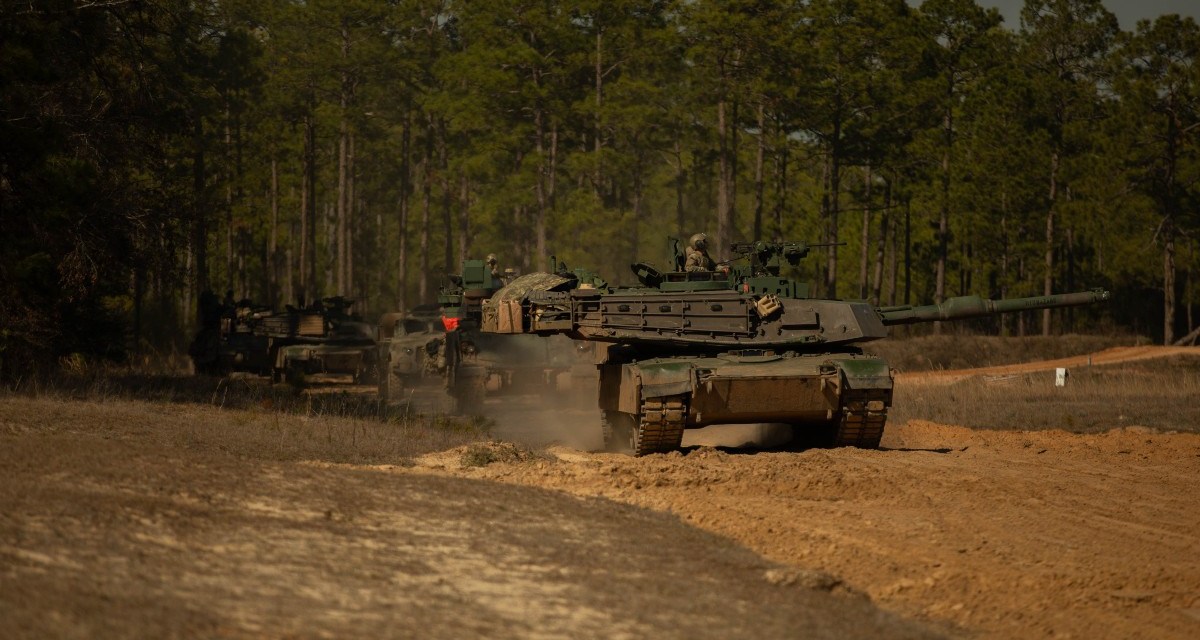
Image credit: Sgt. Bernabe Lopez, US Army