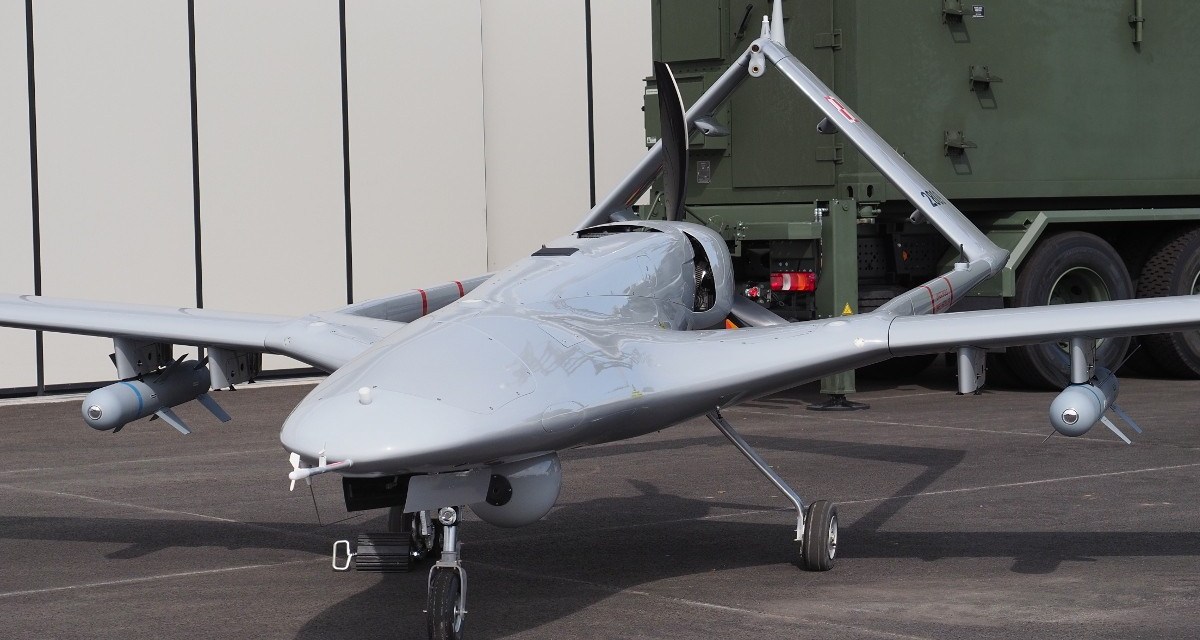
In Mali, rebel Tuareg forces sifted through the wreckage of a Turkish-supplied drone on the night of April 1. The platform, a Bayraktar Akinci surveillance drone operated by Malian armed forces, had plummeted to earth near the Algerian-Malian border. Shortly after the downing, the Algerian Army issued a statement claiming it had shot down the drone because it had entered Algerian airspace, a claim vehemently disputed by the Malian Foreign Ministry. The event showcases the growing tensions between Algiers and Bamako, but it also highlights a larger point—the proliferation of drones in Africa has not gone as smoothly as military leaders might have expected. As the past few years have shown, drones have not dramatically shifted the balance for African militaries. While they may add a modern capability to military arsenals and may even offer some tactical advantages, drones are far from a remedy for the entrenched insecurity that plagues many on the continent.
Regardless of their emerging record of dubious utility in rectifying security threats, African nations have doubled down on their drone acquisitions. This isn’t entirely new. The United States and others have used drones in Africa for years as part of counterterrorism efforts from Somalia to the Sahel, but now African nations are investing in their own independent drone fleets. According to newly compiled data from the Africa Center for Strategic Studies, African drone acquisition packages, which often involve the purchase of multiple drones, have steadily increased each year since 2015, with particularly sharp growth after 2020. Nigeria (eighteen), Algeria (fifteen), and Ethiopia (twelve) led the shopping spree. These acquisition numbers generally, though not exclusively, refer to larger and more sophisticated unmanned systems, such as medium-altitude, long-endurance (MALE) fixed-wing platforms like the Bayraktar TB2 or Akinci, rather than the thousands of cheap, disposable quadcopters or one-way attack drones that have become a fixture in the war in Ukraine. The diversity of threats faced by these top buyers suggests that African nations see drones as flexible tools for managing a wide spectrum of security concerns, from insurgencies to border surveillance, and even as a prime, if not preferred, tool in counterterrorism operations.
External suppliers have capitalized on this surge in demand, dominating Africa’s expanding drone market. Türkiye, whose Bayraktar TB2s have grown in popularity over the past decade, is the largest known supplier of drones to the continent (thirty-two), followed by China (twenty-seven), Israel (eighteen), and the United States (fifteen). However, African nations are also getting involved on the supply side, with Egypt, Sudan, South Africa, Nigeria, Kenya, and Ethiopia staking claims as the continent’s leading drone exporters, accounting for roughly 12 percent of drone sales to African governments.
This drone shopping spree has coincided with a massive increase in both drone strikes and fatalities in Africa, from 31 strikes and 69 fatalities in 2020 to 484 strikes and 1,176 fatalities in 2024. Yet, the increased tempo of drone operations has not decisively shifted the balance in any of Africa’s long-running conflicts. In fact, in many cases, an increased reliance on drones correlates with increased instability. Sudan (264) and the Sahelian countries (145) accounted for 84 percent of Africa’s drone strikes in 2024, yet the conflicts in both areas continue to rage. In Burkina Faso, Jama’at Nusrat al-Islam wal-Muslimin (JNIM), an al-Qaeda affiliate, launched violent offensives in 2024, killing civilians and soldiers and using bases in the country to launch deadly incursions into Benin and Togo. In Mali, JNIM and Tuareg separatist forces sharply defeated a Wagner and Malian Army force in July 2024, followed by attacks on the capital, Bamako. In Niger, the Islamic State’s Sahelian franchise and JNIM advanced into the country, including an October attack on the capital, Niamey. Meanwhile, across the continent in Sudan, an end to the civil war is unlikely despite recent gains by the Sudanese Armed Forces against the rival Rapid Support Forces.
Deadly [Im]precision
Regardless of their questionable efficacy in stemming the tide of violence, drones remain a seductive addition to African arsenals. This is not all that surprising given the evolution of drones as key features across many militaries—from major powers like the United States and China to smaller states like Bangladesh and Tunisia. For some African states, drones are seen as useful in enhancing the government’s ability to target insurgent leadership without risking the lives of soldiers, at least directly. Malian drone strikes in early December 2024, for instance, killed eight Tuareg separatist leaders in Tinzaouaten, site of an earlier ambush that cost the lives of a dozen Malian soldiers along with their Russian mercenary counterparts.
While Malian officials emphasized the success of the drone attack, research shows that leadership decapitation as a counterinsurgency and counterterrorism strategy has a mixed track record. Some research emphasizes decapitation’s effectiveness in degrading organizations’ attack frequency and intensity, and at times, even their longevity, and studies show that drone strikes can have a chilling effect even on nontargeted groups, deterring their operations for fear of becoming potential targets. But other research paints a more cautious picture of the utility of armed drones, emphasizing the plethora of conditionalities that can render decapitation strategies less effective. Factors like organizational age or internal structuring have been shown to increase the resiliency of organizations to decapitation strategies. At times, targeted killings might actually have unintended effects, leading an organization to behave more aggressively. Leadership decapitation isn’t a sure thing—it is a potentially successful strategy with the capacity to backfire.
Regardless, in order to target leadership, this strategy relies on strong intelligence-gathering capabilities to assess where and when targets will be vulnerable to aerial attacks. Drones may help with intelligence, surveillance, and reconnaissance capabilities, but they are not an intelligence cure-all. The US drone strike that targeted Iranian Quds Force General Qassem Soleimani, for instance, relied on extensive human intelligence and international collaboration prior to the strike.
Even cases where leadership is not the target require robust intelligence operations. Ukraine’s Operation Spiderweb, a surprise attack on Russian aircraft carried out on June 1, required over a year and a half of intelligence gathering and preparation. Its focus on hard targets like military aircraft differs markedly from African counterterrorism operations mostly targeting individuals. Ironically, overconfidence in drones’ ability to gather intelligence diverts resources that could be used to develop consistent and reliable intelligence capabilities and an intelligence culture that is focused on interagency cooperation rather than suspicion. This dilemma has already led to mistaken killings of civilians. In 2022 Togo issued a public apology for a drone strike that killed seven civilians that they misidentified as jihadists. A review by Drone Wars UK of six conflicts—in Ethiopia, Burkina Faso, Mali, Sudan, Somalia, and Nigeria—where governments deployed Turkish, Chinese, or Iranian medium-altitude, long-endurance drones between November 2021 and 2024 found that drone strikes were responsible for at least one thousand civilian deaths. To be sure, African militaries have used drone strikes with tactical success, but these are mostly against static targets like enemy-controlled towns, which limits their ability to get the most out of the technology.
A high incidence of civilian casualties in many strikes also suggests that such strikes are often used punitively, which pays little dividends on the battlefield. Instead, it risks provoking backlash and deepening public hostility toward the government, creating fertile ground for terrorist groups to exploit. And enhancing recruitment opportunities is only one potential risk associated with inaccuracy. Drone inaccuracy, willful or otherwise, also diminishes incentives for local populations to cooperate with military and police forces. This erosion of local trust poses an enduring threat to effective counterinsurgency.
Meanwhile, drone reconnaissance failed to detect threats to Sahelian armed forces and cities, such as the defeat at Tinzaouaten and attacks on Bamako and Djibo again reflecting a yawning gap in Sahelian governments’ intelligence gathering. These intelligence failures reflect deeper issues in how drones are being integrated into security strategies. Rather than serving as tools to enhance state effectiveness, drones are sometimes wielded for more political purposes.
Spoils or Solutions?
Some leaders likely see drones as a means of spoiling the armed forces—in effect, giving them new toys that can insulate them from the front lines of violent counterinsurgency campaigns. In fact, some prominent scholarship argues that one of their core advantages for insecure regimes is that “drones can operate from centralized locations where those most loyal to the regime can directly supervise their use.” But such calculations may be misguided. In Burkina Faso, for example, the ruling junta purchased two advanced Turkish-made Akinci drones and five TB2s, investments aligned with projecting force against insurgents and empowering the armed forces. An attempted coup on April 22, however, was allegedly led by members of President Ibrahim Traoré’s own guard and the elite Rapid Intervention Brigade. High-cost drone acquisitions alone, therefore, are insufficient spoils absent addressing other internal grievances and they may actually come at the expense of basic support to key units.
Further, overreliance on drones does not necessarily save money. Arms purchases represent a significant budgetary burden for small militaries, especially those grappling with severe internal security crises. While drones are usually less expensive than traditional manned aircraft, purchasing drones is much costlier than the sticker price of the system itself. Like their manned counterparts, the most capable systems require a steady stream of additional munitions, spare parts, and personnel trained in their operation and maintenance. Militaries might be able to skimp out on costs by hiring contractors to operate their drones, but that comes with a greater dependency on an external firm and potentially a foreign government.
However, African leaders might be after public opinion rather than fielding a war-winning military capability. Evidence from recent scholarship notes that when the government, rather than a foreign power, conducts the successful targeting of militant group leadership, it increases civilian’s perceptions of local government’s capacity—in other words, winning hearts and minds. This appears to be the crux of several drone-based campaigns in Africa—establishing a compelling national security narrative in order to ensure military control of power. In Mali, the government has crafted a brutal counterterrorism strategy that rebrands massacres of civilians as victories against terrorists within the military’s “rise in power” (montée en puissance) against its adversaries. This narrative has been extended to drone warfare, which according to Malian news site Bamada, helps the country in “consolidating its sovereignty, expanding its territorial reach, and neutralizing threats throughout the country.”
Even in countries where the existential risk of terrorism or rebellion is comparatively low, like Djibouti and Tunisia, purchasing and showcasing drones is a quick way to build public perception that the military is on the cutting edge of military technology. In 2022 Djibouti announced it had purchased a TB2 drone by literally parading it during independence day celebrations.
Still, this reliance on drones may be creating the conditions for further instability. Insurgent forces across the region are increasingly developing their own drone capabilities in response. In Sudan, the Rapid Support Forces have deployed Chinese-made Sunflower kamikaze one-way attack drones, as well as Serbian Yugoimport mortar drones allegedly supplied by the UAE. Across the Sahel, JNIM reportedly carried out an audacious strike on Burkinabe military positions in February 2025, employing first-person-view drones to drop explosives improvised from plastic water bottles. In June 2025, JNIM publicized the capture of three drones in its monthly communiqué, a development analysts interpret as a signal of the growing strategic value the group places on drone warfare. As African governments embrace drone-centric approaches to counterinsurgency they risk handing insurgents both the tools and the tactics to cultivate their own drone playbooks.
Despite their limitations, drones have become a symbol of sovereignty and power in Africa, particularly for military regimes and those mired in internal conflicts. While drones may offer symbolic value and even some tactical utility, they cannot substitute for coherent counterterrorism strategies that focus on improved governance and public infrastructure. As insurgents adapt and civil-military tensions mount, African drone proliferation risks becoming more about political optics than real security gains. As the United States weighs its level of security commitment to fight terrorism in Africa, policymakers should ensure that the provision of drones to partners on the continent is understood to be a means, not an end, to counterterrorism operations—means that must be accompanied with more commitment, not less. The lesson for Washington and other external partners is clear: Drones must support African security, not define it.
Raphael Parens is an international security researcher focused on Europe, the Middle East, and Africa. He is a Templeton Fellow in the Eurasia and Africa programs at the Foreign Policy Research Institute. He specializes in African security, paramilitary groups, and Eurasian security. He received his MA in international security studies at the Fletcher School of Law and Diplomacy, and he is currently based in London. X: @MoreSecurityInt
Marcel Plichta is a PhD candidate at the University of St Andrews, former analyst at the US Department of Defense, and an intelligence instructor for Grey Dynamics. His research focuses on the use of force by small states and drones in modern warfare. X: @Plichta_Marcel
Dr. Christopher M. Faulkner is an assistant professor at the US Naval War College and nonresident senior fellow with the Eurasia program at the Foreign Policy Research Institute. His research focuses on militant recruitment, private military companies, and national/international security. X: @C_Faulkner_UCF
The views expressed are those of the authors and do not reflect the official position of the United States Military Academy, Department of the Army, or Department of Defense, or that of any organization the authors are affiliated with, including the US Naval War College.
Image credit: Boevaya mashina