
Despite a robust architecture of strategic documents, planning processes, and professional staff, the US Army and its strategic leadership have struggled to consistently develop and implement a strategy aligned with the threats it faces. Many explanations exist for this persistent shortcoming, but one critical factor is often overlooked: the Army attempts to develop strategists far too late in an officer’s career. Most officers do not receive formal instruction in strategy development until attending a senior service college—long after they have internalized tactical habits, service-specific norms, and cognitive biases that constrain strategic thought. By delaying strategic education until the later stages of an officer’s career, the Army forfeits the opportunity to cultivate adaptive thinkers capable of pursuing innovative, asymmetric solutions to its most complex challenges.
Over the past decade, scholars and practitioners have written extensively about the value of strategic education and wargaming within the US military. So why is it pertinent to raise this issue once again? The answer lies in America’s increasingly precarious strategic position. As the international order progressively features competition among at least two great powers, a growing cohort of middle powers exerts greater regional influence, complicating the military balance of power. In this changing system, the United States’ adversaries appear to be increasingly capable of challenging the American military’s regional dominance. In addition to their individual capabilities, the burgeoning “axis of autocracy” threatens coordinated action to overwhelm the dispersed capabilities of the United States and its allies. With this backdrop in mind, the Army needs to develop senior leaders with genuine strategic expertise, which can only be developed through continuous education and experience.
Succeeding in this complex and competitive world requires a new type of strategist: one that is imaginative, unconventional, and risk acceptant. The kinds of qualities one can only obtain through a career of strategic learning, constant competition, and, most importantly, failure. Fostering strategic expertise within the officer corps requires a paradigm shift in how the Army approaches professional military education. Currently, only a small cohort receives this foundational understanding as part of the Defense and Strategic Studies program’s curriculum at the United States Military Academy, which will soon be succeeded by the War Studies major. As global competition intensifies, the Army must move beyond isolated programs and establish a common core strategy curriculum—enabled by educational wargaming—across commissioning sources to develop leaders capable of operating at the strategic level. Focusing on strategy implementation through wargaming provides cadets with a unique experience largely missing from current military education: the chance for young leaders to experience strategic failure, challenge their own ethnocentric assumptions, and bridge the experiential gap through practice.
The Problem with Teaching Strategy Too Late
The US Army should not aim to create strategic geniuses, a feat that many enlightened minds would say is impossible. Instead, it should seek to establish a broad base of strategic competence. As the late Colin Gray argued convincingly, strategic competence is necessary at all levels of command because, whether we know it or not, all military officers interact with or implement strategy.
Today’s junior officers routinely operate at the intersection of tactical action and strategic consequence. The Army’s forward posture—deploying small formations to strategically significant locations as tripwire forces or reassurance missions—places young leaders in roles with outsized political and strategic impact. Yet these officers often lack formal strategic education. While intermediate-level education introduces operational art as a “bridge” between tactics and strategy, it rarely teaches officers how strategies are formulated, implemented, or assessed. By emphasizing downstream execution before upstream understanding, the Army builds a bridge to nowhere.
In addition to establishing a broad base of strategic competence within the force, the Army needs to routinely assess officers’ ability to assume the role of strategic leader. Officer evaluation reports assess the tactical competence and potential of leaders, but they fail to evaluate whether leaders display strategic acumen. It is difficult for fellow officers to recognize these qualities when they lack the education to do so.
As a result, the Army often selects future strategic leaders primarily based on tactical excellence, hoping that strategic aptitude will emerge later. While tactical competence is essential, it is not a reliable proxy for strategic judgment. The experience of Afghanistan illustrates the danger of this approach: successive leaders displayed varying degrees of strategic effectiveness without institutional continuity or deliberate development. The United States was fortunate that these failures occurred in a conflict that did not threaten its existential security. In a future peer conflict, the margin for learning on contact may not exist.
Developing Strategists: From Theory to Wargaming
Educating strategic leaders requires innovating the military education system to include strategic competence. Before the US Army commits to the wholesale adoption of a new education pathway, it should task one of its subunits to experiment with the changes. When looking to innovate junior leader education, the Army should look to the United States Military Academy as its premier leadership experimentation unit. The task at West Point should be twofold: (1) establish a common core course that teaches strategic theory and development and (2) establish a robust wargaming program to enable cadets to gain knowledge through experiential learning.
West Point already has a model for shaping and developing the curriculum for such a program, so the challenge lies in making it required course material for all cadets. The Defense and Strategic Studies and War Studies majors allow a small cohort of cadets to specialize in the subject, but the majority of cadets are rarely exposed to the subject. West Point can draw valuable lessons from the Air Force Academy, which requires cadets to complete core courses in air, joint, space, and cyber strategy. Rather than mirroring domain-specific approaches, West Point should adopt the underlying principle: early exposure to strategic theory and decision-making as a foundational professional competency.
Next, cadets should learn and experience the strategy development and implementation process in their final years at the academy. A course focused on this will require young leaders to engage in the intellectual exercise of developing a strategy to achieve specific objectives. Though complex and laborious, cadets can begin to experience the difficulty of developing their own strategies for a given scenario, using planning tools to simplify the process. Junior leader development should not end with creating a strategy. To truly understand the complexity that planners, commanders, and policymakers must contend with, cadets must experience the difficulty of competing against a thinking adversary, one seeking to counter them at every turn. Only one tool allows us to test and assess strategy in such a synthetic environment with the ability to replicate on a large scale—wargames.
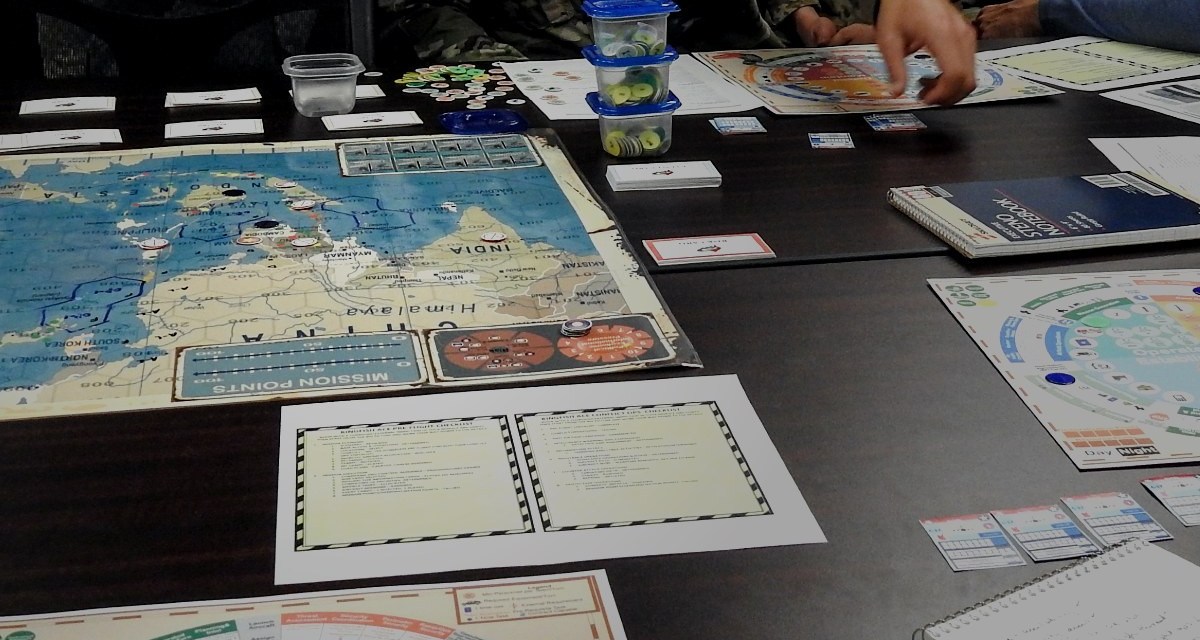
Many prominent military leaders and scholars have long argued for the utility of wargaming to help educate officers, assess their selection for command, and enable them to compete against a thinking adversary. When many think of wargames, they think of complex, scenario-specific games that help planners determine if their forces are properly postured to win a conflict. The analysis occurs after the game, when planners assess and dissect the elements of human decision-making that happened during the game. Narrowly focusing on these games, often classified as analytical, misses their broader applications for learning and assessment.
Wargames include two additional categories: experiential and educational. Both types of games can serve the broader interest of enabling the Army to instruct and assess its leaders over the long term. Educational and experiential games provide the Army with a tool to reinforce core concepts and offer leaders experiences they cannot replicate. Since cadets are just beginning to acquire their strategic competence, West Point should rely on educational games to reinforce key lessons and prioritize games that are fair, not balanced, to replicate the realities of the strategic environment. By leveraging experimentation at West Point, the Army can develop and refine a common core strategy and wargaming curriculum, scale it across all commissioning sources, and deliberately build strategic competence in follow-on professional military education throughout officers’ careers.
In addition to changes in strategic education, the Army should prioritize continuous assessments of its burgeoning leaders through experiential games. Game difficulty should build over time as the leader becomes more experienced and knowledgeable in the subject matter. Initial games should rely on rigid rule structures and clear instructions to guide young strategists, transitioning over time to more open-ended games that require greater subject-matter expertise. An example of games that provide more fluidity for players are Matrix Games. These games enable players to maximize their creativity while relying on a mix of stochastic adjudication and structured dialogue. By beginning with games that guide the strategic leader’s actions and then transitioning to those that require greater expertise, the Army can address long-standing issues within the force and prepare leaders for strategic positions.
Why Wargaming Matters
If early strategy education provides the foundation, wargaming provides the mechanism through which that education becomes experiential and enduring. Educating Army leaders in strategic theory and having them compete in wargames will not, by itself, solve the United States’ dearth of strategic genius. Still, it provides key elements currently missing from the Army’s leader development experience. Finding the right balance between tactical, operational, and strategic education will help build a basic level of competence within the force. But wargaming is the critical ingredient in preparing leaders for strategic roles. The benefits of games extend beyond their use as an analytical tool to the elimination of risk-avoidant behaviors that turn strategy development into a procedural process. Through games, strategists can learn to fail, adopt the views and objectives of different strategic actors, and assimilate into a long-term strategic apprenticeship.
Failure
Failure is a critical component of learning. Unfortunately, by the time strategists can practice their craft, they are already in positions where failure can result in loss of life or have detrimental effects on US national security. When placed in these positions for the first time, many strategists are inherently conservative in their thinking, undermining their willingness to accept risk and increasing the likelihood that they find solace in familiar solutions. Wargames offer us an opportunity to break this norm, allowing future commanders to fail repeatedly in their pursuit of finding solutions to complex problems. In an era when the US military no longer relies on overmatch, leaders must pursue asymmetric approaches that entail accepting risk. Wargames allow future commanders to fail, observe how a thinking adversary adapts, and reflect on the consequences of their decisions. Introducing this experience early enables officers to internalize risk, uncertainty, and adaptation before failure carries real-world costs.
Ethnocentrism
Wargames also confront a persistent flaw in US strategic thinking: ethnocentrism. By forcing players to assume the roles of adversaries, allies, and partners, wargames disrupt mirror-imaging and require strategists to pursue objectives at the United States’ expense. Competitive incentives reinforce perspective taking, making bias reduction a natural byproduct of play rather than a rhetorical aspiration.
Strategic Apprenticeship
Critics often argue that Army officers struggle to think strategically compared to their Air Force and Navy counterparts. This gap is not a matter of intellect but of institutional incentives. The Air Force and Navy operate in domains that require constant interaction with national-level decision-makers, reinforcing strategic engagement. The Army’s structure, branch competition, and emphasis on tactical readiness create fewer natural feedback loops for sustained strategic practice.
Once again, wargames offer a novel solution to the Army’s strategic expertise problem. The nature of the Air Force’s and Navy’s domains, along with their organizational structures, create feedback loops that promote strategic thinking. To develop the Army’s expertise, it must think of strategy education and wargaming as an apprenticeship that culminates in being chosen for positions that influence strategy creation. The Army and the nation expect the service’s leaders to be experts in the application of violence to achieve the United States’ policy objectives, but those in the positions to implement strategy assume their roles with limited practice. Through this strategic apprenticeship, the Army’s senior leaders can develop the necessary expertise to guide US military strategy effectively. The development of expertise requires repeated, challenging practice with effective feedback. Waiting to introduce strategy and wargaming until officers’ intermediate-level education fails to provide them with the necessary practice to develop expertise. Beginning the pattern of strategic iteration, feedback, and reflection early in an officer’s career can close the expertise gap in the Army’s current educational system.
Strategy education and wargaming will not produce the next Napoleon, nor should that be the goal. What they can produce is a force with broad strategic competence, reduced bias, and leaders accustomed to learning through failure. Preparing future strategic leaders must begin early and continue deliberately across an officer’s career. The rapid ascent of Dwight D. Eisenhower should both provide comfort and serve as a cautionary example for the US Army. Despite having no prior combat or formal strategic experience before the war, Eisenhower advanced from lieutenant colonel to four-star general in just two years, culminating in his appointment as supreme allied commander. Though he was successful, there were many blunders along the way that could have hindered strategic success in a different campaign that featured American power fighting an adversary of equal or greater industrial power. Given the changing global power dynamics and industrial capacities, the Army can no longer wait to develop strategic leaders while in contact with its adversaries. Instead, the Army should use West Point as its experimentation and proving ground to develop and refine a common core strategy and wargaming curriculum. Once validated, the Army should implement this curriculum across all commissioning sources and integrate educational wargaming as a developmental assessment tool throughout officers’ careers, treating early strategic failure as an institutional investment rather than a liability. Only through repeated learning and wargames can we hope to develop the expertise necessary to outwit our adversaries and win when crisis comes.
Matthew Revels is an Army strategist who serves as the Modern War Institute’s plans officer and as a senior instructor at the United States Military Academy. He currently teaches courses on military innovation and forecasting and gaming in decision-making.
The views expressed are those of the authors and do not reflect the official position of the United States Military Academy, Department of the Army, or Department of Defense.
Image credit: Chad Kotce, US Air Force