
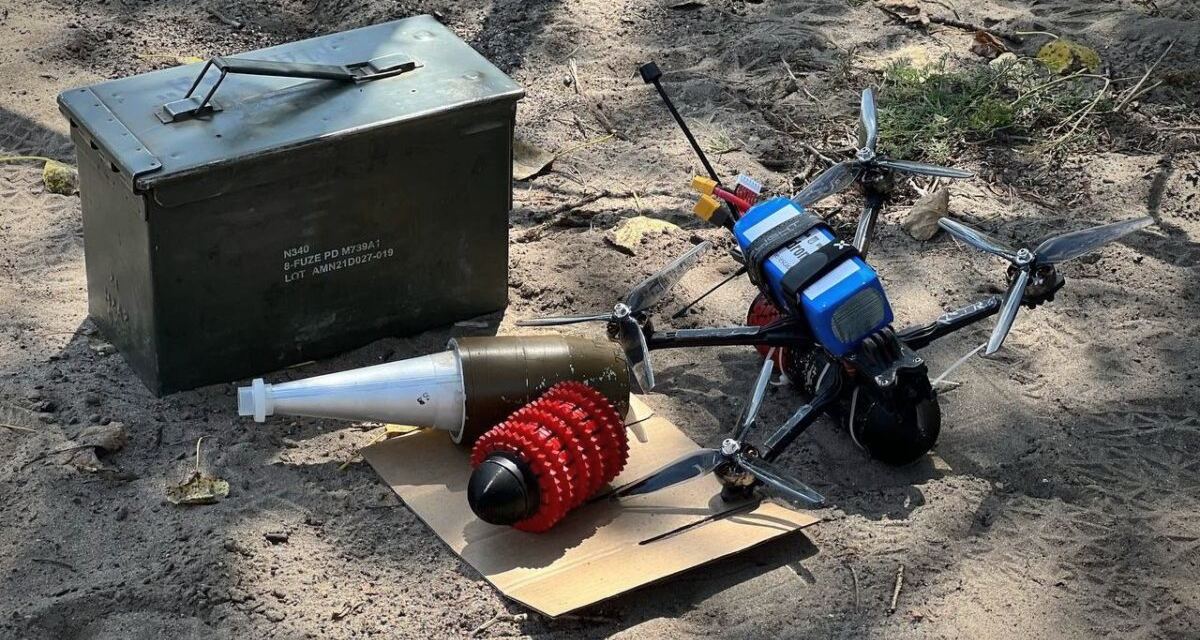
Today, before a tank explodes, before a trench is overrun, and before an artillery battery is silenced, someone is usually recording.
The defining images of modern war no longer come from embedded journalists or military photographers. They are being delivered by drones. First-person-view drones racing through shattered buildings, quadcopters dropping grenades into open hatches, and loitering munitions destroying radar systems have become the defining image of twenty-first-century battlefield. These videos dominate social media, shape public perceptions, and increasingly influence political debates about defense planning and spending. The conclusion seems to be drones have changed warfare forever. Yet, this conclusion is only half correct.
Drones have indeed become indispensable military tools. They have democratized access to aerial reconnaissance, improved tactical precision, and lowered the cost of surveillance and strike missions. But the public discourse has drifted from acknowledging their importance to declaring them revolutionary. In doing so, it risks repeating a familiar mistake. Throughout history, many generations have believed they had discovered the technology that would fundamentally rewrite the rules of war. Gunpowder, machine guns, tanks, strategic bombers, precision-guided munitions, and cyber capabilities were each hyped as revolutionary innovations that would render previous forms of military power obsolete. None of them did. Instead, they became valuable components of broader military ecosystems.
Today’s fascination with drones reflects the same pattern. The problem is not that militaries are investing in drones—they indeed should. The danger is that policymakers, security experts, and even some defense planners are mistaking a tactical innovation for a strategic revolution. Doing so risks distorting procurement priorities, weakening combined arms capabilities, and encouraging the repeatedly refuted belief that technology can substitute for strategy.
The Difference Between Tactical Success and Strategic Advantage
The argument for the revolutionary power of drones is understandable. In contemporary conflicts, cheap drones have destroyed armored vehicles worth millions of dollars, provided real-time targeting for artillery, and conducted persistent surveillance—capabilities reserved only for major powers until now. These developments are genuinely significant. But tactical utility is not equal to strategic success.
Military history is filled with technologies that produced remarkable tactical results without determining the outcome of wars. German tanks were tactically formidable, yet Germany still lost World War II. Precision-guided munitions transformed air campaigns but did not eliminate the need for ground forces in Iraq or Afghanistan. Superior aircraft have repeatedly failed to secure political objectives when not integrated into broader military strategies.
War is won through the interaction of the adversaries’ military forces with logistics, industrial production, political will, economic resilience, leadership, and alliances. While drones can indeed influence many of these factors, they cannot replace them.
The current public discourse often overlooks this important distinction because drones produce extremely visible battlefield effects. Today, a successful strike is easily recorded, shared, and understood. Logistics networks, maintenance depots, industrial production, electronic warfare units, and command structures—the overall ecosystem that makes drone operations possible—are almost never shown in viral videos. One of Ukraine`s best known drone strike on Russian airbases, codenamed Operation Spiderweb, is a telling example of the requirements of successful drone operations. The lack of visibility on all parts of the ecosystem creates a cognitive bias since observers only remember the spectacular images of successful strikes but tend to ignore the invisible infrastructure that enabled it.
Viral Warfare Is Not Representative Warfare
Social media has fundamentally changed how wars are consumed by observers. Before the Ukraine conflict, the public understanding of war depended on official government briefings, the accounts of military correspondents, and postconflict documentary footage. Today, thousands of battlefield videos are shared daily on the internet, many of them recorded directly by drones. These images offer near-real-time, dramatic, high-definition perspectives naturally attracting observer attention. However, these videos tell only part of the real story.
Successful drone operations are recorded and shared because success is worth sharing. On the other hand, failed missions almost never become viral. Few videos show drones losing contact due to electromagnetic interference, crashing because of battery failure, or being defeated by camouflage and deception. The observers therefore witness a curated sample of battlefield outcomes rather than an accurate statistical representation.
Military organizations evaluate technologies differently. They analyze number of sorties, mission success rates, operational availability, replacement cycles, maintenance demands, operator training, and sustainability. These metrics present a more balanced understanding than the selective and often modified imagery dominating the internet.
This distinction is important because defense planning and spending-related decisions increasingly happen under the influence of public discourse. If political leaders made the mistake of equating viral visibility with strategic effectiveness, they risk prioritizing technologies that generate headlines over real military capabilities that produce effective and sustained combat power.
For Every Revolution a Counterrevolution
History suggests another reason to be skeptical about drones’ revolutionary impact: Military technologies have seldomly had prolonged periods of uncontested dominance. Every offensive innovation soon generated defensive adaptation.
The introduction of gunpowder and cannons led to major changes in fortification. The appearance of the tank was quickly followed by the introduction of antitank weapons. The radar quickly prompted the inventions of electromagnetic countermeasures. Precision-guided weapons encouraged major doctrinal changes such as dispersion and deception. The development of offensive cyber capabilities accelerated innovation and investments in cyber defense. Drones are no exception to this trend.
One of the countermeasures to drones has been the rapid expansion of electronic warfare. Today`s militaries increasingly view the electromagnetic spectrum as a contested battlefield. Jamming, spoofing, signal interception, and cyber interference have become routine components of military operations to counter unmanned systems. Many drones remain heavily dependent on satellite navigation, radio-frequency communications, and data links. These dependencies create potential vulnerabilities and when they are exploited drones may lose their targets, return home prematurely, or become unusable. The outcome is an ongoing technological competition between drones and counterdrone technology rather than a one-sided revolution. Improvements in drone autonomy are being matched by advances in electromagnetic warfare, air defense, passive detection systems, deception, and technologies to counter unmanned aircraft.
This dynamic should temper predictions that drones will dominate future battlefields indefinitely. Their effectiveness will not only depend on innovation in drone technology but also on the pace of defensive adaptation.
Cheap Does Not Equal Economical
Perhaps the most convincing argument surrounding drones is economic. Why invest millions in advanced aircraft or armored vehicles, critics ask, when relatively inexpensive drones can destroy them? This comparison is indeed appealing, but it is incomplete.
A drone is not simply a flying munition, but the visible tip of an extensive operational ecosystem. Effective drone operations require trained operators, maintenance personnel, communications networks, secure software, batteries, replacement components, launch equipment, intelligence support, logistics, and increasingly sophisticated electronic warfare protection.
Moreover, drones are highly consumable. In the Ukraine conflict, drone attrition rates are extraordinary. As of 2025, Ukraine was deploying nine thousand drones per day. Weather, mechanical failures, signal interference, and enemy action ensure that large numbers of drones never complete their intended missions. For these reasons the true economic calculation for militaries is not just the cost of purchasing drones but that of sustaining drone operations over months or years of war. That requires industrial capacity, resilient supply chains, and reliable manufacturing—precisely the factors that have always determined success in prolonged wars.
Therefore, the economics of drone warfare are less revolutionary than often portrayed by advocates. Unmanned systems may be cheap, but maintaining a persistent drone capability at scale remains a demanding industrial undertaking for most countries. In this respect, drones reinforce rather than replace one of war’s oldest lessons: Industrial resilience matters as much as technological ingenuity.
Drones Do Not Replace Combined Arms Warfare
One of the clearest distortions in today’s drone debate is the assumption that unmanned systems are beginning to replace traditional military capabilities rather than complement them. The evidence from contemporary conflicts seems to support such claim. Observes see tanks being destroyed by first-person-view drones, infantry tracked and killed by overhead quadcopters, artillery directed by real-time aerial video feeds. Yet what is often missing from this picture is everything that makes those drone missions possible—and everything else required to hold ground, sustain operations, and achieve political objectives.
Drones do not seize cities. They do not secure supply routes or hold defensive lines. They do not evacuate civilians, repair infrastructure, or enforce political control. At best, they shape the battlefield in coordination with traditional military capabilities such as artillery, electronic warfare, infantry, and armor. At worst, they are quickly neutralized when operating in isolation against a prepared adversary.
This is why the most effective militaries do not treat drones as a replacement capability, rather they treat them as an extension of combined arms maneuver warfare. In such model, unmanned systems improve reconnaissance, enhance targeting speed, increase lethality, and reduce risk to personnel while they do not substitute for the core functions of ground forces, airpower, and naval control.
The problem with much of the current public discourse is that it isolates drones from the system that gives them meaning. A drone strike is not an independent event. It is the end point of a long chain: intelligence collection, target validation, communications relay, operator training, logistical sustainment, and often coordination with other traditional military capabilities. Remove any part of that chain, and the effectiveness of drones declines sharply.
The Other Revolutions That Weren’t
The idea that drones represent a groundbreaking shift from past military practice is also weakened by historical precedent. Modern military history is filled with cases of new technologies that were believed to be decisive—only for reality to prove more complex.
For instance, airpower theorists in the interwar period argued that strategic bombing would make ground armies obsolete. World War II demonstrated instead that airpower was indeed powerful but insufficient on its own for achieving political objectives. Even the most intense bombing campaigns required ground invasions to achieve the desired outcomes.
In the 1990s, the so-called Revolution in Military Affairs suggested that precision-guided munitions, advanced sensors, and networked command systems would create near-perfect battlefield awareness and enable rapid, decisive wars. While these technologies did in fact transform certain aspects of warfare, they did not eliminate friction, uncertainty, or the need for sustained ground operations.
More recently, cyber capabilities were predicted to be capable of disabling adversaries without traditional military engagement. Yet cyber operations have instead become one component of broader hybrid strategies, not a replacement for conventional force.
The pattern is consistent. New technologies have reshaped warfare, but they have not eliminated its fundamental characteristics. Uncertainty, adaptation, friction, and the need for sustained political and military effort all remain important factors. Unmanned systems fit within this pattern: transformative at the tactical level, but evolutionary and not revolutionary at the strategic level.
Why the Drone Narrative Persists
So, if drones are not revolutionary in the strategic sense, why has the narrative of transformation become so dominant?
The first reason is extreme visibility. Drones produce real-time and visually compelling war footage almost immediately available to the public. A first-person camera flying through a trench or hitting a target creates a sense of precision and control that older forms of warfare rarely provided. This gives drones an outsized influence on public perception.
Another factor is accessibility. Unlike fighter aircrafts or precision-guided munitions, drones are relatively cheap, commercially available, and widely distributed. This creates the impression that military power itself has been democratized and suggesting that small military formations or even individuals can now deliver strategic-level effects.
Finally, there is also a structural incentive within defense industries and political systems to emphasize innovation. Defense industry stakeholders compete for contracts and policymakers seek visible signs of modernization that provides an advantage over perceived adversaries. Drones fit neatly into narratives of technological progress.
The Real Lesson: Adaptation, Not Replacement
A more sophisticated conclusion from recent conflicts is not that drones are redefining the rules of war, but that they are accelerating a long-standing dynamic: the continuous interaction between military innovation and counterinnovation.
Drones improve situational awareness, targeting, communication, and precision-strike capabilities. In response, adversaries invest in electronic warfare, camouflage, dispersion, deception, and air defense. As drones become more autonomous, countermeasures evolve to disrupt autonomy. As swarms become more networked, efforts intensify to degrade communications and navigation systems. This is not a break from a historical pattern. It is the pattern.
The real lesson is therefore not about drones alone, but about the speed of innovation and adaptation. Militaries that integrate drones into flexible, resilient force structures gain an advantage. Militaries that treat drones as a substitute for broader capabilities risk building systems that are optimized for a narrow slice of the battlefield and vulnerable to countermeasures.
What Defense Planners Should Do Instead
If drones are overhyped as a standalone revolution, the implication is not that they should be deprioritized. It is that they should be properly contextualized within broader force design.
First, investment in drones should be matched by equal or greater investment in electronic warfare. Control of the electromagnetic spectrum is increasingly decisive in determining whether unmanned systems function effectively at all.
Second, militaries should resist the temptation to hollow out conventional forces in favor of unmanned systems. Combined arms warfare remains the foundation of modern combat effectiveness, and drones are most powerful when integrated into it.
Third, industrial capacity and logistics should be treated as central components of drone warfare. Sustained drone operations require production depth, supply chain resilience, and rapid replacement and innovation cycles. Without these, even technologically advanced drone fleets degrade quickly under combat conditions.
Fourth, defense organizations should focus less on the spectacle of individual drone strikes and more on operational metrics such as sustainability, resilience under electronic attack, integration with other systems, and performance over time.
Finally, militaries should invest in training and doctrine at least as much as in hardware. Drones amplify the importance of human decision-making; they do not eliminate it. Organizations that develop effective concepts of employment will gain more advantage than those that simply acquire larger inventories of unmanned systems.
The Enduring Logic of War
This is not to simply say that drones are overrated or that they lack value. It is that they are too often misunderstood. They are treated as symbols of a new era of warfare when they are better understood as part of an ongoing evolution in military capability. They expand what is possible at the tactical level, but they do not resolve the fundamental challenges of war: sustaining operations, adapting under pressure, integrating multiple domains of conflict, and translating military action into political outcomes.
The enduring logic of war has not changed. Technology indeed matters, sometimes even decisively at the tactical edge, but wars are still decided by the ability to coordinate complex systems over time and space, withstand adaptation by adversaries, and align military means with political ends. Drones will absolutely be central to future conflicts. But they alone will not define them.
Dr. Sandor Fabian is a former Hungarian Special Forces lieutenant colonel with twenty years of military experience. He was previously an MWI and IWI nonresident fellow and is the author of the book Irregular Warfare: The Future Military Strategy for Small States.
The views expressed are those of the author and do not reflect the official position of the United States Military Academy, Department of the Army, or Department of Defense.
Image credit: armyinform.com.ua