
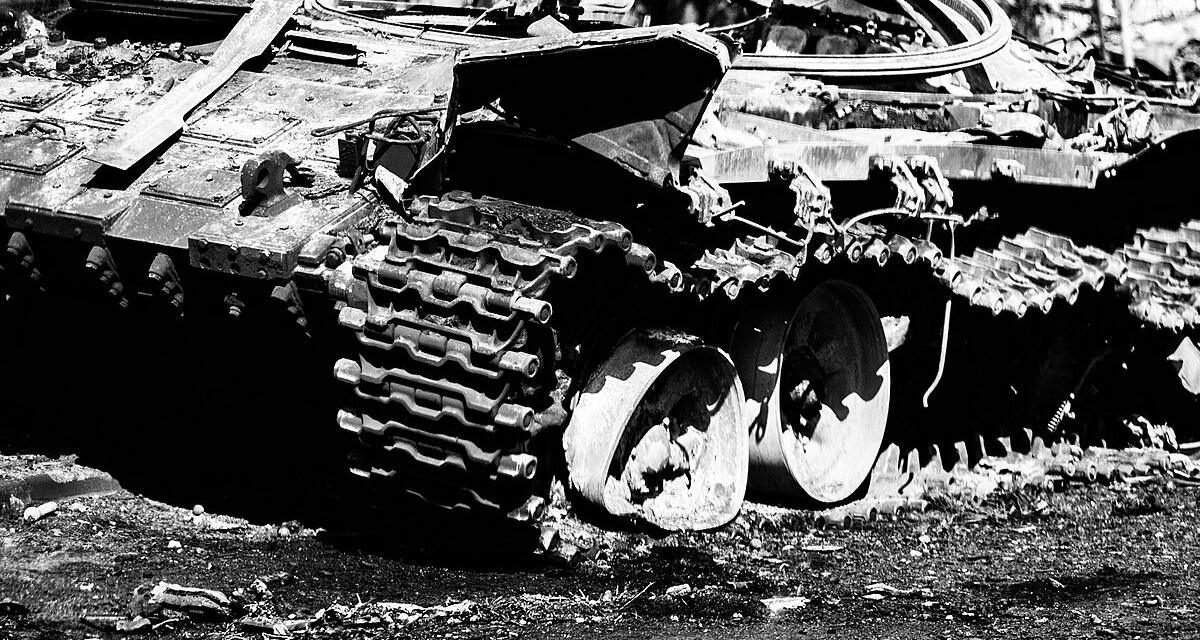
The past three and a half years of the Russo-Ukrainian War has sparked much professional discourse regarding the difficulty of executing combined arms maneuver against a prepared defense on the modern battlefield. Images of shattered armor in places most of us had barely heard of prior to the war—outside cities like Vuhledar, Bakhmut, Mariupol, and Bucha, as well as along the Siverskyi Donets River—serve as stark examples of the impact of mature precision-strike systems on attacking formations. For Western militaries, and for the US Army in particular, the difficulty of combined arms maneuver under such conditions was even more dramatically illustrated by the failure of the Ukrainian Armed Forces during the failed summer 2023 counteroffensive, where, despite extensive equipping and training by the West, a twelve-brigade Ukrainian assault force found itself rapidly impaled on the Russian defensive line.
Unsurprisingly, the offensive’s initial failure and subsequent devolvement to a grinding campaign of attrition has sparked deep examination among military professionals and acrimonious disagreement between Ukrainian leaders and their Western partners. Much of this specifically revolved around the Ukrainian Armed Forces’ transition from a high-tempo, armor-centric concept of operations to one predicated on small infantry formations, supported by even smaller armor elements, slowly chewing their way through successive Russian defensive lines. Ukrainian military officials argued that only such small, combined arms formations could survive inside a highly proficient Russian sensor-shooter network without unacceptable losses, while American military officials believed that the high casualties associated with the commitment of larger formations were an acceptable sacrifice in return for a rapid breach of the Russian defensive line and subsequent transition to a less costly war of maneuver.
Some two years later, while the debate regarding Western and Ukrainian decision-making remains unresolved, the offensive, combined with the larger characteristics of the conflict, is nonetheless generating extensive commentary challenging current US Army combined arms maneuver as practiced by its armored brigade combat teams. An especially effective way of extracting lessons from the counteroffensive—and its failure—is by approaching it from both the micro and the macro level. By examining it through the lens of a small tactical engagement outside the village of Novodarivka in June 2023, and subsequently placing it within a larger context offered by historical armored offensives, it is possible to gain a more nuanced understanding of just what the US Army should learn from this episode of the war.
On the Ground: The Battle of Novodarivka
The village of Novodarivka lies approximately equidistant between the Ukrainian cities of Zaporizhzhia and Donetsk. Otherwise unremarkable, in the summer of 2023, it served as a forward outpost within the initial Russian defensive position opposing what would take shape as a supporting Ukrainian axis of advance running directly south toward the city of Berdiansk along the coast of the Sea of Azov. The main axis of advance for Ukrainian forces attempting to break through Russian defenses along the Surovikin line, which extended from Orikhiv south toward Melitopol, was located some thirty kilometers to its west.
Although the exact deliberations and planning considerations are still hidden behind prudent operational security measures, it is clear that the Ukrainians envisioned a traditional mechanized assault on the Russian defensive line, as practiced by American armored brigade combat teams at combat training centers and executed successfully during the 1991 Desert Storm invasion. At Novodarivka, the first objective for the Ukrainian brigade advancing along the Berdiansk axis, the initial assault consisted of a company of mounted infantry and engineers advancing behind a section of tanks. Supported by artillery, electronic warfare assets, and drones, the armor/infantry column would enter a narrow breach lane blown by the attached engineers and advance toward the objective. Unfortunately, despite the destruction of a reserve Russian tank company by Ukrainian drone strikes, a section of surviving Russian armor would unmask itself and rapidly engage and destroy the advancing column. This sent surviving Ukrainian infantry running either forward to the village in a desperate attempt to gain an initial foothold and escape the kill zone or back toward the safety of Ukrainian lines. A second company team of combined armor and motorized infantry sent to reinforce the initial lodgment met a similar fate, canalized in another breach lane before succumbing to a combination of antitank fires and mines. Only with the commitment of a third company, infiltrating in two platoon-sized elements via a tree line to the west and through the wreckage of the first two companies’ destroyed vehicles, would the Ukrainians finally have sufficient dismounted strength to seize the western half of the village.
However, to continue the advance and take the remaining Russian strongpoint on the eastern side of the village, the Russian company occupying Novodarivka’s neighboring village of Rivnopil, just a couple kilometers to the east, and another company positioned forward of that village would have to be destroyed. Conscious of the heavy equipment loss at Novodarivka, the Ukrainian plan to destroy the forward company was specifically designed to minimize any such additional loss. The sole section of armor committed to the assault was relegated to an attack-by-fire position from which the tanks could engage Russian positions at a distance, while the actual seizure of the objective would fall to dismounted infantry platoons moving through parallel tree lines bordering the position. The eastern platoon established an attack-by-fire position to further fix Russian attention and manpower, while the western platoon, last in the order of movement, would conduct the final assault. Under heavy contact from both flanks and the front, the surviving Russian elements quickly retrograded back to the main position at Rivnopil, which was subsequently seized by a trailing brigade.
While the Battle for Novodarivka was just one of hundreds of tactical actions occurring throughout the entirety of the Ukrainian summer 2023 counteroffensive, the transition from a mechanized-centric concept of operations to one centered on the advance of small, dismounted infantry formations would be one echoed across the front. Ukrainian brigades nearly universally chose to lead with infantry rather than armored fighting vehicles. They accepted the consequently slower operational tempo to reduce equipment losses and casualties. This tactic emphasized Ukrainian advantages in dismounted maneuver and small-unit leadership while mitigating the difficulty of executing combined arms maneuver at scale and a troubling dearth of critical systems such as short-range air defense and engineering equipment.
The Battle of Novodarivka and the Counteroffensive in Context
Like many members of the profession of arms, I have watched the ongoing conflict with great interest. And as an armor officer, I initially reacted with a degree of confusion upon seeing the transition in Ukrainian tactics in early June 2023. Years of professional development and education, repeated articles in Armor magazine, and impromptu discussions from motor pool to field exercises all reinforced one message: Where tanks advance, victory follows. The unequaled combination of firepower, protection, and mobility in the tank—honed to lethal effectiveness in the US Army’s M1A2 SEPv2 and SEPv3 platforms—enable armored forces to rapidly break through an adversary’s most fortified defense and into his rear area. They then deposit accompanying infantry formations, the sole element of the Army’s ground combat team capable of holding and seizing terrain, at their objectives while continuing a destructive rampage through what General George S. Patton called the happy hunting ground of armor—an enemy’s rear.
However, emotion and orthodoxy cannot be allowed to trump rational military analysis and the cold facts of history. For while famed German General Heinz Guderian may have spoken of tanks carrying victory forward, it was the audacious wet-gap crossing of the Meuse at Sedan by his infantry that enabled their subsequent breakout. Though like in Poland and Russia, such infantry would still be called upon to seal the gaps in any great tank encirclement, liquidate any remaining resistance, and collect vast hordes of prisoners. Similarly, General Patton may have visualized deep plunges into the enemy’s rear such as that of his Seventh Army across Sicily in July 1943 or his Third Army’s drive across France in August 1944. But even he and his troops were not immune to a bloody slog through a prepared defense like that they encountered at the fortress city of Metz, which from September to December 1944 rebuffed the previously onrushing Third Army.
Objectively, this contrast between expectation of armored success and frequent armored reality when encountering a prepared defense is a construct that holds true in the Army today as well. While Army leaders may continue to speak of armor’s “gusto and panache,” it is something rarely seen in simulated combat at the National Training Center. In twenty-one months as an opposing force mechanized infantry battalion commander and assistant regimental operations officer within the 11th Armored Cavalry Regiment, not a single armored brigade combat team I have observed has been able to surpass an average rate of advance of six to seven kilometers per day—hardly a blistering pace. And on days that include fierce fights around key pieces of terrain such as the Siberian Ridge, the Snow Cone hill mass, or the pass complex west of Barstow Road, armored brigades’ progress can, at the frequent cost of its near complete culmination, be measured in the mere thousands of yards.
Although sobering, especially when an entire rotational force-on-force period may consume the equivalent of multiple brigade combat teams for only some fifty kilometers of ground, such high losses are not uncommon. Even the lightning defeat of Poland cost the Germans some six hundred tanks, only 70 percent of which could be replaced in the subsequent seven months preceding the invasion of France due to limitations in German industrial production. And the invasion of France was itself another victorious armor-centric campaign that nonetheless saw total German tank availability due to combat losses and maintenance drop to half by the end of just the third week of fighting. Likewise, during Operation Goodwood, the disastrous British breakout attempt from Normandy in July 1944, the British would lose over four hundred tanks in just two days for a mere thirty-four square kilometers of ground. It was only due to the heroic efforts of British maintainers and the Allied support apparatus that all but 156 of those tanks would be repaired and put back into action within a week.
Indeed, it is that fact—that tank-centric offensives frequently suffer from extremely heavy tank losses, even if such tanks are able to be repaired and replaced more easily than an infantrymen—that exposes the most serious and most misunderstood factor in Ukrainian decision-making during the summer of 2023. For all the emphasis on concentration as a characteristic of the offense, within the armor community concentration must be thought of not only in terms of combat power, but also in terms of Army and national support capabilities for tank repair and regeneration. This was among Ukraine’s most serious deficits in 2023. For while the Ukrainians could amass some 1,500 tanks that summer, the bulk were not only old Soviet models, but also tied up in ancillary operations. This left the core of the twelve-brigade counteroffensive force centered around just a battalion of Leopard 2 tanks and a company of Challengers. The former of these required lengthy repair lines stretching all the way back to Germany and Poland, while the latter was provided in such limited numbers as to be of questionable benefit following any amount of loss.
Likely compounding Ukrainian unwillingness to use such limited tanks in large quantities was the reality that massed tank employment is often the quickest way to lose tanks. This fact is proven by history and was abruptly discovered by Ukrainian units when the Russian defensive line contained the offensive’s initial thrust. The failure of the initial push, combined with persistent Russian intelligence, surveillance, and reconnaissance coverage across the front, meant that once offensive operations had begun the multiple Ukrainian axes of advance were rapidly able to be identified and massed against. This eliminating any element of surprise that may have remained after horrendous Western security measures had given the Russians advance warning of Ukrainian plans and intentions.

When placed in its proper historical context, the true surprise of 2023 was not that the Ukrainian Armed Forces would struggle to breach the Surovikin line, but that such a struggle was apparently unanticipated by an array of American military officials and thinkers. Equally unanticipated, it seems, was the resulting change in Ukrainian operational concepts. Perhaps more critically, this lack of historical appreciation for the difficulty and realities of penetrating a prepared defense suggests that the US Army must seriously investigate long-standing concepts of armor employment to ensure their continued validity in light of modern battlefield conditions.
Captain Joshua Ratta is an armor officer who currently serves as the commander of Headquarters and Headquarters Troop, 1st Squadron, 11th Armored Cavalry Regiment at Fort Irwin, California. His previous assignments include commander of Bravo Troop, 1/11 ACR, tank platoon leader, distribution platoon leader, tank company executive officer, and battalion maintenance officer with 1st Battalion, 8th Infantry Regiment, 3rd Armored Brigade Combat Team at Fort Carson, Colorado.
The views expressed are those of the author and do not reflect the official position of the United States Military Academy, Department of the Army, or Department of Defense.
Image credit: Kyivcity.gov.ua