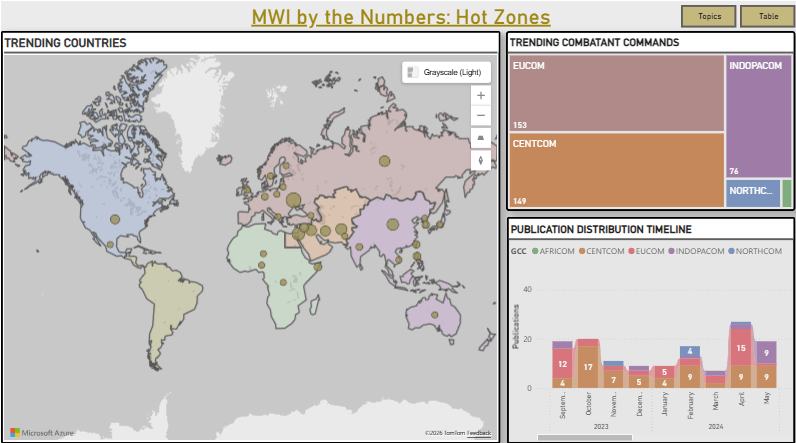
World Refugee Day and Modern Warfare
MWI’s Lionel Beehner argues for more focus on and preparation for conflicts ignited by the world’s refugee populations.
Read More

MWI’s Lionel Beehner argues for more focus on and preparation for conflicts ignited by the world’s refugee populations.
Read MoreNote: We’re revisiting some of our most popular material from the past 10 months for our newer readers; this was originally posted May 21, 2014. Enjoy!
The other day I had a valuable email back-and-forth with a professional acquaintance on teaching strategy. We differed on several points, but there was quite a bit of general agreement as well. One point where we were in violent concurrence was on the influence of strategic culture on tactics. I feel that culture has a bit more influence on warfare than my counterpart does – but concede the broad point that different strategic cultures often gravitate toward a particular “best” tactical approach. These similar choices can also be seen beyond culture – they can be seen across time.
The result is that, paraphrasing the comment often attributed (but never proven) to Mark Twain, “warfare does not repeat itself, but it rhymes.” Sir Michael Howard once said much the same, “[f]or after all allowances have been made for historical differences, wars still resemble each other more than they resemble any other human activity.” Even across time, the basics in land warfare are often the same. Journalist Sebastian Junger, in his book War, remarks on these fundamental tactical principles – and is worth considering at length:
Read More“In a war…soldiers gravitate toward whatever works best with the least risk. At that point combat stops being a grand chess game between generals and becomes a no-holds-barred experiment in pure killing. As a result, much of modern military tactics is geared towards maneuvering the enemy into a position where they can essentially be massacred from safety. It sounds dishonorable only if you imagine that modern war is about honor; it’s not. It’s about winning, which means killing the enemy on the most unequal terms possible. Anything less simply results in the loss of more of your own men…There are two ways to tilt the odds in an otherwise fair fight: ambush the enemy with overwhelming force or use weapons that cannot be countered.” (p. 140)
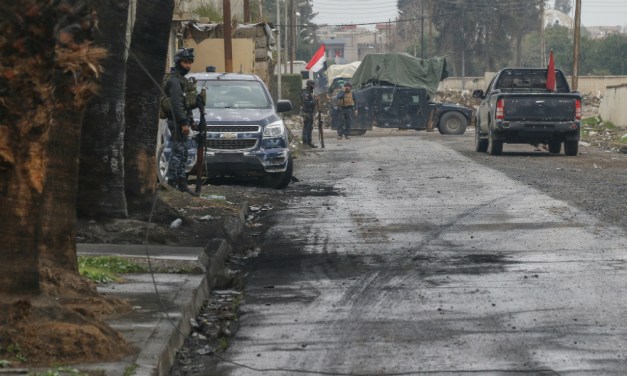
MWI’s Maj. John Spencer was interviewed for this episode of the BBC program The Inquiry, which examines the ongoing battle for Mosul and the challenges of urban warfare.
Read More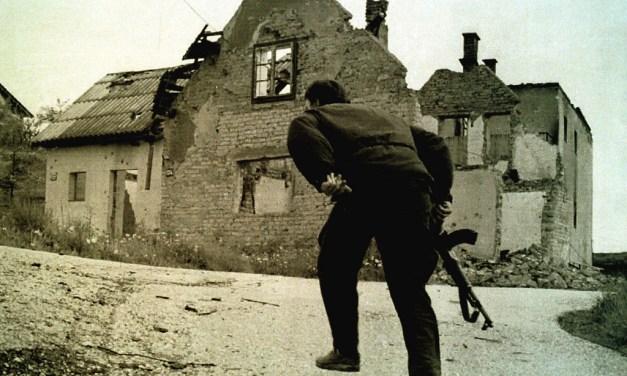
In this new report, MAJ Michael Jackson finds that the positional warfare of the siege of Sarajevo in the mid-1990s resembled the trench warfare aspects of World War I far more than the dynamic urban warfare American forces faced in Baghdad in 2003.
Read More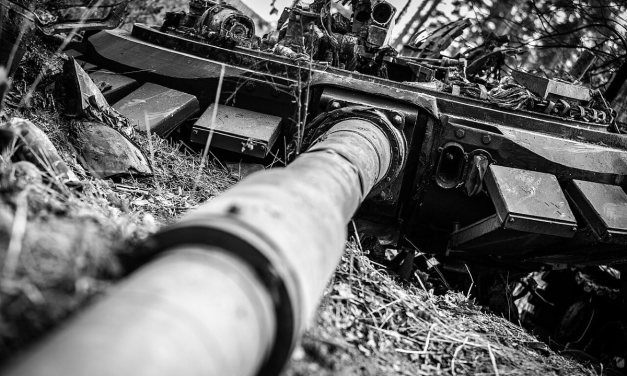
Four years ago today, on February 24, 2022, Russian forces launched the invasion of Ukraine that...
Read More