1800 JST, 15 April 2027, on a piece of maritime terrain
“Dig.”
The staff sergeant never thought he would be issuing an order to dig graves for his fallen Marines. However, forty-eight hours after the Marines’ deaths, their remains threatened to infect the rest of his platoon. An hour earlier, the MV-22 slated to transport the remains to Okinawa had waved off again. A hasty interment outside First Platoon’s new patrol base was the only way to protect the rest of the platoon. Ten days of movement to evade detection, degraded communication that limited interaction with the staff sergeant’s command, and now the stress of burying Marines—all of it was testing the platoon beyond its limits.

For the Marine Corps, imagining the unimaginable is not a morbid academic exercise; it is a sacred duty. The Stoic practice of premeditatio malorum teaches individuals to envision the worst outcomes. Effectively, it is a premortem, and it prepares the mind for adversity. This ancient practice must inform institutions as they prepare for modern combat. The stand-in forces concept provides the joint force and regional partners with credible combat capabilities inside the enemy’s weapons engagement zone. Unlike the post-9/11 wars, in which the Corps served primarily as a unilateral battlespace owner, stand-in forces will integrate and accentuate joint and partner capabilities. Marine Corps leadership has not clearly articulated the demands stand-in forces will face and the joint dependencies they will generate. To prepare for war in the Pacific, leadership must anticipate and define these forces’ worst day. Through this necessary—yet sobering—visualization, the Corps can identify and train for the challenges they will face when (not if) crisis strikes in the Pacific.
As the Corps trains, mans, and equips the stand-in forces, its contribution to deterring aggression and ability to secure key maritime terrain will be dependent on how well it articulates the extraordinary mental, moral, and physical demands its Marines will face. Yet, as the Marine littoral regiments move toward full operational capability and the Davidson Window approaches, the Corps must also confront the risks that stand-in forces encounter. And because the stand-in forces’ design integrates joint capabilities, making the premortem a joint concern.
Marine Corps leaders clearly recognize that, in the event of a conflict, stand-in forces would serve as “the forward edge of the Joint Force” and that their role would be integrated into joint kill chains, for which new equipment would be key. And yet as a service, we have failed so far to adequately articulate the demands stand-in forces would likely face, the traits that would lead to victory, or the steps necessary to prepare forces for the fight in the Pacific. Why? Because we have not yet stress-tested the concept.
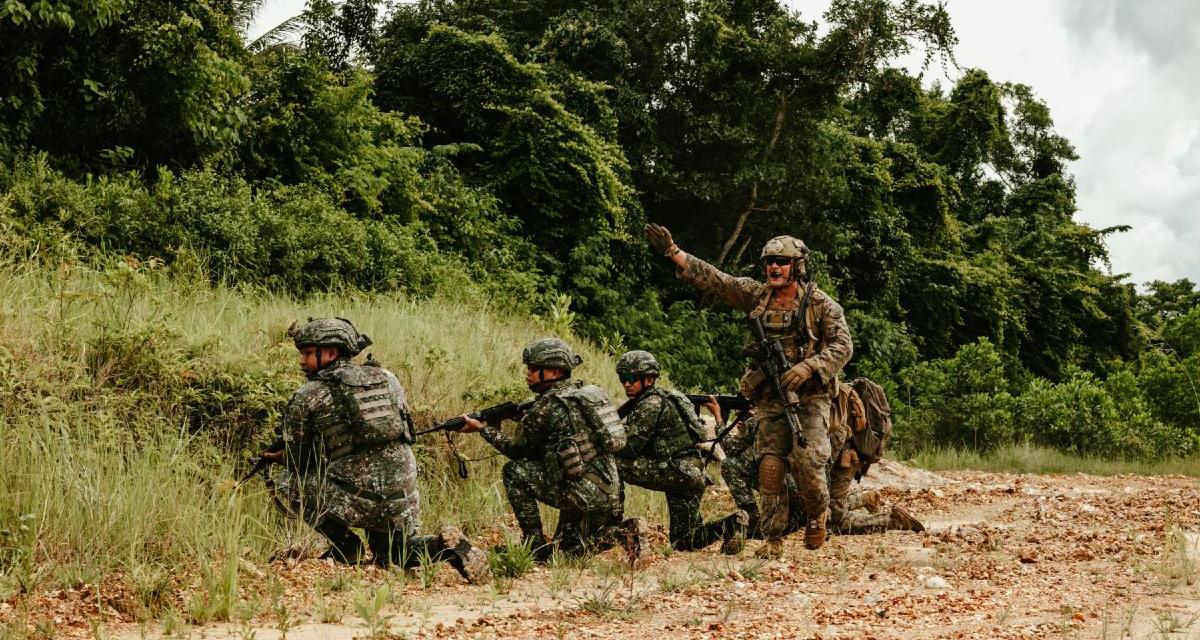
Imagine a squad from the 12th Littoral Combat Team on key maritime terrain, tasked with partnering with host-nation forces and feeding targeting data to the joint strike complex. For days, the squad marches to avoid detection by the enemy. In the contested communication environment, radio silence and a lack of feedback from up the chain of command creates ambiguity for the squad. The Marines wonder: Did higher get the request? Will help arrive? Accustomed to the feedback loop of command and control, the squad does its best to executes missions it judges to be in keeping with the commander’s intent. With medical supplies exhausted, the corpsman manages pain without medication. Stress robs the Marines of sleep, while their bodies bow and bend under the weight of uncertainty and their combat load.
Ben Connable’s War on the Rocks series of articles on the future of the Corps poses grave questions about stand-in forces’ sustainment and survivability. The sober premortem directly confronts Connable’s concerns and the joint force’s greatest fears.
The placement of stand-in forces on key maritime terrain creates opportunities for the joint force. These Marines will use joint sensors, which feed targeting cycles. They will also partner with the militaries of host nations. However, stand-in forces’ capabilities generate numerous joint dependencies that the joint force has yet to fully understand. The joint force faces risk due to a dual reliance on the nascent concept and a concurrent failure to appreciate the associated demands.
The premortem is a joint concern but remains a service responsibility. The Corps must pivot from keeping the joint force at arm’s length to embracing other services. The Marine Corps’s role as a battlespace owner in Iraq’s Anbar province and, later, Afghanistan’s Helmand province colors the joint force’s relationship with the service. As it shifts this relationship, the Marine Corps must demonstrate and articulate how the stand-in forces concept will integrate joint capabilities and indicate the external support necessary to prevent stand-in forces from culminating. Armed with this information, the stand-in forces can become a fully functional part of joint kill webs and enable external partners to orchestrate fires.
The premortem should identify the human factors these forces will encounter and inform the material solutions the Corps will implement. By working backward from these human factors, the service can better scrutinize the equipment stand-in forces currently possesses, will receive, and still requires. The imperative to enhance procurement timeliness and material effectiveness requires the service to soberly evaluate the items in the stand-in forces’ rucksacks and at their disposal. However, a meaningful assessment of equipment begins with an evaluation of the humans who will use it. With contested supply lines stand-in forces must ensure every ounce they carry counts.
This assessment must identify risks, clarify the necessary preparation, and align efforts to enhance stand-in forces’ readiness. However, the premortem cannot be a service-centric activity; it must be a joint undertaking. The Corps now advertises stand-in forces as the “JTAC [joint terminal air controller of the Joint Force.” In this way, it links the joint force to the success and survivability of the stand-in forces. The stand-in forces concept’s utility, therefore, lies in integrating with other services’ capabilities—a substantial pivot from the Marine Corps’s role as a battlespace owner.
Where a premortem to stress-test the stand-in forces concepts departs from premeditatio malorum is that while the Stoic practice involves mentally rehearsing worst-case scenarios, for the Marine Corps, such a rehearsal must take place outside of the mind and in the real world. The premortem should consist of a ten- to fourteen-day intensive field exercise in the first island chain. In recent exercises, including Keen Edge, Pacific Sentry, Iron Fist, and Resolute Dragon, Marine stand-in forces were a supporting character, not the lead. Placing them at the center of the premortem exercise is vital—there is no other way of validating the concept. Joint and partner representatives should collaborate on exercise design, rather than serving as observers. The exercise objectives should focus on integrating and fulfilling joint requirements while helping external partners understand the stand-in forces’ considerable capabilities and support needs. For the Marine Corps, the gathered data and observations will inform the stand-in forces certification and provide a clearer understanding of joint and partner needs. This inclusive approach mirrors the joint, partnered environment in which Marine stand-in forces will operate in war.
To prepare Marines and, by extension, the joint force, the premortem exercise should be a clinical examination of the stand-in forces’ worst day. Reliance on past combat experience and the ill-defined warrior ethos does little to prepare Marines and even less to assure the joint force. Training must prepare units for the demands of combat by replicating the strain the stand-in forces will face. The Corps still has time to envision those fateful days and prepare for them.
Distributed operations entrust small-unit leaders with immense responsibility and minimal oversight. The decisions these leaders make under stress will determine commands’ level of trust in the stand-in forces. A premortem exercise must replicate the dilemmas units confront in combat. For instance, will a distressed unit manage its signature, or will it revert to sloppy practices, risking detection by the enemy? When resupply and evacuation missions arise, how will leaders prioritize and account for the needs of all units, rather than just one? Will a unit under stress maintain trust with partners, relationships with whom are essential to the stand-in forces concept, or revert to a parochialism that erodes operational effectiveness? The answers to these questions will only become apparent if we subject the concept to a real test.
The demands imposed on stand-in forces extend to intense cognitive pressure. As teams integrate new equipment and lose familiar feedback loops, the minds of Marines will determine mission outcomes. Communications-degraded environments force Marines into ambiguity. The premortem, therefore, must include unit and individual problem-solving scenarios, uncovering not only what the stand-in forces decide but also why they make those decisions. For instance, leaders must troubleshoot a piece of equipment under a time constraint, communicate the update, and assess the cascading effects. Physical fatigue injects a level of realism into the scenario. Small-unit leaders must demonstrate problem-solving skills as they fuse systems to orchestrate the opening and closing of kill chains.
Despite the scope and complexity of the stand-in forces’ mission, the Marine Corps’s fitness screening and standards for stand-in forces leaders remain stagnant. The Corps is not formally testing its Marines under a combat load over multiple days. Thus, it is not mirroring the conditions stand-in forces will face.
An extended premortem exercise will quantify the physical toll the unit will endure. Biometric tracking data and bloodwork—from before, during, and after the exercise—can reveal the physiological stress Marines experience. With data in hand, the Marine Corps can adjust physical preparation, and the joint force can better understand the physical stress stand-in forces will face. Conducting the exercise in the first island chain, rather than in the familiar environs of Twentynine Palms, will boost the assessment’s realism and credibility. This meaningful measure gauges the work capacity of stand-in forces, enabling a recalibration of operational endurance and support requirements.
The examination of stand-in forces’ worst day must include the joint force and regional partners, such as the Armed Forces of the Philippines, the Japan Ground Self-Defense Force, and representatives from Taiwan. Each has a vested interest in the stand-in forces concept’s success.
The premortem exercise should occur after observing stand-in forces during an extended, intense, full-mission rehearsal. The exercise outcomes and end point must remain fluid, allowing stand-in forces to display sound judgment in the face of incomplete information. The pace and tempo of operations should simulate adversary forces and conditions, including a lack of food, a shortage of water, degraded communication, and elevated stress. The Marine Corps should also open the exercise to outside expertise by allowing psychologists and exercise physiologists to gather data on the stresses and responses the stand-in forces confront. At the end of the exercise, all participants, regardless of rank, should present their observations.
The United States’ renewed emphasis on deterring and responding to Chinese aggression places the stand-in forces at center stage. Proximity to the front lines and partners allows these forces to integrate with and accentuate joint capabilities. The stand-in forces’ organic sensors and shooters comprise a credible combat force but also stitch together links in the joint kill chain. Their positioning, capabilities, and understanding accelerate joint capabilities and processes. Although stand-in forces will be trained, manned, and equipped as other Marine units, their work enables partners and the joint force. The pivot from battlespace owner to joint enabler extends the stakeholder network.
The stand-in forces concept offers the joint force a potent, purpose-built unit inside the enemy’s weapons engagement zone. However, only a rigorous examination of stand-in forces’ worst day can determine its prospects for survival and success. A clear understanding of stand-in forces’ capabilities and capacity ensures its proper employment. By imagining and examining the worst-case scenario, the joint force can gain a better understanding of stand-in forces’ capabilities and dependencies. Each day, China’s military readiness grows alongside its willingness to fight. As a result, among its other requirements, the joint force and partners must deepen their understanding of stand-in forces and their requirements. The time to test the concept is now, before it’s too late.
Major Benjamin Van Horrick is currently serving at the Department of Defense Inspector General.
The views expressed are those of the author and do not reflect the official position of the United States Military Academy, the Departments of the Army or Navy, the US Marine Corps, or the Department of Defense.
Image credit: Cpl. Angelina Sara, US Marine Corps