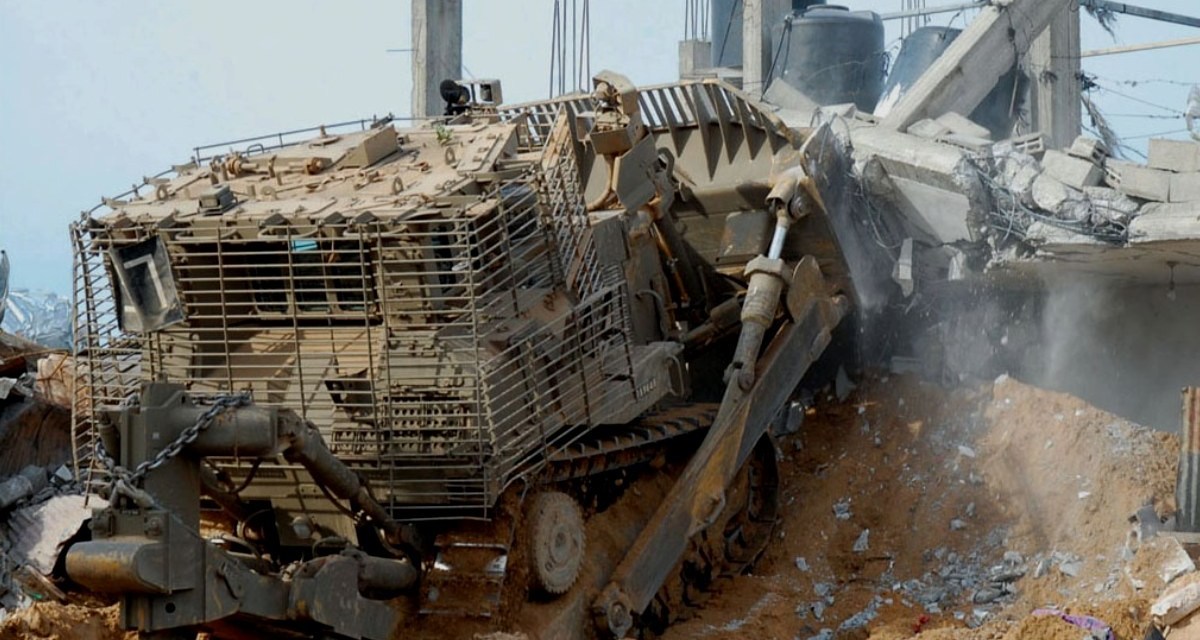
In 2008, Israel’s government had a problem. Since the unilateral Israeli withdrawal from the Gaza Strip in 2005, rocket first from Gaza into Israeli territory had steadily increased. In 2007, the year after Hamas took control of Gaza, there were 1,276 rocket attacks. Previous Israeli actions aimed at stemming the tide of the attacks—imposing restrictions on goods entering the territory to reduce the supply of rockets, thousands of artillery strikes aimed at Hamas infrastructure, and a limited air and ground campaign—had failed to sufficiently address the threat.
A six-month ceasefire in 2008 reduced attacks substantially, although without eliminating them. But after it expired in December—Hamas declared an end to it one day prior to the scheduled expiration—rocket and mortar attacks picked up once again. Discussions over a renewed ceasefire ultimately failed to produce one, and on December 27, 2008, Israel launched Operation Cast Lead. Several days of airstrikes were followed by a ground campaign involving around ten thousand members of the Israel Defense Forces. The twenty-three days of fighting would become known as the First Gaza War.
The fourteenth installment in MWI’s Urban Warfare Project Case Study Series examines Operation Cast Lead and extracts its lessons on urban warfare—from the tactical-level imperative to operate in combined arms teams to the strategic-level risk when battlefield success is not clearly links to sustainable political objectives. You can read it here, and be sure to follow the Urban Warfare Project for future case studies and continuing exploration of the challenges faced by military forces operating in cities.
Liam Collins, PhD was the founding director of the Modern War Institute at West Point and a distinguished military fellow with the Middle East institute. He is a retired Special Forces colonel with deployments to Iraq, Afghanistan, Bosnia, the Horn of Africa, and South America, with multiple combat operations in Fallujah in 2004. He is coauthor of Understanding Urban Warfare and author of Leadership & Innovation During Crisis: Lessons from the Iraq War.
John Spencer is chair of urban warfare studies at the Modern War Institute, codirector of MWI’s Urban Warfare Project, and host of the Urban Warfare Project Podcast. He served twenty-five years as an infantry soldier, which included two combat tours in Iraq. He is the author of the book Connected Soldiers: Life, Leadership, and Social Connections in Modern War and coauthor of Understanding Urban Warfare.
The views expressed are those of the authors and do not reflect the official position of the United States Military Academy, Department of the Army, or Department of Defense.