Recent rhetoric surrounding the Venezuelan regime of Nicolás Maduro has framed US policy primarily through the lens of counternarcotics. This framing and the emphasis on Venezuela, however, risks obscuring a more consequential development vis-a-vis China’s expansion and growing influence across vital maritime and logistical corridors around the world.
If reinvigorating the war on drugs was the principal objective, Venezuela would be a suboptimal focal point. It is a secondary transit node, not a production hub. Cocaine is produced primarily in Colombia while the majority of US-bound flows transit through Mexico rather than the Caribbean. The scale of Venezuelan flows alone is out of proportion with the level of military activity seen in recent months. This discrepancy suggests that drugs are a tactical concern nested within a broader context.
Despite being the primary transit point for US-bound flows, Mexico is managed through bilateral frameworks, not overt military signaling. This divergence between the US relationships with Mexico City and Caracas is illustrative of the more subtle realities of modern statecraft. Where economic interdependence and cooperative mechanisms exist (e.g., integration under USMCA), Washington pursues risk-managed engagement; where they do not, signaling and coercive presence become the de facto tools. This distinction reinforces conclusions that Venezuela’s importance may be less about mainstream narcotics talking points than its utility within global competition shaped by access, influence, and great-power posturing throughout Latin America and the Caribbean.
Chinese state-owned enterprises have invested heavily in ports, logistics infrastructure, extractive industries, and telecommunications across the region. These investments are described as commercial, but their dual-use potential is difficult to ignore, as port access, infrastructure control, and supply-chain leverage provide valuable advantages without the visibility and friction of formal basing or kinetic action. From this perspective, US military operations in and around Venezuela appear less about the shortcomings of the Maduro regime itself and more about signaling control and preserving maneuverability in a key region for global trade and US security. The Caribbean serves as a hub for energy and commercial flows; therefore, demonstrating the ability to rapidly deploy and utilize lethal force in this theater signals escalation dominance while actively stymieing Beijing’s advances.
China has implemented a similar approach in sub-Saharan Africa. Chronic instability in the “coup belt” has pushed illicit flows toward the coast, where Beijing’s investments along the Gulf of Guinea and into the Sahel have expanded under weak maritime governance and deteriorating regional security. Over time, these economic footholds translate into political leverage and influence, privileged access, and latent dual-use advantages that reshape the operational landscape not through conventional warfare, but through asymmetric dominance in the gray zone. The lesson is not that Africa and the Caribbean are identical, but that contemporary competition increasingly turns on who controls access, infrastructure, and logistics in contested but formally sovereign spaces.
Through this comparative lens, Venezuela is better understood as circumstantial rather than central. Its historic alignment with Russia and increasing dealings with China, combined with permissive geography and fragmented sociopolitical environment, makes it a convenient venue for signaling and presence operations. But treating Venezuela as the core problem risks overemphasizing its importance while underestimating the cumulative effect of China’s big-picture approach. Reactive policy distracts from the systemic challenge unfolding across multiple regions simultaneously. Washington does not face a Caracas problem so much as a competition problem—one defined by access and influence in spaces where competition falls largely below the threshold of open conflict but is still critical to long-term strategic positioning. Venezuela is a test bed for influence, maneuver, and escalation posture on a broader scale.
Clear strategy requires distinguishing signal from substance. Counternarcotics operations and pressure on authoritarian regimes should remain grounded in achievable objectives. Therefore, policymakers and analysts must be wary of narratives that elevate certain regions to center stage while competition across other decisive theaters continues largely out of the public view.

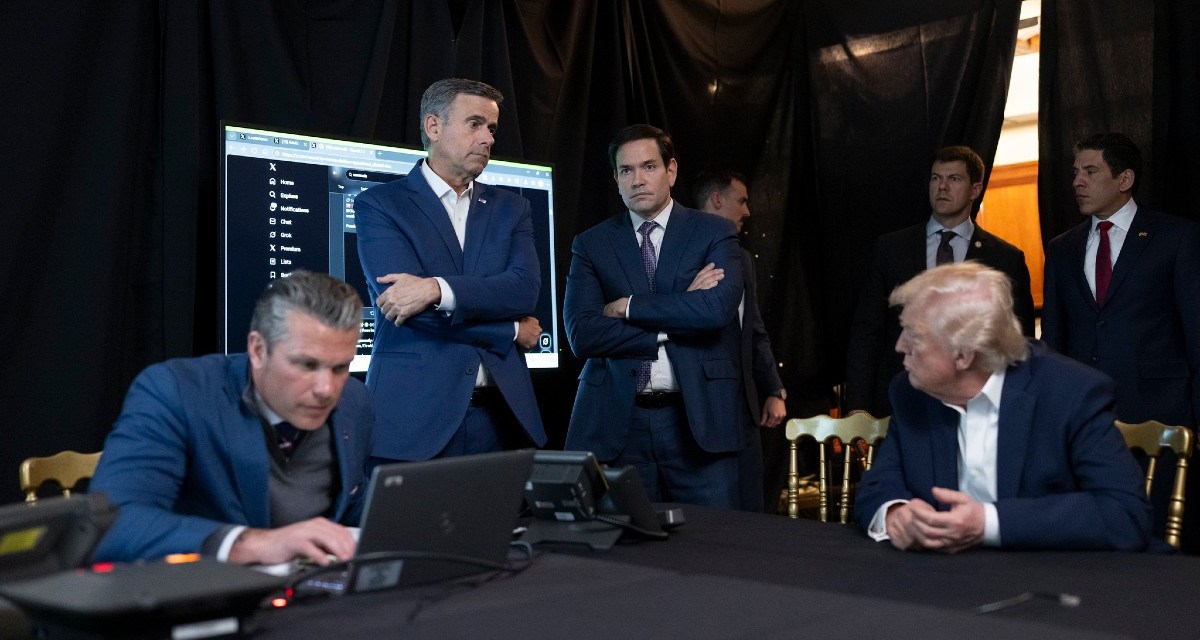
All of the above was written prior to the military operation in Caracas. News of the targeted strikes and the capture and extraction of Maduro from Venezuela broke as I finalized this analysis on January 3. In many ways, the operation proves the framework described above for conceptualizing the strategic competition context in which military action takes place. Official statements remain limited, but the strikes illustrate how narratives of authority, escalation, and justification transcend intent and hinge on perception and precedent. While there remain more questions than answers at this early stage, near-peer adversaries and regional actors will certainly observe what has occurred and how it was framed and justified in revision of their own frameworks. The significance of these events far outweigh Maduro’s fate and will inform how power is exercised and contested globally.
Ibrahima Diallo is an analyst whose work focuses on great-power competition and gray zone dynamics. He has conducted research in support of the Office of the Under Secretary of Defense for Research and Engineering and the US Army Nuclear and Countering WMD Agency. He holds a master of global affairs with a specialization in conflict and security from George Mason University.
The views expressed are those of the author and do not reflect the official position of the United States Military Academy, Department of the Army, or Department of Defense.
Image credit: The White House