
Throughout history, the dream of a decisive victory has often been shattered when technology surpassed doctrine. In World War I, the promise of the swift victory envisioned in Germany’s Schlieffen plan was dashed by machine guns and artillery, resulting in a stalemate that transformed the European battlefields into a maze of trench lines. Even when tanks emerged by 1916 as the potential antidote, crossing no man’s land and supporting infantry at battles such as Cambrai, without the appropriate doctrine and coordination they failed to turn tactical victories into operational breakthroughs.
Twenty-three years later, in 1939, tanks were no longer just a novelty for infantry support; when paired with close air support, they shaped decisive maneuvers and enabled breakthroughs. It was not only the machines that changed warfare, but also doctrine and organization, which allowed them to destroy large enemy formations rather than simply seize territory.
This historical context is a powerful framework with which to understand the role of drones on today’s battlefields—and those of tomorrow. Drones are proving to be a devastating tool of attrition in and around the trench lines of Ukraine, but they may soon enable the next evolution in maneuver warfare. Similar to tanks in World War I, drones have emerged as tactical novelties and delivered terrifyingly lethal—but limited—effects. And like tanks in World War II, if enhanced with the appropriate doctrine, organization, and operational concept, drones will help establish the conditions for offensive breakthrough and exploitation.
Drones have already shown they can kill squads in trenches and disable vehicles, tactical actions that contribute to attrition. Attrition alone, however, even at scale, is neither quick nor affordable for most Western militaries, including that of the United States, to achieve decisive outcomes. One alternative to this approach is dislocating and collapsing enemy formations and the critical subsystems that those formations rely on to remain combat effective. This means breaking the enemy forces’ command and control, severing their logistics, and isolating enemy units so that they are unable to regroup or reinforce critical parts of an area of operations. At the same time, friendly forces exploit these opportunities to rupture enemy defenses and destroy critical parts of enemy forces’ warfighting system faster than they can react. In this way, operational successes, if repeatable, can compound into favorable strategic outcomes.
Rather than viewing attrition and maneuver as opposing models of modern warfare, maneuver can complement attritional approaches by enabling the rapid destruction of enemy capability. By creating and exploiting vulnerabilities, maneuver enables the efficient destruction of enemy capabilities at a favorable cost, potentially leading to the destruction of entire brigades, divisions, and corps in detail. In this approach, victory in ground combat depends upon setting the conditions for operational breakthroughs, and in modern times, this means developing the drone’s full potential for offensive maneuver warfare.
Russia’s struggle to achieve a decisive victory in Ukraine highlights three enduring but now intensified main operational challenges. First, modern states can defend broad fronts, producing a lack of assailable flanks, which forces attackers to risk costly penetration maneuvers. Second, the enormous cost of penetration operations makes exploitation challenging. Third, defenders can respond with rapid precision fires and counterattacks that can stall offenses before attackers can achieve operational effects. Given this challenging context, maneuver requires more than just speed; it demands isolating, dislocating, and disrupting the enemy system on a large scale.
Drone-enabled maneuver may provide a solution to all three by bypassing flanks, overwhelming static defenses, and, importantly, enabling the isolation of key sectors to prevent enemy reserves from repositioning, setting the stage for successful exploitation. The air littoral, then, becomes the new assailable flank for ground combat.
To harness the potential of drone-enabled maneuver warfare, security experts should be careful not to draw narrow conclusions based on the observations of first-person-view drones in Ukraine’s trench warfare. This would be akin to watching tanks slog through the mud at the Somme and assuming that they could never enable the destruction of enemy armies.
Drones are set to do for twenty-first-century warfare what tanks achieved in the twentieth century—if employed effectively at the operational level. If drones evolve from tools of attrition into instruments of drone-enabled operational art, they will lead a new era of maneuver warfare by quickly and accurately dismantling enemy systems as our doctrine describes. The challenge—and the opportunity—is in transforming drones from tactical nuisances into decisive force multipliers that could cause operational and strategic collapse.
The hum in the sky is growing louder, bringing not only firepower but the dawn of drone-enabled operational breakthroughs.
Ukraine: Drones in Trench Warfare
The battlefields in Ukraine have demonstrated that drones can carry out various missions, but their ability to enable rapid maneuver and exploitation remains limited. Thus far, the war in Ukraine has showcased the most extensive employment of drones in military history—providing lethal previews across the tactical, operational, and strategic levels of war. Drones are performing roles in intelligence, surveillance, and reconnaissance, in targeting, and even in deep strikes against Russian air bases. However, despite their widespread use and ability to create casualties, they remain largely disconnected from a cohesive framework of operational maneuver. We have yet to see drones used to create, exploit, and sustain battlefield ruptures that lead to the collapse, encirclement, or destruction of major formations. Undeniably, drones have accelerated attrition, provided excellent fire control, and killed tens of thousands of combatants. They just have not enabled the type of shock that ties tactical disruptions into operational gains.
Yet, this does not mean they are incapable of doing so. As seen in the employment of tanks during World War I, the initial deployment of weapon systems is not always accompanied by the best doctrine. There has already been a limited glimpse of the promise of drone-enabled maneuver in Russia’s recent drone-enabled operations near Kursk. The challenge, therefore, lies not in what drones can do tactically or even operationally, but rather in writing, training on, equipping for, and executing doctrine that transforms tactical effects into operational and strategic successes.
The next stage of maneuver warfare evolution will not take twenty-three years to develop. It may occur within a year or two, as the world’s armies race to equip, organize, and train themselves for the drone-enabled battlefield.
The military force that first packages drone tactics into a concept of operational maneuver will shred opposing armies. The promise—and the threat—of the coming drone-enabled maneuver warfare is real, and it is closer than we think.
From Mechanized to Drone-Enabled Maneuver Warfare
Mechanized maneuver warfare in World War II was never solely about tanks. It represented a German style of warfare focused on speed, shock, and encirclement. As military historian Rob Citino has noted, Blitzkrieg did not suddenly emerge in 1939; it was the modern expression of Bewegungskrieg (war of movement) and Kesselschlacht (the “cauldron battle”), meant to encircle and eliminate enemy forces. Since the eighteenth century, German military thought emphasized rapid maneuver to enclose and destroy the enemy, aiming to end wars quickly by collapsing armies rather than capturing territory. Allied planners had to reckon with Germany’s successful employment of this new capability that significantly enhanced their preferred way of war—a lesson that, despite Germany’s ultimate inability to coordinate battlefield operations with a viable strategy to end the war on favorable terms, US thinkers should consider when developing concepts of employment for a new capability.
So how can the United States employ drones to enhance the American way of war? Drones now offer the potential to conduct maneuver warfare by enabling units to create and capitalize on opportunities to crush the enemy’s flank on the air littoral. Though not traditionally understood as a flank, the air littoral—the contested low altitude airspace up to one thousand feet—can function as a new maneuver space that exposes seams and enables new axes of attack.
For decades, ground forces have held their breath at critical moments, waiting for close air support to arrive and suppress enemy defenses. When used wisely, drones can provide persistent, responsive, and precise close air support that comes not in hours, but in minutes. This would enable forces to maintain air superiority over the air littoral, but more importantly, to sustain shock, maneuver, and tempo on the ground. In this way, drones could become the airborne hammer that ushers in the next era of maneuver warfare.
There are already early indications of how drones can be used for more than just limited strikes on trenches and vehicles. Ukrainian attacks on Russian airfields and Israel’s strikes on Iranian air defenses hint at a future where vehicles act as land-based aircraft carriers, delivering precise airpower deep into enemy territory. These operations offer a preview of what the next stage of air and land warfare will look like.
Drone-enabled maneuver warfare will require heavy drones—unmanned aircraft systems in groups 2 and 3—which are vehicle-portable, runway-independent, and capable of carrying larger payloads and operating over greater ranges than typical first-person-view drones. These drones can vary from single-use loitering munitions to tactical multirole platforms designed for repeated use and persistent presence. While drones already conduct strike missions, most cannot deliver payloads capable of creating decisive effects to support fast-moving ground operations, so larger drones would expand their lethal potential beyond foxholes and trenches. These heavy drones would provide decisive firepower at critical points, similar to how tanks and dive bombers did during World War II by isolating and destroying vital parts of the enemy’s forces.
Drones and the units transporting them must become fully integrated with fast-moving armored, mechanized, and infantry forces, providing constant reconnaissance and strike capabilities without delays from centrally controlled close air support. These drones will scout ahead, suppress defenses, isolate enemy formations, and execute precision strikes, allowing advancing units to maintain momentum and adapt in real time. Instead of calling for air support, formations will carry their own airpower directly into the advance.
Vehicles acting as small, highly mobile, land-based drone carriers—mobile launch platforms embedded at the battalion and company levels—will enable saturation attacks to be launched on demand, creating corridors of chaos and opportunities for maneuver forces to exploit. However, it is important to recognize that drone-enabled success is not guaranteed; drones face significant vulnerabilities in contested environments, including jamming, drone-on-drone attrition, and degraded performance in dense vegetation, high winds, or adverse weather conditions. Drone-enabled maneuver will have to fight for freedom of movement in the air littoral. Still, when integrated with ground maneuver and supported by electromagnetic support, drones provide a flexible maneuver strike option that, while vulnerable, can create windows of opportunity.
Most critically, command structures must fully incorporate drone strikes into operational maneuvers. The goal will be not only to destroy frontline positions but also to disrupt enemy command systems and rear areas, thereby creating conditions for rapid isolation, encirclement, and the systemic collapse of the enemy.
In practice, before the lead penetrating ground units initiate their attack with traditional line-of-sight weaponry, they would be preceded by ground-based drones and loitering munitions capable of isolating enemy units, preventing their ability to reposition, receive reinforcements, emplace additional countermobility obstacles, or benefit from their operational fires. The goal of these shaping operations is not only to overwhelm the point of attack but also to give friendly forces enough time and a sufficiently large mobility corridor to exploit any tactical success and seize operationally significant objectives.
To facilitate rapid brigade and division maneuvers, drone-enabled engineer battalions can deploy drone-delivered line charges to quickly and effectively clear minefields at scale. Equipped with drones capable of carrying and deploying modified mine-clearing line charges, these units can fly the charges over suspected or confirmed minefields and detonate them precisely, creating lanes for armored and mechanized forces without exposing sappers to direct fire or artillery. This drone-enabled breaching force would allow a division to clear multiple paths simultaneously across a broad front, maintaining momentum in the assault and reducing bottlenecks at minefields. A brigade or division can transform what was once a slow and hazardous breaching process into a swift, coordinated operation that preserves combat power and sustains operational tempo.
While both Russia and Ukraine already possess some of the tools required for this model of employment, neither side has yet been able to achieve decisive results. One important reason we have yet to see drones be used in an operational breakthrough is the relative inability of both sides to control the air littoral. Without control of this space, and ideally the air above it too, it becomes very difficult to avoid becoming fixed by the enemy’s fires and to prevent the arrival of the enemy’s reserves, which can hobble operational tempo and momentum.
Building the Drone-Enabled Division
To implement this vision, we need to rethink our force structure. A modern US Army division typically includes two to three brigade combat teams, division artillery, a combat aviation brigade, a sustainment brigade, and a division headquarters. Although all brigade combat teams will probably become drone-enabled with organic drone assets, the key advancement requires a drone strike brigade specifically designed for decisive, heavy drone operations.
The drone strike brigade would consist of six specialized battalions, each equipped with heavier drones to perform specific missions. A heavy drone strike battalion would operate large drones for deep, precise strikes on the battlefield. A heavy drone isolation and interdiction battalion would focus on securing the attack corridor, maintaining air littoral superiority and flank security, and providing fire support against enemy counterattacks. A drone carrier battalion would run modified vehicles—for instance, the trucks that carry the high-mobility artillery rocket system—as mobile, land-based drone launchers to saturate the air littoral. The brigade would also include a drone reconnaissance and electronic warfare battalion to deliver continuous intelligence, surveillance, and reconnaissance, as well as dominate the electromagnetic spectrum. A drone-enabled engineer battalion would use drones to reduce and emplace minefields, improve mobility, and carry out area-denial operations. Lastly, a dedicated drone sustainment battalion would facilitate high sortie rates through logistical support, maintenance, and resupply tailored to drones’ specific needs.
This structure would transform the division into a drone-enabled maneuver force capable of executing deep, system-isolating or fracturing strikes while maintaining a high operational tempo. As proof of concept, some of these capabilities could also be replicated in a brigade by introducing this capability into a battalion, with its specialties serviced by companies.
Drone-enabled maneuver warfare will require much more than new tools. Most importantly, it will require new ways of commanding, integrating, and maneuvering across echelons. To succeed, drone units must train and move alongside maneuver formations, expanding and protecting their share of air littoral dominance. This means rethinking command structures so that drone capabilities are not merely siloed as fire support assets; rather, they must be woven into combined arms planning cycles and rehearsals, from the squad to the division.
Operation Cobra and the Highway of Death—All at Once
Drone-enabled maneuver warfare at the operational level will blend the most decisive and devastating elements of some of the twentieth century’s sharpest military shocks—such as Operation Cobra and the Highway of Death—into a scalable, repeatable, and portable operational art.
Operation Cobra, the 1944 Allied breakout from Normandy, demonstrated the destructive power of air support in weakening defensive lines, paving the way for armored forces that turned a stalemate into a quick collapse within days. The Highway of Death during Operation Desert Storm in 1991 demonstrated the precision of modern airpower when used relentlessly against retreating forces, destroying columns almost without challenge.
One of the most critical aspects of drone-enabled maneuver is not only the ability to strike, but also the capacity to provide persistent, reliable, and actionable intelligence in real-time. A dedicated drone brigade could provide beyond-line-of-sight intelligence across the depth of the battlefield, enabling commanders to see and understand enemy movements in real time. This continuous stream of intelligence would allow leaders to identify movements and fractures in enemy formations as they develop and exploit them while the enemy is unbalanced.
Drone-enabled maneuver warfare will transform the battlefield’s patterns of violence into an advanced dance of maneuver combat. Long-range, expendable, heavier strike drones—could suppress and demolish adversary defenses on a larger scale and at greater depth than we have seen in today’s wars. The heavy drones will demolish forward defenses like Cobra’s carpet bombing, but with precision that keeps corridors open for maneuver forces. As defenders try to reposition or retreat, drones will turn roads into deadly traps, echoing the Highway of Death on a larger scale.
In drone-enabled maneuver warfare, the most severe moments of twentieth-century air-land combat will no longer be rare, theater-altering events. They will become routine, scalable operations for rapidly destabilizing and collapsing an enemy’s system with terrifying speed and efficiency.
Developing Drone Operational Art
The path to drone-enabled maneuver warfare demands the development of a drone doctrine and operational art: the deliberate design and employment of drone-enabled campaigns that turn tactical victories into operational breakthroughs and strategic successes. Operational art, as the connection between tactics and strategy, has traditionally involved using maneuver to destabilize an opponent’s front, cut communication lines, and disrupt the enemy system’s coherence. Drones must now be integrated into this framework, not as isolated strikes, but as vital tools for causing disruption, paralysis, and exploitation on a large scale.
This will involve developing concepts for massing drones at crucial points, not just for harassment, but to create pathways for exploitation. It requires turning kill boxes into operational mobility corridors where drone swarms can target enemy armor and infantry, logistics convoys, and artillery redeployments, keeping the enemy reactive and pinned even beyond the front line.
Developing drone operational art also requires rethinking timing and tempo. Campaign plans could shift from traditional cycles of fire and maneuver to a continuous, rolling advance, with drones applying constant pressure while ground forces exploit openings without pause. This approach forces the defender into a state of continuous crisis, accelerating collapse. While the battlespace in Ukraine is saturated with drones, collapse has not occurred because the existence of technology alone is not enough.
We are seeing the employment of this capability in its earliest form. Just like with tanks, what we are seeing right now may only be a fraction of the capability that an adversary with large-scale production capability may be bring to bear in the future. Moreover, these systems are easier to produce, extremely affordable relative to armor, and available in many cases as a dual-use technology that can rapidly be repurposed. When this new scale is combined with doctrine that is written, trained, and rehearsed by armies and enhanced with more mature AI capability, drones will be able to achieve their full potential as a key ingredient in restoring the viability of offensive maneuver.
Advancing this art will require bold experimentation in wargames and exercises. It means intentionally pairing drones with infantry, armor, and mechanized units, using drones not as an afterthought but as a central part of operational design. By doing so, drones will be moved beyond being extremely effective tactical nuisances and transformed into the decisive tool of twenty-first-century warfare.

The trenches in Ukraine are reminiscent of the mud of Flanders, but the drone hum above them signals a change ahead, just as the tank vibrations in the soggy fields of France did more than a century ago. Drones have proven capable of killing soldiers in trenches, but that is not enough. Winning a modern war requires not just capturing positions but dismantling entire systems, dislocating and then destroying the enemy.
Just as tanks crawled through the mud at Cambrai before roaring through France in 1940, drones today buzz and strike in the skies above Ukraine as a prelude to what they might yet become. The question is not whether drones can kill—it is whether we can wield them to break armies.
The contingencies dominating defense planning today may be defensive, but moments will come when offensive action may be the only way to achieve our goals. We must look beyond Ukraine’s trenches and toward the operational art of tomorrow, asking how drones can enable maneuver warfare that fractures enemy systems, exploits openings at speed, and collapses adversaries before they can react.
The window is narrow, the pace of change is quickening, and the stakes are extraordinarily high. The military force that first masters drone-enabled operational breakthrough will not merely win the next battle, but redefine the practice of warfare itself.
The hum in the sky is growing louder—and with it comes the chance to transform war before it transforms us.
Antonio Salinas is an active duty US Army officer and PhD student in the Department of History at Georgetown University. Following his coursework, he will teach at the National Intelligence University. Salinas has twenty-seven years of military service in the US Marine Corps and US Army, where he has served as an infantry officer, assistant professor in the Department of History at the US Military Academy, and strategic intelligence officer, with operational experience in Afghanistan and Iraq. He is the author of Siren’s Song: The Allure of War , Boot Camp: The Making of a United States Marine, and Leaving War: From Afghanistan’s Pech Valley to Hadrian’s Wall.
Mark Askew is an active duty Army officer and military historian. He has over twenty years of military service as an armor officer, assistant professor in the Department of History at the US Military Academy, and Army strategist, with operational experience in Iraq. Askew has a PhD in military history from Texas A&M University and currently serves at US Army Futures Command.
Jason P. LeVay teaches joint doctrine at the US Army Command and General Staff College at Fort Leavenworth and is a doctoral student in the Security Studies program at Kansas State University. He earned his undergraduate degree from the University of Washington and holds graduate degrees from Yale University and the National Intelligence University.
The views expressed are those of the authors and do not reflect the official position of the United States Military Academy, Department of the Army, or Department of Defense.
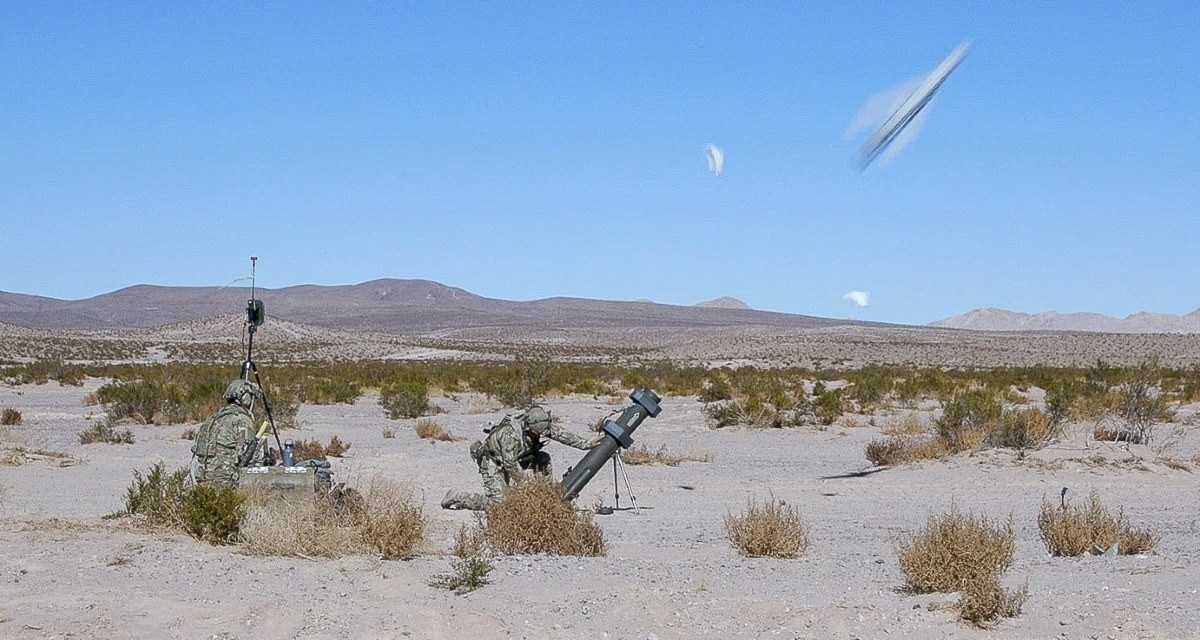
Image: A soldier assigned to the 1st Infantry Division launches a HERO-120 loitering munition system at the National Training Center, Fort Irwin, California, Jan 23, 2025. (Credit: Pfc. Christopher Bailey, US Army)