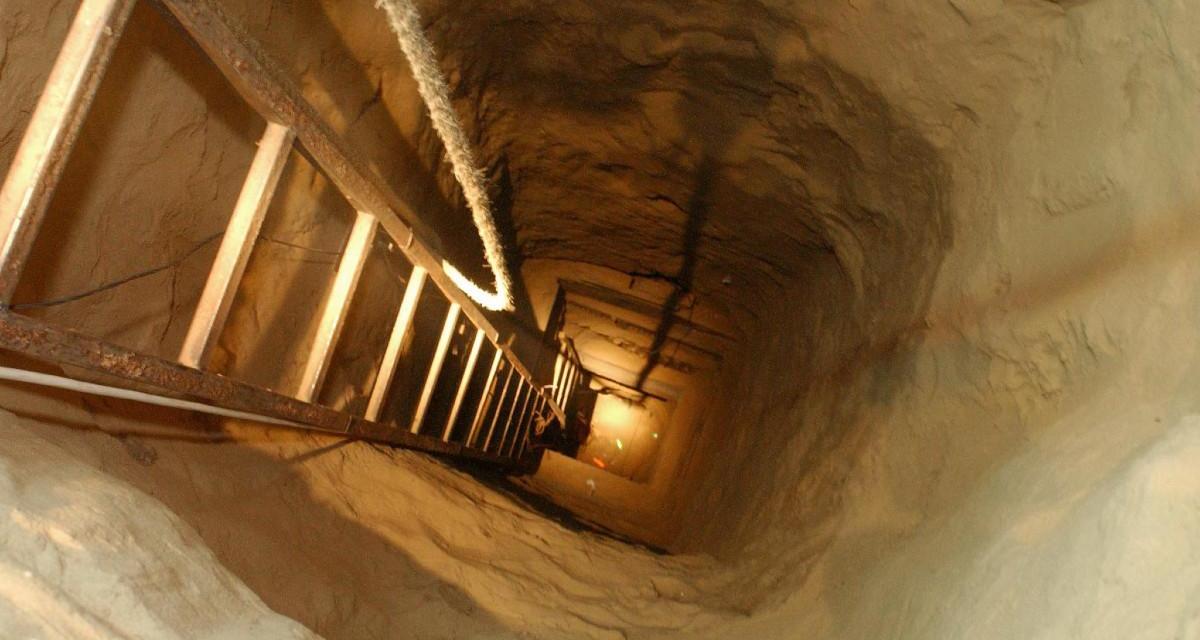
In Gaza’s Khan Yunis, like in Iran’s Fordow, the challenge lies, quite literally, beneath the surface.
The recent round of conflict between Iran and Israel highlights the increasing significance of the underground as a strategy and a trend among state and nonstate actors. Although Iran’s deeply buried facilities differ in depth and scale from Hamas’s tunnels, they share a core logic: the use of underground structures to conceal and protect key military assets. Subterranean spaces have been tactically useful across much of military history. On the modern battlefield, however, the underground is being leveraged for its strategic utility. As a result, the military challenges encountered by the United States in Iran increasingly resemble those experienced by Israel in Gaza.
Converging Towards a Strategic Use of the Subterranean
In less than a decade, Iran and its proxies have turned to tunnel warfare and the use of deeply buried facilities as an effective strategy in the face of ever-more penetrating sensors and intelligence collection tools wielded by Israel’s technology-empowered (and technology-dependent) military.
It is well known that Hamas benefits from Iran’s support in terms of weapons, technology, know-how, and training. What is less known, however, is that under Iranian influence, Hamas has shifted from a tactical use of tunnels to a more strategic one. If Hamas’s tunnels were dramatically different from Iran’s subterranean military bases a decade ago, their differences have eroded since then.
In the late 1990s and early 2000s, Hamas used tunnels primarily to smuggle weapons, move undetected, avoid Israel’s surveillance capabilities, and maintain the element of surprise when conducting attacks. The past decade has seen Hamas shift from these largely tactical uses of the underground to strategic use. Beyond storing munitions and moving rocket launchers to facilitate attacks, weapons are now manufactured in facilities deep underground. And Israeli hostages taken captive on October 7, 2023 are held there.
As a result of this shift, and under Iran’s influence, the strategies of Khan Yunis, Rafah, and Jabalya have converged with those of Fordow, Isfahan, and Natanz.
Hidden from the eye and most signals intelligence tools, Iran’s and Hamas’s underground assets are kept deep below the surface, frustrating intelligence collection and complicating efforts to assess the adversary’s strike and development capabilities. Even the most sophisticated technologies struggle to detect and destroy them.
In Iran, like in Gaza, the use of the underground complicates enemy targeting, preserves offensive and defensive capabilities, and ensures operational continuity under attack. Iran’s nuclear facility at Fordow, buried under more than eighty meters of rock and located in a mountainous area, is a prime example of strategic concealment. Gaza’s terrain does not offer the same opportunities, but Hamas has borrowed and adapted this approach to local conditions, utilizing civilian infrastructure rather than mountains as an additional concealment asset. Hamas shields data centers under UNRWA offices and top leaders under hospitals and schools.
Moreover, much like Iran’s efforts to decentralize its nuclear and missile programs, Hamas has broken down its weapons manufacturing process across numerous underground locations in the Gaza Strip, ensuring supply chain continuity even when parts of the program are destroyed. This, too, points to a more strategic, less tactical, use of the subterranean dimension of the battlefield on the part of Hamas.
Yet another similarity between Iran’s underground infrastructure and Hamas’s tunnels is the way it complicates adversary understanding of damage done to these spaces and the capabilities they protect. After-action assessments of operations aimed at underground targets are ambiguous. How much of Gaza’s tunnel network has been destroyed? Can bunker buster bombs truly destroy Fordow? How effective were the combined US and Israeli strikes against Iran’s various nuclear installations?
While accounts of the extent of the damage to Iran’s nuclear installations vary from “obliterated” to “severely damaged” to the nuclear program being “set back a few months,” in Gaza, the damage caused to Hamas’s hundreds of kilometers of tunnels may never be known. Battle damage assessments are notoriously difficult without physical inspection, and even then cannot be definitive.
In sum, the underground dimension successfully cloaks the Iranian and Gaza theaters with ambiguity, secrecy, and invisibility. Its use is decisively strategic, thickens the fog of war, projects power and uncertainty, and calls for unique countermeasures combining detection and monitoring with highly performant weapons.
Location, Location, Location
Still, the underground military infrastructure in Gaza and Iran differ in terms of location, dispersion, growth, and depth.
Iran’s deeply buried facilities, built into the thickness of mountain rock and quarries, are not located near large civilian concentrations. Significant firepower can be deployed to destroy them. The United States used the Massive Ordnance Air Blast (known as MOAB) on a tunnel complex in Afghanistan and Russia reportedly used flamethrowers in Syria against fortified targets. In Gaza, options to eliminate the tunnels are more limited due to their location in urban areas.
One important difference distinguishes deeply buried facilities like those of Iran’s nuclear program and tunnels used by Hamas: They have evolved very differently in the last two decades, displaying divergent patterns of diffusion and innovation at the hands of a state and those of a nonstate actor.
Tunnel networks—including Hamas’s—are relatively dynamic, shaped by evolving trends of diffusion and innovation by flexible nonstate actors willing to adapt their strategies to the needs of a specific battle or theater. Over the past decade, Hamas has transitioned from rudimentary smuggling routes and tunnels fortified with wood planks to an intricate and layered tunnel network, encompassing living quarters, command-and-control centers, and weapons manufacturing facilities. The system has grown deeper, longer, interconnected, and more technologically advanced, serving increasingly strategic functions, reinforced with cement, and equipped with ventilation, electrical, communications, and sewage systems.
Hamas has overcome all the traditional challenges encountered in underground warfare. It has drawn lessons learned from previous rounds of conflict with Israel (for example by adding blast doors and digging what are known as approaching tunnels that extend almost to the border but do not trigger cross-border sensors ); significantly improved its engineering capabilities; learned from the use of tunnels in other theaters (for example tunnel mining in Syria and Iraq); and innovated by combining underground warfare with naval warfare.
Whereas Hamas’s learning curve has been sharp, Iran’s use of the underground has been more stable. Iran, like the United States, Israel, China, Russia, and others, has made used of deeply buried facilities for decades. Iran has consistently embraced a strategy of subterranean concealment, burying its facilities to avoid detection, shield them from enemy attack, and maintain ambiguity about the scope of its missile and nuclear activity. The essential purpose and structure of Iran’s facilities have remained relatively constant over the past forty years of the Iranian regime’s rule.
In Gaza, the use of tunnels has shifted from tactical to strategic; in Iran, it has always been strategic in nature. Iran’s facilities have, however, increased in depth, scale, and reinforcement, making them more difficult to reach. Though Iran’s use of the underground stands out in its scale, the evolution of its facilities is more linear and less innovative than that of Hamas’s tunnels.
The starkest difference, perhaps, is that Hamas conceives of its tunnels as battlefields in their own right. It expects Israeli soldiers to enter its tunnels—to reach hostages, destroy military equipment, collect intelligence, and engage militants. Other than in the extraordinary event of an Israeli ground operation, Iran assumes its hardened sites are vulnerable only to airstrikes, not combat engagement.
From Guerrilla to Near-Peer Warfare
The appeal and versatility of the underground is undeniable. If the war in Ukraine was not evidence enough, the lesson is that subterranean strategies are emerging in all conflicts—especially in an era of satellites, reconnaissance drones, and communications interception. It can elevate a contest from guerrilla warfare to near-peer conflict.
The subterranean realm is not a marginal or auxiliary feature of contemporary warfare. It is central to how both state and nonstate actors conceive of strategic depth, survivability, and asymmetry. It can shield and preserve, yes, but it can also bring about a level of symmetry between adversaries possessing vastly unequal above-ground capabilities.
Regional actors perceive Iran’s facilities—hardened, deep, and housing its most strategic missile and unconventional assets—as a significant threat even in the absence of quality conventional capabilities. How survivable these facilities are, and whether they can continue to project Iran’s power, remains to be seen.
Fordow and Khan Yunis make clear that the challenge of the underground is here to stay. Operations Rising Lion and Midnight Hammer specifically bring into focus the convergence between the use of the underground by Hamas and Iran—and by states and nonstates more generally. I wrote elsewhere that “how a party makes use of the underground . . . depends on its capabilities.” While both Iran and Hamas exploit subterranean space, their capabilities and resources continue to shape how they do so. Hamas’s tunnels remain more rudimentary and vulnerable to detection, degradation, and collapse, even as they enable offensive operations on a more equal basis.
Though the divide that once existed between states’ deeply buried facilities and terror tunnels still exists, it has significantly narrowed as Iran’s use of the subterranean domain has inspired Hamas. In Gaza, as in Lebanon and Yemen, Iranian financial and logistical support enables the digging of more strategic, stronger, and deeper tunnels.
Dr. Daphné Richemond-Barak, author of Underground Warfare (Oxford University Press, 2018), is a professor at the Lauder School of Government, Diplomacy and Strategy at Reichman University. She serves as senior researcher at the International Institute for Counter-Terrorism and as an adjunct scholar at the Modern War Institute. She cofounded the International Working Group on Subterranean Warfare.
The views expressed are those of the author(s) and do not reflect the official position of the United States Military Academy, Department of the Army, or Department of Defense.
Image credit: Israel Defense Forces