The blood-soaked battlefields of Ukraine combine timeless operational principles— speed, surprise, and combined arms maneuver—with new technology, like drones, electronic warfare, and AI. Yet, more striking than the change in the character of war is the pace at which it is changing. In such a dynamic environment, one principle remains firm: Those who adapt, win.
There is no single step the US Army can take to meet this adaptation imperative. But one that it can begin to take now, and that would have a disproportionate impact, is to embed small, collaborative workshop cells— teams of industry engineers and military subject matter experts—within frontline units and training centers. These teams would enable the rapid iteration of low-cost unmanned systems (UxS) and counter–unmanned systems (cUxS), ensuring that battlefield feedback shapes design in real time. Inspired by Ukraine’s success in accelerating UxS innovation, this approach offers a practical path to make the Army more adaptable, agile, and lethal.
The Problem
The UxS and cUxS fight in Ukraine vividly illustrates the speed of battlefield evolution. What began as operational intelligence, surveillance, and reconnaissance assets, drones have become more agile—utilized for mass fires, precision strikes, mine-laying, cUxS, and more. The versality has been driven by the fielding of increasingly inexpensive commercial FPV and one-way attack drones. As both belligerents developed cUxS measures, like electronic warfare jamming and interceptor drones, UxS operators have had to rapidly modify their systems to remain operationally effective. Adaptations include larger frames, quieter engines, AI targeting systems, and fiber-optic control cables. This continuous adaptation reflects what Zachary Kallenborn and Marcel Plichta call the “counter-counterdrone” dynamic—a multilayered cycle of technological escalation that makes iteration speed decisive. According to a UK Ministry of Defence official, this grinding process produces new UxS capabilities every two to three weeks, highlighting the necessity of constant technological adaptation to maintain superiority. This tit-for-tat arms race is not only shaping the future of warfare—it is revealing that the US defense industrial base is too slow, expensive, and inflexible to cope with the rapid battlefield change. To remain competitive, procurement must move as fast as the fight and institutions must reward adaptation, not perfection.
The Department of Defense acquisitions process is notoriously slow and bureaucratic. Governed by over 3,500 pages of rules under the Federal Acquisition Regulation (FAR) and its defense supplement (DFARS), the system incentivizes caution and punishes risk. The result is predictable: failed projects, cost overruns, and institutional stagnation. On average, firms take twelve years to deliver the first version of a new weapon system. Even small upgrades lag, such as Lockheed’s two-year delay on the F-35 “technology refresh 3.” While the process crawls, warfighters are left waiting for the capabilities that they need to survive and win.
Over the last several years, DoD sought to address these deficiencies. The 2022 Adaptive Acquisitions Framework created faster acquisition mechanisms, like the urgent capability acquisition pathway and middle tier of acquisition policy, and empowered project managers with greater tailoring authority. Beyond these, there are non-FAR vehicles, such as Other Transaction Agreements (OTAs) and Commercial Solutions Openings (CSOs), that can be leveraged to rapidly onboard commercial technology. While the rules have changed, the culture has not. Consequences of project failure, deeply conservative norms, and bureaucratic oversight continue to disincentivize risk-taking and lock in slow delivery.
Meanwhile, Ukraine shows that speed alone is not enough. To stay relevant on the battlefield, systems must be designed for modularity to facilitate iteration and adaptations as tactics evolve. The best way to ensure battlefield relevance is not through extended lab development cycles—it is through continuous frontline testing and real-time feedback.
The Army Test and Evaluation Command (ATEC) oversees testing and evaluation for every piece of gear in a soldier’s environment. Conducting tests across numerous ranges, ATEC places weapons systems through a comprehensive testing regimen designed to stress the system in combat scenarios and extreme environments. While ATECs testing produces reliable weapons systems, two glaring questions remain: Can ATEC keep pace with the increasingly rapid cycle of iteration and change on the battlefield? And does current testing truly simulate the combat conditions, especially in electronic warfare–dense, GPS-denied environments like Ukraine? If not, new testing models may be needed—ones that are faster and embedded closer to the point of use.
The modern battlefield rewards not just innovation, but iteration. To do this effectively, the defense industry must understand battlefield conditions from the soldier’s perspective. In Ukraine, the urgency of the war and limited resources have forced military and civilian sectors to collaborate in real time. This distributed, bottom-up approach has become central to Ukraine’s success at maintaining technological parity with Russia. Nowhere is this more pronounced than in Ukraine’s UxS and cUxS development cycles.
Lessons Learned from Ukraine
Ukraine’s defense industrial base and procurement system differ sharply from those of the United States. In response to Russia’s invasion, Ukraine rapidly reformed its procurement approach, opening its centralized, state-owned military research and development model and procurement system to private firms and more procurement entities. For example, Ukraine authorized brigades to procure their tactical equipment via the Brave1 marketplace and contracted fifty-eight firms to construct drones. However, these policies create inefficiencies in resource allocation and standardization that the US Army may not be willing—or need—to accept. While not all the lessons from Ukraine are applicable to the American context, the United States can learn from the underlying mechanisms that Ukraine uses to facilitate bottom-up iteration.
Ukrainian industry and soldiers are directly collaborating on equipment modifications, creating real-time feedback loops that allow UxS platforms to be rapidly iterated. To enable this, defense firms, like Skeyton, regularly send key decision-makers and engineers to visit frontline troops. Furthermore, the Ministry of Defense integrated mobile drone workshops into their battalions where engineers maintain and upgrade systems according to battlefield needs. As tactics and equipment evolve, these workshops communicate to industry headquarters to inform future designs. As a Ukrainian special operations commander noted, no product “was 100% combat-ready” upon procurement, but was fine-tuned by engineers and soldiers sitting in the trenches together.
Although this model of iteration may prove too costly for high-end strategic weapons systems, it is ideally suited for attritable, modular systems like UxS. These tactical feedback loops are not only critical to meet short-term battlefield needs but also vital to drive innovation by deepening industry’s understanding of the realities of combat. Moreover, the consistent collaboration will enhance soldiers’ “techcraft” competencies—the creative use of technology on the battlefield. While the Army may hesitate to formalize communication between warfighters and industry, the accelerating pace of change on the battlefield makes tighter integration not just advantageous, but essential.
Recommendations
While often conflated, iteration and innovation are two complementary, yet distinct processes. Iteration is characterized by continuous refinement and adaptation of a product whereas innovation involves breakthroughs in design or method. For example, enlarging a drone airframe to carry a bigger warhead is iterative while integrating AI-targeting software for the same drone is innovative. These concepts are linked, with iteration frequently driving innovation over time. On the battlefield, iteration dominates—success depends on fast adaptations to evolving conditions—and effective iteration demands a consistent feedback loop between developers and end-users. As researchers found in a study of Japanese companies, empowering mid-level managers to synthesize frontline feedback with strategic goals drives both performance and innovation. Ukraine’s approach to UxS battlefield iteration offers valuable lessons for the US Army, particularly in how structured feedback loops can be embedded into training and testing environments.
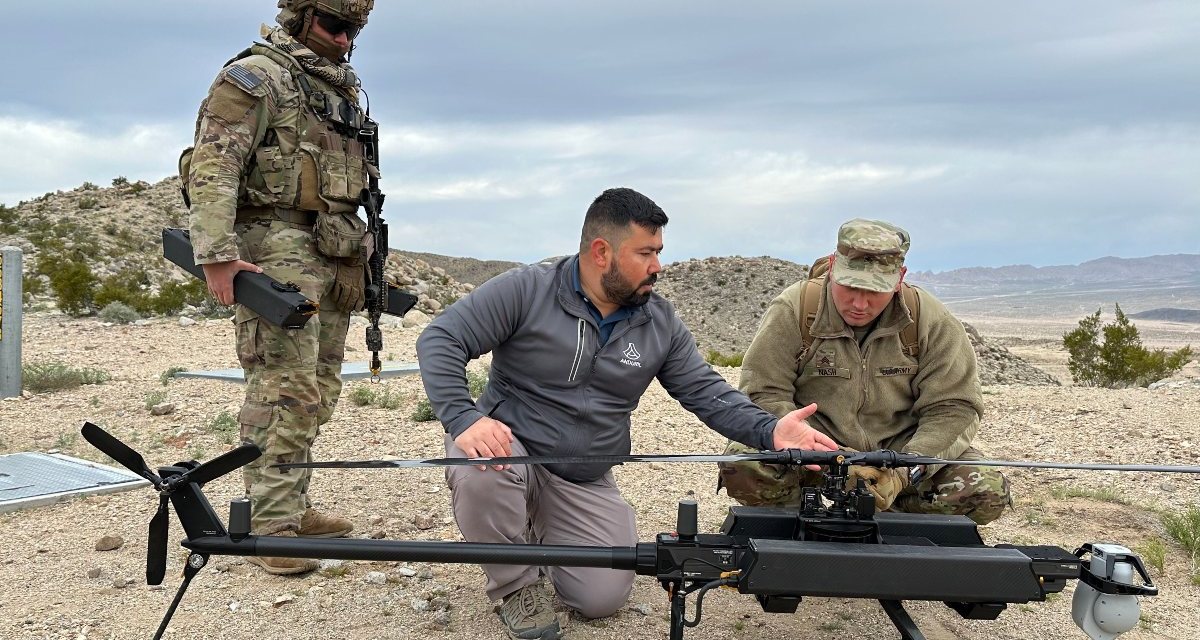
To operationalize these principles, the US Army should build on early steps to partner manufacturers with units under the transformation in contact initiative by launching a full pilot program to embed UxS and cUxS industry engineers within brigades rotating through US combat training centers and select forward units during peacetime exercises. The aim is to gather live-training data and operator feedback to inform real-time iteration of technologies. These feedback loops should be institutionalized, like Ukrainian drone workshops, by creating cells of industry engineers and uniformed subject matter experts to assess, refine, and codevelop modifications to address pressing battlefield problems. Although industry representatives often observe ATEC testing, embedding workshop cells into combat training center rotations would expose how new capabilities function under simulated combat and in the hands of the average soldier. Rather than replacing ATEC’s long-cycle testing, embedded workshops would supplement it by stress-testing adaptability—ensuring new technologies perform under evolving battlefield conditions before formal acquisitions. If successful, these adaptations should directly inform the future design of drones and counterdrone equipment on the production lines.
Despite efforts to create faster pathways, most DoD procurement remains captive to the waterfall-style requirements and oversight model embedded in the FAR process, where extended testing cycles and rigid milestone gates delay responsiveness. Frontline workshop cells offer a way to sidestep this bureaucracy. By treating frontline units and training centers as live test beds, the Army can shift more of the development cycle into the field, using tools like OTAs to refine systems before they ever enter a formal program of record. In this sense, embedded iteration is not just a testing reform—it is an acquisition reform. It allows for agile development outside traditional program constraints while preserving program manager oversight and feedback cycles aligned with tactical need. The result would be a hybrid model that integrates speed, accountability, and operational relevance.
While this proposal emphasizes accelerated testing and iteration, its viability hinges on navigating broader institutional and legal barriers. Embedding workshop cells into operational units will require adjustments in contracting authority, oversight mechanisms, and interorganizational coordination. Fortunately, DoD has experimented with alternative pathways, like the middle tier of acquisition pathway, and programs, like DIU’s Replicator initiative, that offer a foundation for piloting such agile models outside of the FAR process.
Implementation Plan
To operationalize these recommendations, an implementation plan must address six enabling dimensions: legal, cultural, operational, technical, economic, and institutional.
Legal Pathways
To enable embedded workshop cells and battlefield iteration, DoD should issue guidance to encourage the use of existing flexible contracting tools, like OTAs and the middle tier of acquisition pathway. These authorities allow program managers and organizations to structure contracts around broad capability goals, rather than rigid specifications. A March 2025 memo from the secretary of the defense took steps in this direction for software acquisition; the approach should also be extended to hardware. Instead of prescribing a perfect solution to a problem, acquisition specialists should incentivize adaptive development, enabling forward-deployed workshop cells to refine general technological solutions in close coordination with operators.
However, the issuing of broad requirements and relaxing oversight on development can create information asymmetries. To mitigate moral hazard, contracts should also include performance-based incentives, such as milestone payments, that are tied to iteration speed and effective upgrades in addition to cost savings. Additionally, there is a risk that iterated projects expand beyond the requirements scope. Therefore, program managers must retain the authority to assess and approve modifications throughout the development cycle.
Navigating Cultural Friction
Cultural friction may arise on two fronts: from defense primes used to long-cycle procurement and program managers focused on cost savings. Primes may view embedded iteration as a threat to centralized production, particularly as companies specializing in small, relatively cheap systems are increasingly likely to compete with primes on larger, comparatively big-ticket items. But even as nontraditional government contractors develop attritable UxS and cUxS technology for the Army—especially those, like Anduril, who are already engaged with DIU—the broader defense base will remain essential for exquisite platforms, such as Patriot missile batteries, ensuring primes still play a critical role. Internally, DoD leadership must champion this model to shift acquisition culture from risk aversion to adaptive experimentation.
Operational Integration
Successful battlefield integration requires doctrinal grounding. US Army Training and Transformation Command—the newly merged organization combining Training and Doctrine Command and Futures Command—should develop an innovation doctrine to codify the composition, mission, and operational roles of embedded workshop cells. This doctrine will help clarify command relationships and demonstrate how such teams can enhance unit lethality and responsiveness. By institutionalizing their function in doctrine, commanders are less likely to sideline these teams during exercises or operations.
Beyond doctrine, the initiative will need to be piloted in combat training center rotations and large-scale combat operations exercises to gradually rehearse integration. These venues simulate combat, offering industry engineers and unit leaders the opportunity to stress-test procedures, refine feedback loops, and validate the tactical value of iterative engineering. Findings from embedded workshop cells should be logged and transmitted to acquisition program managers and ATEC liaisons via a standardized reporting framework, enabling faster updates to requirements and formal testing protocols.
Ensuring Modularity
Uncontrolled iteration risks creating a fragmented equipment landscape. To preserve interoperability of systems and interchangeability of parts, the Army should enforce standardization around modular architecture. This would allow for diverse platforms to share common software stacks, payload interfaces, and hardware components, such as jammers or munition mounts. Centralized oversight—focused not on dictating design but on ensuring plug-and-play compatibility—will help avoid logistical friction in the field.
Affordability
There will be increased upfront costs associated with requiring sustained firm engagement for technological iteration. However, these costs can be offset through targeted reforms. Firstly, most DoD contracts for continued production are decided annually since multiyear procurement requires the notification and permission of Congress. Experts predict that multiyear contracts could provide projected savings of 5–15 percent to the government through economies of scale. DoD could redirect multiyear contract savings to offset costs for embedded research and development teams. Additionally, by lowering barriers for nontraditional entrants, competition may put downward pressure on prices, especially as strong demand signals for UxS and cUxS technology encourages firms to scale production. Lowering compliance costs for firms producing low-cost, attritable systems may also reduce overall prices. Finally, the expansion of these rapid iteration pathways could lead to mission creep. To avoid massive budgetary expansion, the regulations should be limited to low-cost UxS and cUxS technology.
Scalability Path
To ensure scalable implementation, embedded workshop cells should first be piloted with one brigade per combat training center. Lessons learned from these trials can inform doctrine and structure before a broader rollout. Eventually, the model could expand to divisions and multinational partners in NATO, particularly those operating UxS platforms in electronic warfare–contested environments.

The introduction of modern commercial technologies like AI and UxS has dramatically reshaped the character of war, as evidenced by the conflict in Ukraine. Three years into the war, there is still no equilibrium; in fact, the pace at which technology and tactics are iterating is measured in months and even weeks. Ukraine has managed to maintain and even drive this rapid tempo of change by tightly coupling its warfighters with its defense industrial base. The United States must absorb these lessons to modernize and equip its force, specifically the integration of industry engineers and soldiers on the front line. To succeed, the policy needs to be designed to mitigate legal, cultural, operational, technical, economic, and institutional risks.
The imperative to prepare the US defense industrial base for rapid iteration and acquisition is made more urgent by the unraveling of the liberal international order. Revisionist powers, like China, Russia, Iran, and North Korea, are actively challenging US hegemony. After decades of relative peace, armed conflict threatens to define the mid-twenty-first century, as conflicts in Ukraine, Gaza, Sudan, and elsewhere are matched by potential flashpoints like Taiwan. While future wars will differ in terrain and tempo, the principles of modularity, iteration, and operator-driven adaptation will remain constant. If the United States hopes to defend its values and deter conflict, it must strengthen and modernize its industrial base to cope with the changing crucible of combat.
First Lieutenant Kai L. Youngren branched infantry from the United States Military Academy in 2023. Pursuing a Rhodes Scholarship, he completed a master’s in public policy and a master’s in global governance and diplomacy at the University of Oxford. The insights gathered for this article came from his work with SAG-U J37 during the summer of 2025.
The views expressed are those of the author and do not reflect the official position of the United States Military Academy, Department of the Army, or Department of Defense.
Image credit: Chaplain (Col.) Ken Harris, US Army