The command tent of the 25th Infantry Division’s forward headquarters, buried beneath the dense, humid jungle canopy of a remote Pacific island, was a quiet hum of glowing blue screens and whispered coordination. For seventy-two hours, the headquarters element had maintained absolute radio silence under strict emissions control guidance.
A passive naval surveillance feed, connected to the 25th ID’s AI-enabled mission command suite, indicated a lone guided-missile destroyer drifting lazily east of a crucial straight. Its radar and sonar systems were active, its propulsion appeared compromised, and unencrypted radio distress signals painted a picture of a crew panicking after an apparent engine-room fire.
“It’s a golden opportunity,” the division operations officer whispered, pointing at the coordinate plot. “If we strike it now, we punch a hole through their blockade and open a transit corridor.”
The commander hesitated, then nodded. “Do it. Send the targeting data to corps and the joint targeting center. Make it fast.”
To coordinate the synchronized strike, the 25th ID headquarters broke its three-day silence. A highly directional, high-bandwidth, five-second microwave burst was sent to a nearby relay satellite.
Hundreds of miles away, on the freshly paved runway of an austere forward contingency location, two F-35A aircraft sat, their pilots on standby. Massive rubberized fuel bladders hummed as tactical fuelers pumped volatile propellant into the tanks of the two aircraft. Upon receiving the targeting coordinates, the ground crew rapidly cycle through the pre-takeoff routines they have rehearsed countless times and the pilots briefly flick on their APG-85 radar systems and prepare to program the guidance systems of their Long-Range Anti-Ship Missiles.
In the Philippine Sea, the Los Angeles-class fast-attack submarine USS Charlotte, loitering silently at the surface, received the burst transmission. Eager to verify the target’s acoustic signature before launching, the sub transmitted a brief, ultra-high-frequency handshake to confirm target acquisition.
In less than ninety seconds, the trap snapped shut.
The destroyer was not in fact crippled. It was a hollowed-out hull towed by an unmanned surface vessel. It was rigged with low-cost electromagnetic repeaters playing pre-recorded radio loops, commercial heat generators mimicking a massive gas turbine engine, and radar-reflecting arrays that made the small hulk look like a massive combatant.
Orbiting high above, passive signals intelligence satellites had been waiting for exactly this moment. The brief microwave burst from the 25th ID headquarters, the transient sweep of the F-35 radar, and the Charlotte’s satellite handshake were instantly registered, geolocated, and cross-referenced by a theater-level adversary artificial intelligence network. The coordinates were immediately fed to People’s Liberation Army Rocket Force batteries on the mainland.
“Sir, we have multiple hypersonic tracks detected!” the radar operator at the 25th ID headquarters screamed. Impact in—”
The warning was cut short. A hypersonic glide vehicle carrying a high-explosive warhead plunged through the jungle canopy at Mach 10, vaporizing the command post in a blinding, concussive flash.
Simultaneously, at the remote forward contingency location, an intermediate-range ballistic missile detonated directly above the runway. The blast tore through the aircraft, igniting the rubberized fuelers in a towering column of black smoke.
Miles out at sea, the USS Charlotte scrambled to dive, but her brief transmission had already unmasked her. A swarm of air-dropped active sonar buoys rained into the water around her, followed immediately by the high-speed screws of two rocket-assisted acoustic torpedoes.
The US joint force had not seized an opportunity; it had merely unmasked critical assets as the victims of deception.

The modern battlefield is often described as a hyper-transparent environment. Between the proliferation of commercial satellite imagery, pervasive unmanned aircraft systems, ubiquitous electronic warfare sensors, and open-source intelligence, a dangerous assumption has taken root among some military professionals: The era of hiding is over. The logical, yet flawed, extension of this assumption is that military deception, or MILDEC, is an anachronism and a relic of World War II’s infamous Operation Fortitude.
This perspective is fundamentally wrong. In an era where hiding the presence of forces is increasingly difficult, hiding the purpose, capabilities, and intent of those forces is not just possible, it is more critical than ever before. To survive and win in a contested multidomain environment, the joint force must recognize that MILDEC is an indispensable requirement across all phases of the operation. Furthermore, the responsibility for deception can no longer reside solely at operational or strategic levels. Tactical leaders must master the art of deception to preserve their formations and exploit windows of opportunity.
Historically, MILDEC has often been treated as specialized tool reserved for the opening salvos of a campaign. In modern war, this approach to deception is a recipe for defeat. Against a near-peer adversary equipped with sophisticated intelligence, surveillance, and reconnaissance complexes, deception must be woven into the fabric of every operational phase, from shaping to stabilization.
During both Phase 0 (Shape) and Phase I (Deter)—together comprising the gray zone of competition—MILDEC is a critical tool for managing escalation and protecting friendly centers of gravity. By projecting false signatures or masking the true readiness, movements, and strength of specific units, commanders can complicate an adversary’s calculus. Deception during these phases prevents the enemy from establishing an accurate baseline of friendly patterns of life, thereby creating a buffer of ambiguity that can deter preemptive action.
With the initiation of armed conflict, the US joint force enters Phase II (Seize Initiative) and Phase III (Dominate). During these phases, the sheer volume of lethal fires means that to be targeted is to be destroyed. Here, MILDEC serves a vital protective and offensive function. It forces enemy commanders to waste finite, high-value munitions on phantom targets, diluting their combat power. Offensively, deception creates temporary, localized windows of multidomain superiority. By feinting in one domain (e.g., launching a massive, localized electronic attack to simulate a main effort), commanders can blind or distract the enemy long enough to achieve a decisive breakthrough in another.
Even as large-scale combat subsides and the joint force enters Phase IV (Stabilize) and Phase V (Enable Civil Authority), deception remains necessary to protect consolidating forces from asymmetric threats, insurgencies, or residual state-sponsored proxies. Masking logistics nodes, varying patrol routes, and deceiving the adversary about the location of key command nodes prevents remnants of enemy forces from achieving disruptive tactical victories.
Recommendations for Tactical Leaders
While theater-level deception requires extensive resources and planning, the fluid and lethal nature of large-scale combat operations demands that MILDEC be executed dynamically at the tactical edge. Brigade, battalion, and company commanders must be empowered and trained to employ deception as a routine part of their tactical repertoire. Four recommendations will enhance their ability to do so.
1. Integrate Deception into the Military Decision-Making Process
Deception cannot be the sole purview of a unit’s information operations officer; it must be driven by the commander and the operations officer. During course-of-action development, tactical staffs must systematically analyze what they want the enemy commander to believe, what sensors the enemy will use to verify that belief, and how to feed those sensors a logical, consistent narrative. Every tactical maneuver should have an accompanying deception narrative, even if it is a simple localized feint.
Historical case study: The value of embedding deception into the core planning cycle is illustrated by Operation Bertram during the Second Battle of El Alamein in 1942. General Bernard Montgomery’s staff did not treat deception as a side project, but integrated it completely into maneuver planning. By constructing a dummy water pipeline to simulate a slow buildup in the south while concealing real tanks under canopy covers that made them look like standard supply trucks, the British completely deceived Field Marshal Erwin Rommel regarding the timing and location of the main attack.
2. Master Electromagnetic Signature Management
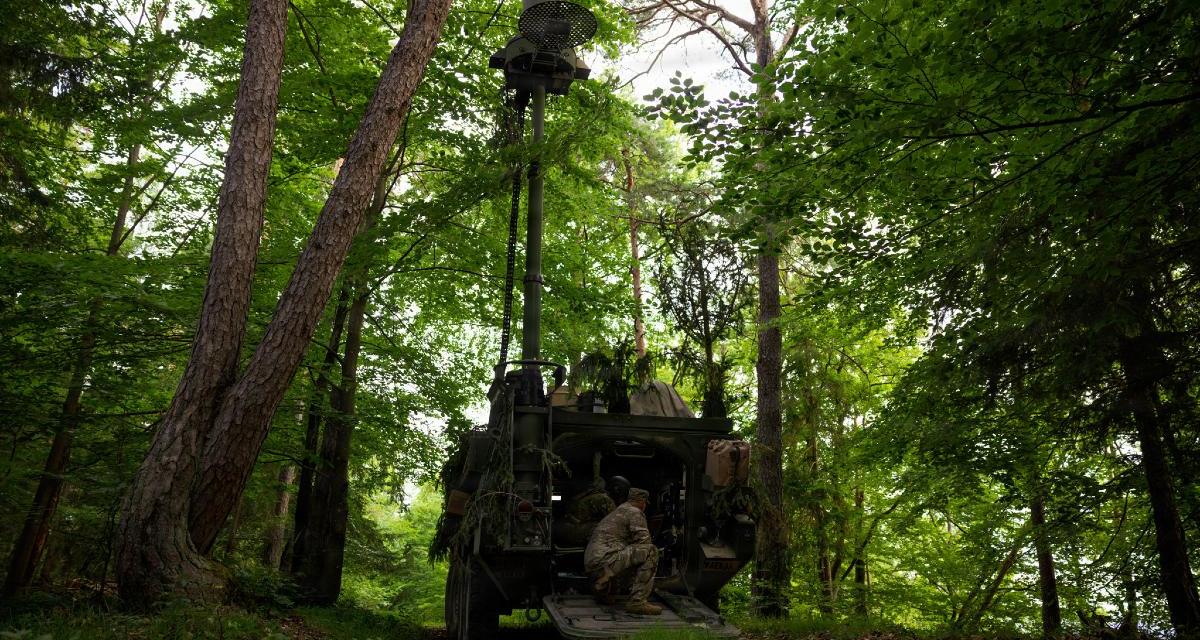
Tactical leaders must understand that in large-scale combat operations, their electronic signatures are often more visible than their physical ones. Leaders must train their formations in strict emissions control. More importantly, they must learn to use emissions aggressively. Decoy emitters, rapidly deployable antenna masts, and the intentional transmission of standard operating procedures from false locations can effectively draw enemy fires away from actual command posts and maneuver elements.
Historical case study: During World War II, the US Army’s 23rd Headquarters Special Troops—the so-called Ghost Army—pioneered tactical signature spoofing. Using powerful, multidirectional speakers mounted on half-tracks, they projected the recorded sounds of armored and infantry movements up to fifteen miles away. This audio deception was paired with a sophisticated radio counterintelligence team that created false radio nets, mimicking the traffic, slang, and transmission patterns of real divisions. By manipulating the electronic and acoustic signatures of the battlefield, this tactical unit repeatedly drew German attention and artillery fire away from actual Allied vulnerabilities.
3. Employ Cheap, Multispectral Decoys
We must move past the reliance on expensive, exquisite deception tools. Tactical units should be equipped with—and trained to improvise—cheap, multispectral decoys. Radar reflectors, thermal blankets rigged to heat sources, and 3D-printed visual mock-ups can be rapidly deployed by a small element to simulate a much larger force. Tactical leaders should foster a culture of innovation where soldiers are encouraged to find creative ways to spoof enemy drones and sensors using materials at hand.
Historical case study: The power of low-cost decoys against advanced targeting systems was demonstrated during the 1999 Kosovo Campaign. Faced with the overwhelming aerial reconnaissance and precision-guided munitions of NATO, Serbian forces constructed highly effective, low-tech decoys out of wood, canvas, plastic sheeting, and old household heaters. They simulated dummy MiG-29 fighters and mock bridge structures. Crucially, they burned old tires or used small fuel cans to mimic the thermal signatures of operational vehicles. This simple, multispectral spoofing program successfully tricked advanced Western aircraft into wasting hundreds of high-value precision munitions on worthless decoys.
4. Execute Dynamic Repositioning and Dispersal
Deception relies on mobility. If a unit remains static, the enemy will eventually penetrate the deception through continuous observation. Tactical leaders must embrace constant, erratic movement. By frequently shifting command posts, varying the locations of sustainment nodes, and maintaining wide dispersal, leaders make it impossible for the enemy to separate the signal from the noise.
Historical case study: The mastery of dynamic tactical movement was a hallmark of Field Marshal Erwin Rommel’s maneuvers in North Africa. Recognizing that dust clouds were the primary visual indicator of movement in the desert, Rommel frequently ordered small detachments of light vehicles to drag brushwood, or mounted aircraft propellers onto trucks, to kick up massive clouds of dust in unoccupied sectors. To British reconnaissance officers, these artificial dust clouds simulated the advance of entire armored columns. Meanwhile, Rommel’s actual Panzer units moved silently and dispersed elsewhere to launch flanking attacks. The rapid, deceptive shifting of his forces kept his opponents perpetually off-balance and guessing his true strength.
The character of war is changing, driven by hyperconnectivity and advanced sensors. However, the nature of war remains fundamentally human—a clash of wills where uncertainty, fear, and friction reign supreme. As long as warfare is directed by human cognition, even with increasing involvement of machine assistance, deception will remain an asymmetric advantage.
In the future fight, we cannot rely on the veil of the unknown; we must actively construct a veil of the untrue. By embracing military deception across all phases of the operation, mastering the nuances of the contested multidomain environment, and empowering tactical leaders to deceive at the edge of the fight, the joint force can shatter the adversary’s illusion of certainty. In the lethal transparency of the modern battlefield, those who cannot deceive will not survive.
Major Charlie Phelps is a Special Forces officer and currently serves as operations officer in 10th Special Forces Group (Airborne).
The views expressed are those of the author and do not reflect the official position of the United States Military Academy, Department of the Army, or Department of Defense.
Image credit: Cpl. Leonard Beckett, US Army