On the approaches to Pokrovsk in late 2025, the battlefield looked nothing like the doctrinal diagrams in most command-post exercises. Reuters described stretches of eastern Ukraine as a “drone-infested” twenty-kilometer kill zone, where small Russian assault groups creep forward under constant observation from Ukrainian quadcopters and first-person-view strike drones, and any movement risks immediate detection and fire. Inside Pokrovsk itself, Ukrainian defenders told reporters that drones alone could not hold the city: They could see Russian forces infiltrating block by block, but still lacked the infantry and the command bandwidth to turn that visibility into coherent, timely action.
That is the world US Army company commanders are preparing for. At the same time, Army formations, like the 4th Infantry Division through its Ivy Sting exercises, are fielding the Army’s Next Generation Command and Control (NGC2) prototype—a unified data and software ecosystem that ties together fires, intelligence, movement and maneuver, logistics, and airspace management. NGC2 and related efforts like TITAN, data fabrics, and division-wide kill webs are doing exactly what they are supposed to do at the enterprise level: collapsing sensor-to-shooter timelines and giving commanders access to more data than ever before.
But there is a doctrinal problem hiding in plain sight. The Army’s principal doctrinal manual for command and control (C2), Army Doctrine Publication (ADP) 6-0, Mission Command: Command and Control of Army Forces, defines mission command as “the Army’s approach to command and control that empowers subordinate decision making and decentralized execution appropriate to the situation.” Mission command is rooted in the recognition that no single commander can make all important decisions in modern combat. Our emerging C2 architecture risks violating that logic. We have optimized the observe and act ends of the kill chain, but we are offloading the hardest parts—orient and decide—onto the single most constrained node in the formation: the company commander.
The Logistics of Data vs. Mission Command
ADP 6-0 is explicit about what mission command is for. It acknowledges that war is chaotic, that no plan survives contact, and that “no single person is ever sufficiently informed to make every important decision, nor can a single person keep up with the number of decisions that need to be made during combat.” The doctrinal answer is delegation: clear commander’s intent, mission orders, and disciplined initiative at lower echelons.
At the same time, ADP 6-0 draws a sharp distinction between information and understanding. Operations generate large amounts of information, but “while much of this information may be important to the staff or the conduct of operations, it may not be relevant information for the commander.” The publication warns that commanders must act with their staffs to reduce inaccurate, late, or unreliable reporting.
Our current modernization path quietly inverts those principles. NGC2 is designed as a “fundamentally different approach to reduce stove piped warfighting systems and provide commanders with the integrated data they need to make more, better and faster decisions than the enemy.” It integrates applications, infrastructure, data, and transport into a single operational architecture. In other words, the Army is getting exactly what it asked for: a unified kill web that can move huge volumes of data anywhere in the formation very quickly.
The technical descriptions of these efforts do address the issue of cognitive burden, but they assume the presence of a sufficient personnel infrastructure. As an article on data-enabled decision-making produced by officers from the Army’s Mission Command Center of Excellence explains, humans mitigate data bias “especially as part of a staff.” Army leaders overseeing Ivy Sting describe NGC2 as a division-level prototype and a unified operational architecture intended to integrate fires, intelligence, maneuver, sustainment, and airspace management at scale. The requirements exist, but they are written for division, not for the tactical edge. A common operational picture is treated as a shared, often identical, visual layer for multiple echelons, not a tailored view filtered to what is relevant for each commander. Networks and apps are measured by latency and bandwidth, not by the number of discrete decisions they push onto a company commander per hour.
Where the Network Hits the Company Commander
At brigade and division, the kill web is supported by a staff. NGC2’s Ivy Sting demonstration focused on division artillery: a brigade-sized element with fire direction centers, targeting officers, and intelligence and operations sections to process data. The new Artillery Execution Suite was delivered on a Sunday night, artillery soldiers trained on it Monday, and they used it live that same afternoon. At that echelon, more data and more connectivity are harnessed by a team whose sole job is to turn information into understanding.
Now translate that architecture down to a rifle company. In a Ukraine-style kill zone, the company commander’s common operational picture can easily include: local quadcopter and first-person-view drone feeds from organic or attached small drone teams; higher-echelon intelligence, surveillance, and reconnaissance such as satellite imagery, electronic warfare reports, and friendly and enemy tracks shared across battalion and brigade; fires and airspace management tools, chat rooms for adjacent units, and mission planning overlays; and digital orders and fragmentary instructions from battalion and brigade as those headquarters see new opportunities or threats on their own displays.
On paper, this is shared understanding. In practice, it is shared data. The brigade commander may be looking at essentially the same map and video that the company commander sees, but with a staff of 150 people and a fires cell to help interpret it. The brigade staff watches those feeds on large displays in a protected tactical operations center; the company commander is often hunched over a single tablet or laptop in a cramped basement or fighting position that is shaking under artillery fire. The company commander has an executive officer who is probably running logistics, a first sergeant who is moving casualties, and a radio-telephone operator.
ADP 6-0 is clear about the appropriate level of control. It praises decentralized, flexible control that relies on subordinates to coordinate among themselves and warns that “the higher the echelon and the larger a formation, the longer it takes to complete assigned tasks.” It uses the French doctrine of “methodical battle” in 1940 as a cautionary tale: a system that emphasized synchronization and central control at every echelon, and that proved ill-suited for situations requiring rapid decision making and initiative.
Our digital architectures risk recreating methodical battle in software. When a brigade staff can watch company-level drones in real time and type directly into a company commander’s or even a platoon leader’s device, the temptation to help reaches down seven kilometers and two echelons. High-fidelity, real-time data creates a moral hazard: It makes senior leaders feel as if they are physically present at the squad fight and invites them to act as general squad leaders, issuing tactical instructions at echelons where doctrine says they should speak in intent, not in cursor movements.
Ukraine’s defenders in Pokrovsk are already living this reality. They have drones, data, and apps; they can see much of what the Russians are doing; yet they still describe struggling to maintain coherent defensive schemes under constant pressure and infiltration. Their experience underscores a simple point: A transparent battlefield does not automatically produce sound decisions at the company level. Without disciplined information management and doctrinally grounded C2, visibility becomes another source of friction.
Recentering Mission Command in C2 Modernization
The answer is not to slow down kill chains or roll back digital C2. It is to treat ADP 6-0 as a design specification, not as inspirational wall art.
First, design for commander’s intent, not just the common operational picture. ADP 6-0 devotes significant attention to intent: a succinct statement of purpose, key tasks, and end state that subordinates can remember and act on without further guidance. It emphasizes that “soldiers two echelons down should easily remember and clearly understand the commander’s intent.” Yet most digital tools present information independent of that hierarchy. C2 systems should be built so that information is triaged by its relationship to current intent and commander’s critical information requirements, rather than by source or sensor.
Second, treat the cognitive load of the company commander as a genuine constraint. ADP 6-0 explicitly acknowledges that information will be incomplete and imprecise, that time is limited, and that effective commanders act with their staffs to reduce information that is inaccurate, late, or not relevant. Modernization efforts should be evaluated not just on how fast they move data, but on how many separate systems, channels, and decisions a company commander must manage while in contact. A system that cuts sensor-to-shooter time from ten minutes to thirty seconds, but forces the company commander to monitor six parallel chat streams and three video feeds to avoid fratricide or missed opportunities, may have made the formation tactically faster yet operationally slower.
Third, enforce levels of control and decentralized execution in both doctrine and software. ADP 6-0 describes mission command as inherently less vulnerable to disrupted communications precisely because it relies on mission orders and subordinate initiative rather than continuous top-down direction. If digital tools make it trivially easy for higher headquarters to issue detailed instructions directly to the company or platoon level based on what they see on a screen, then the software is undermining doctrine. Interfaces and permissions should reflect the levels of control the Army actually wants to enforce.
AI and automation have an important role here, but not as substitutes for commanders. NGC2 concepts describe using AI and machine learning “to help organize and process the vast amount of data available on the battlefield to facilitate more informed decisions” and to “reduce [soldiers’] cognitive load.” That is necessary, but not sufficient. For mission command, the central requirement is that information be evaluated against commander’s intent, commander’s critical information requirements, and the current running estimate—not just against targetability. Used that way, AI should function as a mission-command assistant: filtering, clustering, and summarizing information in terms of what helps the company commander achieve the purpose of the operation and accept or mitigate risk.
In practice, that could look like a system that suppresses a live drone feed from an adjacent sector because nothing in that feed bears on the company’s current key tasks or commander’s critical information requirements, only surfacing it when a trigger condition is met—for example, when enemy heavy armor or a failed adjacent attack creates a new risk to the company’s mission. Instead of a constant firehose of video, the commander sees a small, intent-linked alert and a recommended action tied to the existing scheme of maneuver. AI will not replace mission command, but it may be one of the few scalable ways to keep mission command viable at company level inside a kill web.
Avoiding Data Defeat
The US Army’s comparative advantage is not that it will have more drones or a denser network than its adversaries. Ukraine’s experience shows that commercial drones and improvisation are available to any moderately capable opponent. Our advantage is supposed to be mission command: technically and tactically competent subordinates, trusted to exercise disciplined initiative within a clear commander’s intent, across dispersed formations in a contested environment.
If we design kill webs that treat the company commander as just another sensor-shooter node—and measure success primarily by latency and throughput—we will hollow out that advantage. The next war will not be lost because we lacked data, but because we flooded the company commanders who could act on it with more information than they could possibly turn into understanding.
C2 modernization should begin from a different question set: What does ADP 6-0 demand of a company commander in a drone-saturated, information-rich battlefield? What information is genuinely relevant to that role at that moment? How does a division-level common operational picture need to be filtered so that a captain with an executive officer and a first sergeant, not a staff of 150, can still practice mission command under fire? At a minimum, we should treat company-commander cognitive load as a key performance parameter for C2 and kill-web systems, on par with latency and availability.
Until those questions are treated as system requirements across all echelons, we will keep building exquisite logistics for data and then dumping the bill—cognitively and morally—on the company commander at the edge of the fight.
Major C. Wayne Culbreth is a civil affairs officer with the 353rd Civil Affairs Command and a 1993 graduate of West Point. He previously served as an armor officer, including cavalry troop command with 3/278th Armored Cavalry Regiment in Diyala Province, Iraq. He is currently developing AI decision-support tools for tactical commanders.
The views expressed are those of the author and do not reflect the official position of the United States Military Academy, Department of the Army, or Department of Defense.
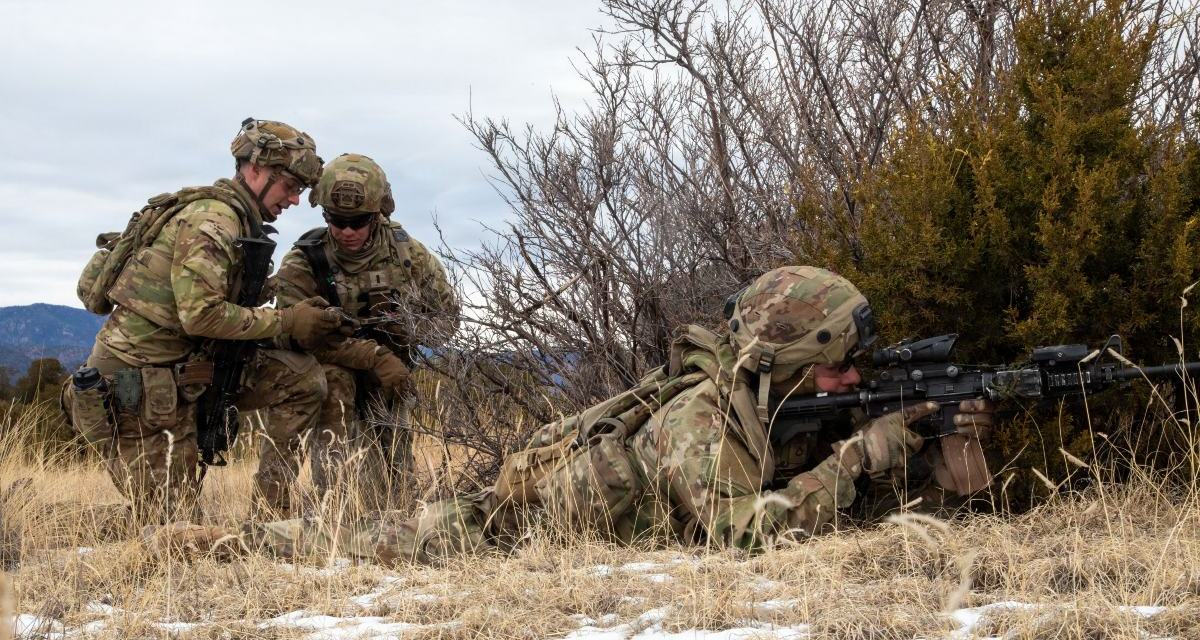
Image: 4th infantry Division soldiers participate in Ivy Sting 4, part of the Army’s effort to integrate NGC2 into its formations (credit: Pfc. Jacob Cruz, US Army)