The rapid expansion of AI-driven data centers is driving permanent changes to the geographical layout of critical infrastructure that serves as the backdrop of global competition and future wars. This includes the construction of digital megacampuses, which will become strategic high value targets, and the proliferation of new data center hubs, which could drive changes to defense planning scenarios, particularly in the Indo-Pacific.
In the wake of the United States’ and Israel’s February attack on Iran’s military and senior leaders, Iran retaliated with missile and drone strikes against US military bases and civilian infrastructure across the Middle East. While much of the world’s attention has focused on the disruption of regional energy production, the attacks also struck three Amazon Web Services (AWS) data centers in the UAE and Bahrain, disrupting digital services to banks, payment platforms, and other entities. A month later an Oracle data center in Dubai was damaged in another attack. Iran then declared eighteen major technology companies as legitimate military targets. Included in this list were many of the world’s largest data center owners, including AWS, Microsoft, Meta, Google, and Oracle.
For Iran, targeting data centers served multiple strategic ends within a single effort. Hitting those centers allowed it to punish economically vital US companies, as well as the regional organizations that host data on those companies’ servers, and served as an unambiguous threat that further attacks on digital infrastructure were likely if Iran’s demands were not met. But these strikes indicate that a broader strategic shift is already underway.
For adversaries looking to impose costs, signal resolve, or disrupt military operations, data centers make attractive targets. They are large, fixed sites that are costly to build. They are also dependent on local power, water, and data transmission infrastructure, which can also be targeted. Attacking them not only harms the data center operator, but all the organizations that rely upon it for data storage, networking, or AI integration. This has the potential to compound effects, as multiple entities experience degradation or loss from a single action.
Data Centers and the AI Catalyst
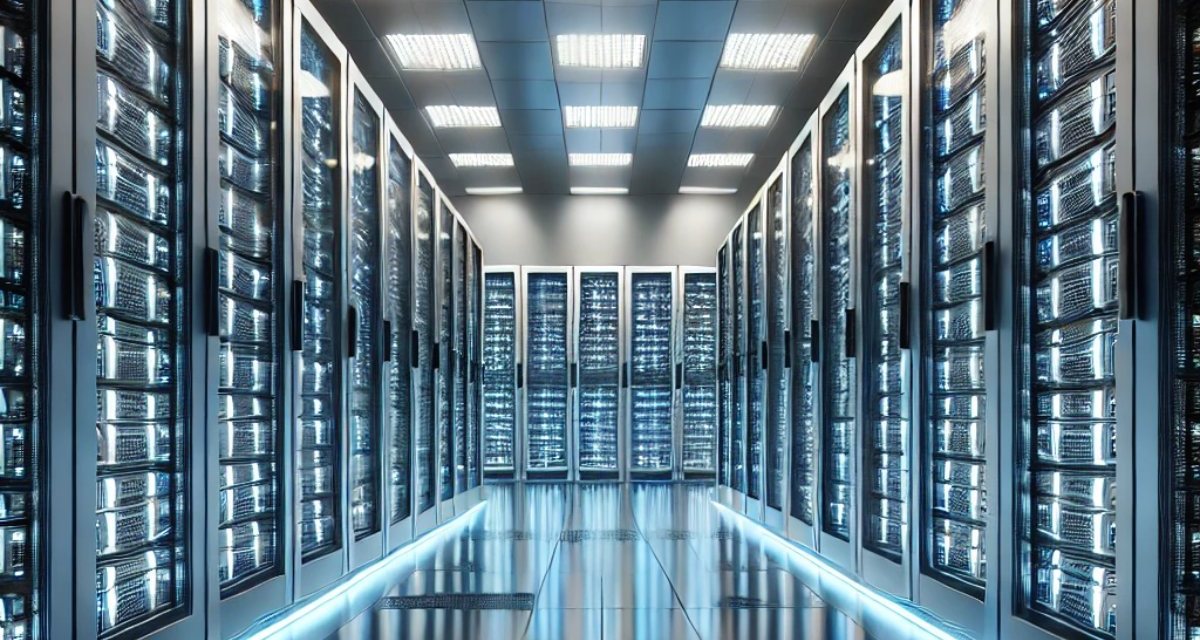
Data centers are specialized facilities designed to house data servers and networking equipment used by businesses and governments to manage their digital operations. While they appear as nondescript warehouses from the outside, their interiors contain vast hallways of server racks, requiring specialized power and cooling equipment designed to maintain optimal conditions for the digital machinery housed inside. They draw power from the local energy grid but typically contain industrial-scale backup generators and uninterrupted power supplies to maintain continuous energy flows to the equipment during blackouts or other power interruptions. Data centers are essential to the modern technology and economic landscape, providing data backups for enterprises, enabling hyperscalers to offer cloud services, and supporting AI computing. There are now more than ten thousand data centers operating worldwide, a number that is likely to grow significantly in the coming years.
Data centers that support AI models have substantially different requirements and architecture than those used as backups or traditional cloud computing services. Non-AI data centers are designed to run servers comprised of central processing units, or CPUs, and a traditional non-hyperscale data center could require upwards of twenty megawatts of power to run its operations, the equivalent of fifteen to twenty thousand US homes. Cloud data centers, which are run by hyperscalers like AWS, Google and others, are larger but follow the same principles.
AI data centers, by contrast, require densely packed clusters of graphical processing units, or GPUs, built by companies like Nvidia. Training AI models can use clusters of over 100,000 GPUs, requiring 150,000 megawatts. Soon, a single AI training run could require up to a gigawatt of power, enough to power a city. Once a model is built, it can be deployed onto computing infrastructure used to support user queries, which requires about half the power of a training facility.
To enable these operations many existing conventional data centers are being overhauled to support a mix of CPU, GPUs and specially designed AI processing chips called NPUs (neural processing units). Each rack can require over one hundred kilowatts of power (compared to five to fifteen kilowatts per CPU rack) and cooling these systems requires even more power generation. Some larger data centers consume up to 5 million gallons of water a day. New methods of direct-to-chip cooling will lower these thresholds, but also require significant facility overhauls, which may not be practical for many existing facilities.
All these factors are driving significant changes on how and where data centers, power plants and data transmission lines are being built. In the United States, 67 percent of new facilities are being planned in rural areas where energy is cheaper. Globally, data center power consumption is expected to grow by 100 gigawatts by 2030, effectively doubling the amount of computing power available today.
A New Class of Strategic Targets
Data centers that support both AI model training as well as inference are becoming the engines of modern digital economies. This is leading to the development of specially designed digital megacampuses, with dedicated power and transmission lines that will become national-level strategic assets in need of defense.
Globally, major tech firms are betting that multibillion-dollar investments in data centers will fuel decades of growth. This includes the development of digital megacampuses such as an eleven-gigawatt site in Texas, a thirteen-thousand-acre 7.2-gigawatt facility in Montana, and a $16 billion site in Michigan. A proposed forty-thousand-acre campus in rural Utah would have its own dedicated natural gas pipeline to power a nine-gigawatt power station built specifically for AI data center operations. These megacampuses concentrate enormous economic and military value into a handful of fixed sites.
In Europe, where high costs and existing infrastructure places strict limitations on new construction, cooler Nordic countries have become key areas of growth. Sweden is building a $10 billion data center outside Stockholm. Norway, with its abundant hydropower, is constructing multiple new facilities, including an 840-megawatt Google campus near Skein. Finland is also experiencing substantial data center growth, with new construction spreading beyond Helsinki to northern areas such as Lapland.
In the Middle East, security concerns are real but have not scared off fully investors attracted by cheap energy, with investment flowing to Saudi Arabia and Oman, whose governments are committing to multiple-gigawatt data center builds.
For larger countries like the United States and China, most data centers and supporting infrastructure will reside within their national borders, creating a degree of protection from all but the most aggressive strategic attacks. However, if a significant percentage of economic activity becomes dependent on a few dozen high-powered digital megacampuses, defense planners will need to consider how best to protect this infrastructure from potential sabotage, cyberattacks, and conventional military strikes.
In Europe, Russia may find new ways to threaten or exploit data centers situated in northern reaches, particularly using gray-zone attacks. It may also come to see AI data centers as important strategic targets, increasingly the likelihood that they will be directly attacked or seized as part of a larger military campaign against Europe or NATO. In the Middle East, there is a strong potential that Iran will build upon its current strategy to threaten critical infrastructure to include an even greater number of data centers. Similarly, terrorist groups and other nonstate actors will likely see data centers as important symbols of the West and therefore prime targets for attack.
Implications in the Indo-Pacific
In the dispersed Asia-Pacific region, undersea cable density remains a critical requirement; however, power and physical space limitations are pushing data center construction into new locations. The creation of data center hubs in Taiwan and Malaysia could have implications for a regional conflict with China.
In Taiwan, new data centers and undersea cable infrastructure are being constructed in the southern portions of the island, away from densely populated Taipei in the north. Most defense analysts envision Taiwan invasion scenarios focused on capturing major ports or key terrain around Taipei. However, the construction of AI data center hubs in southern Taiwan could present China an alternative point of leverage, as seizing and potentially preserving advanced AI infrastructure becomes a key task for military operations.
Another area of interest is Johor, Malaysia, which is adjacent to the undersea data cable hub in Singapore. With limited growth potential in the Singapore, US, Chinese, and other international firms have been investing heavily to build data centers in the region, creating a diverse technology corridor, which could quickly become a geopolitical flashpoint during a conflict. While it is difficult to imagine China attacking Malaysia directly, in a broader regional conflict Beijing may be able to use diplomatic pressure or other coercive tools to deny US firms access to data infrastructure. China could also seek to curtail data flows from Johor to Singapore, which provides logistical support to the United States military.

The explosive growth of data centers into new regions, along with the development of digital megacampuses, is creating both economic opportunity and potential points of geopolitical friction. The allure of attacking this infrastructure for both coercive leverage and operational impacts is an undeniable feature that planners must account for.
Defense planners need to understand how AI infrastructure is changing the physical battlespace, along with the geopolitical and operational impacts that entails. Data centers are now key terrain, and military commanders need to consider not just how best to leverage them to create opportunities but also how to defend them during conflict.
Jason Vogt is an assistant professor in the Cyber and Innovation Policy Institute at the US Naval War College. He specializes in cyber, communications, critical infrastructure protection, and wargaming. He has developed numerous wargames designed to study critical infrastructure resilience and conflict in cyberspace. Prior to working at the college, Professor Vogt held several positions in the US Department of Defense and he previously served on active duty as an Army officer.
Dr. Nina A. Kollars is an associate professor at the US Naval War College’s Cyber and Innovation Policy Institute, where she specializes in military innovation, cyber resilience, and emerging technologies. She is also a SOCOM scholar in residence, and the codirector of the Taiwan Resilience Project and Taiwan Digital Blockade wargame series.
The views expressed are those of the authors and do not reflect the official position of the United States Military Academy, Department of the Army, or Department of Defense, or that of any organization the authors are affiliated with, including the United States Naval War College and Department of the Navy.
Image credit: Cbrasil0 (created by AI)