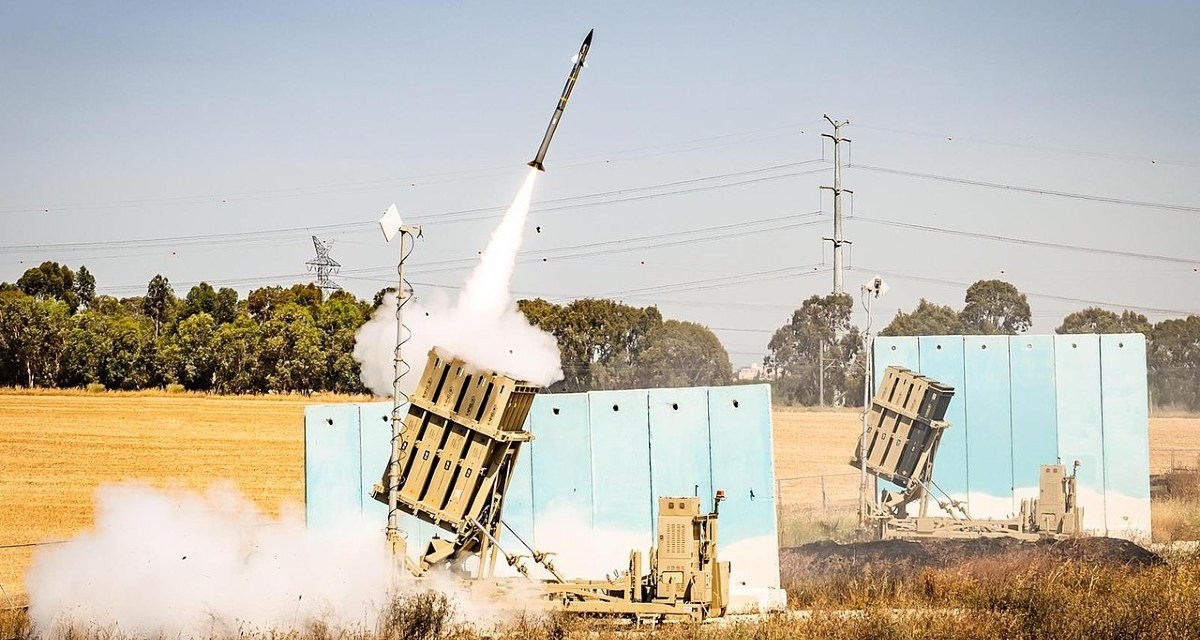
At dawn, on August 25, 2024, air-raid sirens wailed across Israel. Seconds later, the sky filled with arcs of interceptors rising to meet an incoming salvo of rockets, missiles, and drones. Many expected a massive Hezbollah retaliation after the Israel Defense Forces eliminated senior commander Fuad Shukr the month before. When the all-clear sounded, the damage to Israel was negligible.
Israel’s success that morning was not the result of interception alone. While active defense systems intercepted most of what Hezbollah managed to launch, two additional lines of defense proved decisive. Shortly before the salvo, Israeli fighter jets struck launcher clusters and command nodes across southern Lebanon, sharply reducing the volume of fire before the salvo could even be launched. This use of preemptive strikes to degrade an adversary’s attack capacity (what we term here offensive defense) constituted the first line of protection on August 25. The final layer was passive defense (early warning, shelter, and disciplined civilian behavior) that absorbed what penetrated outer defenses.
This episode illustrates a broader lesson emerging from the ongoing wars between Israel and Iran’s “axis of resistance” in the Middle East and in Ukraine since Russia’s 2022 invasion. In prolonged air and missile campaigns, endurance is not determined solely by interception rates. It depends on a state’s ability to integrate offensive action, active defense, and civilian and national infrastructure protection into a system that adapts continuously under pressure. In both wars, integrated defense is less about the performance of individual platforms than about sustaining functionality over time. Offensive, active, and passive defense do not operate as separate lines of effort; they form a load-sharing system in which pressure shifts continuously from one layer to another as the conflict evolves. It is this capacity to redistribute pressure across defense layers over time, rather than the excellence of any single system, that ultimately determines whether a state can endure sustained air and missile attack.
The Israeli and Ukrainian cases differ sharply in scale, resources, and strategic contexts. Israel is geographically compact, is protected by the world’s most sophisticated integrated air defense network, is financially and materially backed by the United States, and has built its military and society for short, intense campaigns while having decisive air superiority. Ukraine, by contrast, is vast, materially constrained, and entering a fourth year of attritional war where neither side holds air superiority. Despite these differences, both experiences of integrated defense point to the same lesson: In today’s airpower environment, redundancy across several defense layers emerges as an indispensable condition of endurance in wars that are increasingly long, indecisive, and attritional by nature.
In this analysis integrated defense does not refer solely to integrated air and missile defense—the layering of sensors and interceptors with varying capabilities and ranges. Rather, it is a framework akin to how some airpower services conceptualize defense of their installations and power projection platforms—but on a broader, national scale. It denotes an all-encompassing architecture that combines, and at times merges, three main layers: offensive action to preventively reduce threats at their source, active defense to intercept what is launched, and passive defense to protect civilians and sustain societal functionality as an integral part of the whole defense system. The robustness of this architecture does not lie in achieving hermetic protection, but in providing sufficient, adaptable defense to sustain state and society endurance under prolonged air pressure.
Air Threats, 2.0
The characteristics of aerial coercion have changed. The early twenty-first century ushered in a new era of air threats defined not only by their affordability and accessibility but also by their quantity, precision, range, and versatility. Capabilities that were once reserved for state actors with extensive resources are now simple to use, relatively cheap, and within reach of nonstate actors and revisionist states with an immature industrial base.
Attackers today combine state-of-the-art with low-tech and cheap projectiles into synchronized, multivector waves. These projectiles not only vary in size, speed, altitude, and direction, but also aim to evade real-time surveillance capabilities and defense systems. Their combined effects produce “precise mass in action”: dense and accurate salvos launched to impose cumulative strain on an adversary’s military and civilian resources and overwhelm its defensive capabilities. Today’s aerial coercion is also about an architecture built on intelligence support, electronic warfare, optimized flight routes, iterative learning, rapid regeneration of salvos before interceptors are replenished, and the crippling of enemy air defense assets.
For defenders, these characteristics necessitate a paradigm shift. In particular, they introduce strategic standoffs. Many of these low-cost projectiles require expensive interceptors to defeat, creating cost-per-effect dilemmas: A single failure can have catastrophic consequences, while draining advanced defense resources puts a state’s security at risk.
Israel and Ukraine have lived this transformation intensely: Both have faced protracted and intense air attacks since 2022–2023. Between 2024 and 2025, Russia’s monthly use of one-way attack drones surged from roughly 1,900 to 5,300. Meanwhile, long-range ballistic missile launches increased more than fourfold. Israel faced over thirty-seven thousand projectiles since 2023, including ten thousand in its first month following the October 7 attack; during the Twelve-Day War in June 2025, the Israeli front was targeted by over five hundred Iranian missiles and one thousand drones.
Both also confront the expanding use and affordability of precision-guided munitions targeting strategic assets and civilian sites. Hezbollah’s “precision project” shows how inexpensive modifications can convert thousands of unguided rockets into precision-guided munitions, giving nonstate actors access to strategically consequential capabilities. Both countries also deal with relatively cheap drones that can be used in mass, such as the Iranian Shahed 131/136, estimated to cost $35,000 per unit.
Versatility of speed, altitude, and direction further deepens the threat. Ukraine has faced a mix of projectiles, including the Kinzhal air-launched ballistic missile (which reportedly reaches speeds up to approximately Mach 10) and the Iskander cruise and ballistic missiles (Mach 6.3), alongside slow propeller-driven Shahed 131/136 drones, which cruise at 115 miles per hour.
The challenge is compounded by varying strike ranges. Long-range systems such as the Kh-101, Kh-47, Kalibr (1,500–2,500 kilometers), and Shahed 131/136 UAVs (1,300–1,500 kilometers) hit targets across the entire Ukrainian territory. Meanwhile, shorter-range ballistic missile systems such as Hwasong-11A/B, Fatah-360, Iskander, and Tochka (120–700 kilometers) strike both frontline and deep-strike targets, including civilian sites. Israel wrestles with comparable combined threats, with some adversary munitions at the extremely short-range end of the spectrum, while others reach ranges of 1,300-1,750 kilometers, as Iran has developed a substantial arsenal of medium-range ballistic missiles.
Combat-Tested Integrated Defense: Israel and Ukraine
In his 1908 novel The War in the Air, H. G. Wells anticipated the destructive potential of large-scale aerial attack but not the emergence of defensive systems designed to absorb it. The experiences of Ukraine and Israel point to this imperative: Under persistent air threat, survival depends on integrating offensive action, active air defense, and passive civilian protection into a mutually reinforcing system.
Israel’s journey toward integration unfolded mainly in its interwar periods, before the most recent conflict. Its active defense layer reflects decades of doctrinal development and scientific-technological investment, beginning with the Arrow Program during the late Cold War, which has since been continuously improved and used, and the activation of Patriot batteries during the First Gulf War. After the 2006 Lebanon War, amid rising projectile threats and a growing recognition of the limits of passive defense, Israel accelerated the development and integration of active defense systems. Iron Dome became operational in 2011, followed by David’s Sling in 2016 for rockets and tactical missiles, and most recently the Iron Beam laser system.
Together with the use of fighter jets and helicopters to deal with airborne threats and the reinforcement of US air defense assets during intense phases of conflict, Israel had built a comprehensive architecture of active defense capabilities. These assets are deeply embedded in the Israel Defense Forces’ command culture through a synergistic effort among intelligence personnel, the air force, including its air defense array, and Home Front Command forces.
By contrast, Ukraine’s development of active defense mainly unfolded during wartime. Admittedly, Kyiv entered the war in 2022 with an extensive array of ground-based air defense systems. The network was based on Soviet air defense systems and was robust enough to deny Moscow quick air superiority. Yet its static design and interceptor shortage made it unsustainable in a prolonged air campaign. As Russian forces introduced new threats, Ukraine was forced into a rapid and improvised transformation under fire: decentralizing its ground-based air defense and resorting to improvised civilian solutions to plug defensive gaps. Later in 2022, Western systems such as Patriot, NASAMS, IRIS-T, and Gepard created hybrid arrays combining high-end interceptors with older systems, including surviving Soviet assets. This provided a stronger defense envelope yet remained short of nationwide coverage.
With the sharp intensification of the Russian air campaign in 2024–2025, Ukraine adjusted again. It has leaned on mobile units equipped with man-portable air defense systems and deployed cheap interceptor drones to preserve high-value interceptors. It also established what it called the “Drone Line” to create a buffer zone with enemy forces and bolstered air defense sustainability through innovation, such as the Sky Sentinel project, even though this ecosystem remains fragile.
When it comes to passive defense, both countries rapidly recognized its decisive role in reducing civilian casualties and allowing functional continuity. Israel’s passive defense rests on mature institutional foundations. Public shelters appeared as early as the British Mandate period, and following Israel’s establishment, the 1951 Civil Defense Law mandated the construction of shelters in all communities. Since the 1990s, all new residential and public buildings have been required to include protected spaces. The creation of the Home Front Command in 1992, drawing lessons from the Iraqi Scud missile attacks in 1991, further professionalized passive defense through standardized protocols, nationwide drills, and public education, coordinated at both national and municipal levels. By 2023, Israel’s passive defense had evolved into a national defense culture, anchored in a multilayered, targeted, early-warning communication system that integrates sirens, the Home Front Command app, traditional media, and social media channels.
Ukraine, by contrast, adapted its passive defense primarily under fire. It entered the war with a robust yet insufficient shelter network and limited digital coordination. By 2023, however, shelter coverage had become a national priority. That year, the Ministry of Strategic Industries launched the Iron Shelter project to institutionalize shelter construction and nationwide mapping, but implementation remains incomplete. At the same time, Ukraine’s passive defense evolved to include a fully digitalized, geolocated, and threat-specific alert system.
The third layer, offensive defense, aims to reduce the scale of aerial threats at their source, either in a sharp preemptive action or in a longer preventive one. Israel’s offensive defense is deeply embedded in its operational doctrine and geostrategic constraints, which dictate fast and decisive action to prevent enemy fire from reaching population centers. To this end, Israel has invested heavily in integrating offensive and real-time intelligence capabilities and in achieving and exploiting air superiority over its adversaries. Air superiority enables direct, repeated strikes on high-value targets—launch platforms, missile depots, one-way attack drone launch sites, and command-and-control nodes—designed to degrade an adversary’s strike capability rather than merely absorb it. This approach was enacted during Israel’s Twelve-Day War, when the Israeli Air Force’s opening salvo and subsequent operations preventively targeted Iran’s strike infrastructure, significantly constraining its ability to retaliate. Combined with Israel’s active and passive defense layers, the result was a markedly lower volume of incoming fire and limited civilian casualties.
Ukraine has also sought to integrate offensive capabilities to influence the course of the war. Unlike Israel, however, Ukraine still lacks the capacity to conduct real-time and effective offensive defense against emergent or immediate air threats. Its strikes are therefore primarily aimed at degrading Russia’s production and launch infrastructure over time.
Ukraine’s offensive strike capacity matured only in late 2022 and 2023 and remains limited in effectiveness. By mid-2023, Kyiv had launched a sustained one-way-attack drone campaign that exposed Russia’s own vulnerability to “precise mass in action.” In addition to disrupting an estimated 17 percent of Russia’s refining capacity, these strikes forced Moscow to divert air defense assets to protect its own territory, prioritize the protection of military and civilian targets inside Russia, and pass laws to bolster national defenses against Ukraine’s strikes.
Yet Ukraine still cannot launch real-time offensive operations that effectively reduce the volume of fire launched against it, which has instead continued to grow over the past year. Operation Spider Web in June 2025 illustrates this gap. The attack damaged and destroyed several Russian aircraft (including the severe damage and destruction of Tu-95 heavy bombers and Tu-22 long-range bombers). The total effects of the operation, however, amounted to an undoubtedly embarrassing but ultimately absorbable blow for Moscow: Russia’s strike tempo and intensity were not significantly reduced. The operation underscores the limitation of Ukraine’s offensive tier: tactically impressive and operationally innovative, but strategically insufficient to blunt incoming strikes.
Beyond Interception: The Need for a Load-Sharing System
The experiences of Israel and Ukraine demonstrate that offensive action, active air and missile defense, and passive defense operate as a dynamic load-sharing system. When one layer is strained or degraded, pressure shifts to the others. Interceptors absorb what offensive operations fail to suppress; shelters and early warning absorb what interceptors miss; offensive strikes seek to reduce the volume and complexity of incoming fire over time. All-encompassing integrated defense, in this sense, is not static. It is an adaptive process in which military and civilian components continuously rebalance under stress.
The contrast between Israel and Ukraine further highlights the difference between integration built before war and integration forged under fire. Israel entered the current war with defense integration largely institutionalized, embedded in doctrine, intelligence-airpower fusion, command culture, and civilian preparedness. Yet Israel, too, was forced to adapt under fire. The scale and coordination of missile and drone attacks, particularly during Iran’s April 2024 strikes, exceeded prewar assumptions and stressed Israel’s defense architecture. This element of surprise accelerated operational learning and reinforced the centrality of integration under sustained pressure.
Ukraine, by contrast, has been compelled to build integration almost entirely during wartime. Its adaptation has been rapid and innovative, but uneven in scale and constrained by limited offensive capacity. The contrast underscores a shared conclusion: Whether integration is built before war or forged during it, the ability to adapt and fuse defense layers under fire determines whether a society can withstand sustained air attack.
Taken together, the Israeli and Ukrainian experiences point to a transferable lesson for states potentially facing sustained air threats. All-encompassing integrated defense is a minimum condition for endurance in modern air warfare. Missiles and drones are becoming cheaper, more precise, and easier to regenerate, while wars are growing longer and less decisive. Few states can replicate Israel’s air superiority or interceptor density, and many face constraints closer to Ukraine’s. Yet the underlying logic of load-sharing is broadly applicable. States that treat interception, offensive action, and civilian protection as separate missions will find that pressure accumulates faster than any single layer can absorb.
Israel demonstrates what integrated defense can achieve at the high end of capability. Ukraine shows how integration can emerge under severe constraint. Neither offers a universal template. Both, however, converge on the same conclusion: Given the changes to contemporary air and missile threats, state endurance is not a matter of successful interception alone. It depends on war preparedness and the cultivation of an all-encompassing defense architecture, combining active, offensive, and passive components that allow a state to sustain its ability to fight, govern, and function under continuous attack.
Dr. Sarah Fainberg heads the Great Powers Research Program at Tel Aviv University’s Elrom Center for Air and Space Studies and has previously served as a visiting assistant professor at Georgetown University’s School of Foreign Service and a senior advisor at Israel’s Ministry of Defense.
Yuval Peleg is a researcher at Tel Aviv University’s Elrom Center for Air and Space Studies. He is a PhD Candidate at the Department of International Relations at the Hebrew University of Jerusalem, where he is also a fellow at the James Sasha Center for Strategic Studies and the Cherrick Center for Israel Studies.
Dr. Tomer Fadlon is the academic director and a senior researcher at Tel Aviv University’s Elrom Center for Air and Space Studies, a lecturer in political science and international relations at Tel Aviv University, and a research fellow at the Institute for National Security Studies, focusing on airpower, strategy, and great-power competition.
The views expressed are those of the authors and do not reflect the official position of the United States Military Academy, Department of the Army, or Department of Defense.
Image credit: IDF Spokesperson’s Unit