
I wasn’t what you’d call a typical career Army officer. I started as a drafted enlisted soldier, then fought my way through Officer Candidate School. OCS was the hardest thing I had done up to that point, and the fact that I wasn’t a spit-and-polish kind of soldier made it harder.
But I did like leadership. And I liked the clean purpose of field artillery: Shoot. Move. Communicate. Put accurate fire where it matters, when it matters, for soldiers who are pinned down and running out of time.
Six months after commissioning, in January 1967, I was on my way to Vietnam having fired only three training artillery missions from a camp stool at Fort Sill. My fourth would be in combat.
I was assigned to the 1st Squadron, 9th Cavalry as an aerial forward observer, with the additional duty of right-side M-60 door gunner on a Huey gunship. I’d never been on a Huey and hadn’t even seen an M-60 up close, much less fired one, and now I’m hanging out the door with it.
Because we covered a wide area of operations, I got to request fire from many artillery units. That gave me a strange advantage for a brand-new lieutenant: I could compare units in real time. And I quickly learned something nobody ever put in plain language during training: Nothing takes longer to hit a target than a round not fired.
As an aerial observer, two things mattered more than anything else: first, how fast the first round is fired after my request; and second, how close it lands to where it’s supposed to land.
Accuracy was similar between different units, but speed is where the real spread showed up. For the first several weeks, it took anywhere from two to five minutes from the end of my request to the first round leaving the tube. At first, I assumed the batteries hitting the low end of that range are doing well.
Then one day I called a mission and the first round fired in forty seconds.
Forty. Seconds.
It stopped me cold. It was like watching someone do the same job under different rules of physics. Why are they so fast? Why are they so much better than the rest?
After six weeks I left the squadron to replace a forward observer who had been killed with A Company, 5th Battalion, 7th Cavalry. I spent the next four months on the ground, conducting search-and-destroy missions in the rice paddies, mountains, and jungles.
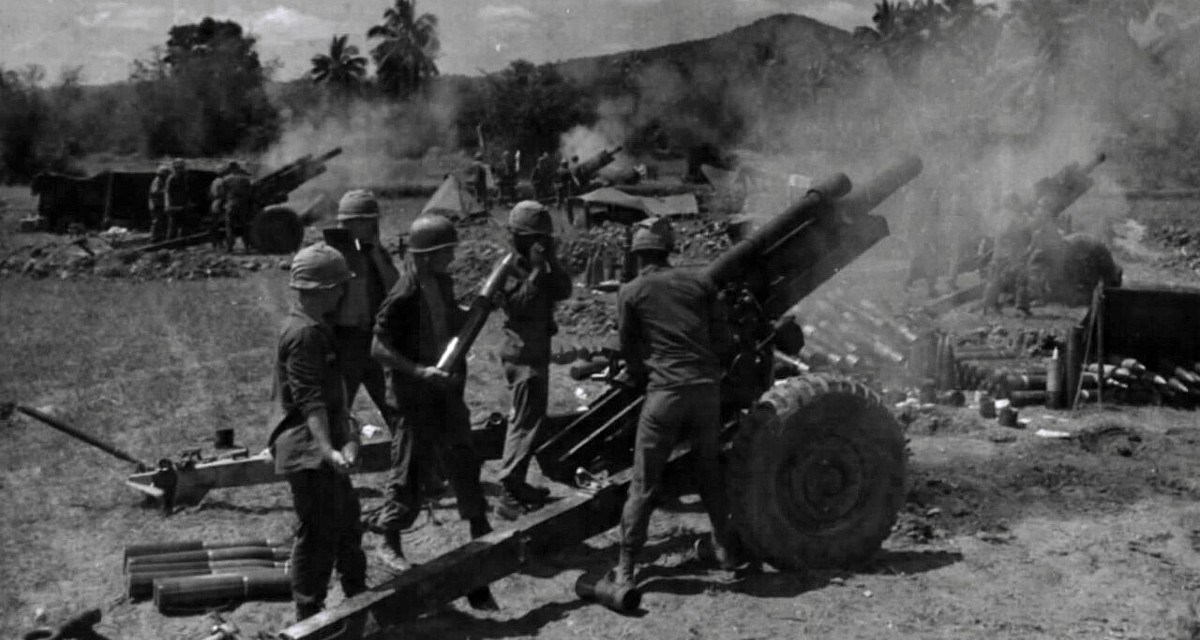
We rotated for three weeks in the field and one week back on an LZ—a helicopter landing zone—providing security. By chance, the unit that had fired so rapidly for me was located on one LZ we provided perimeter security for. So I went to see them.
I was expecting a secret. A trick. A wizard behind the curtain.
But there was no magic. Just discipline.
The unit’s fire direction center ran like clockwork—no wasted motion, no confusion. The crew members knew their jobs, knew why they mattered, and knew they were extremely good at them. Most importantly, their fire direction officer set a clear expectation—forty seconds—and proved it could be done, repeatedly, until it became the new standard.
That’s the lesson I took with me for the rest of my career: Standards aren’t slogans. Standards are enforced reality.
Later, when I served as a fire direction officer, I set our standard at thirty seconds, and we lived there consistently, even beating it at times. It could never be fast enough for us. This is the practical education I never got in any school.
A few years later, I became a battery commander of a 105-millimeter unit in Korea. Vietnam was still going on, so I assumed the chain of command shared the same understanding: Speed and accuracy are the bedrock of artillery.
Strangely, I was wrong.
We only go to the field to actually shoot the howitzers a couple times a year (budget constraints). The rest of the time, the important metrics became the ones you can inspect on a Tuesday morning: barracks scores, appearance, rates, reports. Unlike the other units in the division artillery, I scheduled dry-fire training anyway and set hard goals—because if you can’t do it dry, you won’t do it live.
Higher headquarters inspectors were impressed in the moment, but when it came time to write evaluations, that wasn’t always what rose to the top of their minds. It’s easier to reward what’s visible every day on charts than what matters when it counts. Most seemed ignorant of the standards my battery lived by.
Then in 1974 I was promoted to major and my new battalion commander, Lieutenant Colonel Dave Meade, selected me as S-3 (operations and training). He picked me because we had already talked about what matters: speed, accuracy, and combat readiness—not as theory, but as a standard you can measure with a stopwatch.
The first thing he said to me was, “Somebody has to have the best field artillery battalion in the Army, and it might as well be us.”
I had been waiting my whole career to hear that.
We took the standards I learned in combat and built our training around them. The soldiers responded immediately. Most young men didn’t join the Army to polish floors and cut grass. They joined to become competent at a real mission (blowing things up!). They understood something many peacetime officers forget: Pride comes from mastery.
Soon we were consistently firing accurate first rounds in under thirty seconds and proving it in training evaluations. And something else happened that surprised a lot of people but didn’t surprise me. When a unit becomes excellent at its core mission, excellence spreads. Maintenance improves. Barracks improve. Discipline improves. Not because someone threatens the unit’s soldiers—but because success is contagious when leadership respects the mission and the standard is real.
We all knew we had the best battalion in the Army.
That lesson I learned from an artillery unit in Vietnam—that standards matter—stayed with me throughout my career. Others took me longer to learn, but they largely revolve around what to pay attention to. Attention isn’t just vigilance. It’s honesty. Most of us don’t fail because we don’t see what’s happening. We fail because we see it—and then explain it away.
So, here’s a short inventory of what I learned to notice, late in life, after I ran out of reasons not to:
Pay attention to what gets softer over time. Institutions don’t usually break loudly. They fade. Clarity gets replaced by comfort one meeting at a time.
Pay attention to who tells the truth when it costs them. Watch how they’re treated. That tells you what the system really values.
Pay attention to certainty. Certainty feels like control. But where curiosity should live, certainty often moves in instead.
Pay attention to behavior when no one is watching. Beliefs are cheap. Behavior is not. Character lives in restraint and quiet protection of others.
Pay attention to what exhausts you. Some arguments drain you because they’re empty. Not every battle is cowardice to avoid. For some, it is wisdom to walk away.
Pay attention to how you handle your own mistakes. Shame freezes you. Responsibility moves you. “I was wrong” is a rare sentence—and a powerful one.
Pay attention to what actually reduces suffering. Not what sounds good. What works. A boundary. Silence. Truth. Consistency. Showing up again without drama.
I don’t have a theory of everything. I don’t trust anyone who does. But I learned lessons about the most important things. In Vietnam, the lesson was simple: Time matters. Later I learned the deeper version: Attention matters—because what you ignore today becomes your normal tomorrow.
George Kalergis is a retired US Army officer and Vietnam combat veteran. This article is based on an excerpt from his forthcoming memoir, The Year the Greek Survived.
The views expressed are those of the author and do not reflect the official position of the United States Military Academy, Department of the Army, or Department of Defense.
Image credit: Staff Sgt. Gilbert L. Meyers, US Army