How Change Happens: The Four Ways New Ideas Get Implemented in the Defense Department
Adm. Hyman Rickover, the “Father of the Nuclear Navy,” was once quoted as saying, “If you’re going...
Read More
Adm. Hyman Rickover, the “Father of the Nuclear Navy,” was once quoted as saying, “If you’re going...
Read More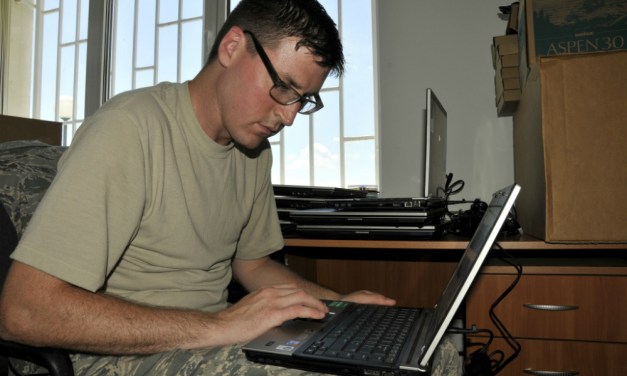
The military will grapple with important doctrinal issues and strategic challenges in the years to come, and men and women in uniform should be weighing in on them.
Read More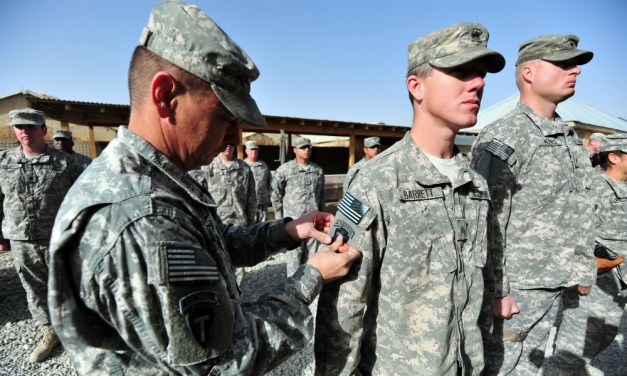
Andy Dziengeleski and John McRae argue against a notion that National Guard unit patches are less worthy than Active Component unit patches and encourage all leaders to teach the history of their unit and its patch.
Read Morehis book The End of Power, Moises Naim lays out the myriad ways the historical virtue of power has diminished of late, and has in some circumstances become a liability. As I reflected on the case studies Naim laid out, however, I kept returning to corollary that the author doesn’t fully address. Namely, the crucial role that speed plays in the reshaping of both power structures and strategic decision making in the 21st Century. Specifically, I kept returning to the fundamental disconnect between the current capacity for rapid action at the national level and growing expectations worldwide for quick and satisfying outcomes. A handful of examples can serve to illuminate how this challenge is becoming widespread of late.
An old Chinese aphorism observes that “the mountains are high and the emperor is far away.” This is no less true in modern China than it was in the Ming Dynasty. Given an enormous land mass imbued with a similarly massive population base, the Communist Party of China has among its responsibilities the projection of national unity across an ethnically diverse and geographically dispersed citizenry. This challenge is exacerbated by the rapid rise of technology in the country. Just as in the 15th Century Emperor Chenghua had to deal with the challenges endemic to both the Xinjiang province and Guangdong province 2,600 miles apart, so too does President Xi Jinping. President Xi, however, has the added challenge of a more savvy, more connected, and in many senses entitled China than any of his predecessors. Again, the speed with which Chinese citizens expect their government to act is of serious concern for the CPC. Couple this rise in expectations with the notoriously slow-moving machinations of a bureaucracy as vast and entrenched as the CPC, and there is a potentially serious problem afoot.
Read More