
Editor’s note: This article is the fourth in an eight-part series led by retired General James Mingus, the thirty-ninth vice chief of staff of the Army, on transforming the Army to meet the challenges of tomorrow’s battlefield. You can read other articles in the series here.
On a stormy Christmas night in 1776, General George Washington pulled off an audacious victory at Trenton, New Jersey that changed the course of the Revolutionary War. With a battered force facing annihilation, he loaded soldiers into boats, crossed the ice-choked Delaware River, marched nine miles through sleet, and successfully struck a Hessian garrison at dawn. A bold and innovative approach to mobility turned probable defeat into strategic victory. Two and a half centuries later, on a battlefield where forces are under near-constant surveillance, the Army must learn from Washington’s lesson on mobility or risk a fate that nearly ended us before the nation even began.
Mobility Equals Survivability
The current operational environment decisively favors lighter, faster, networked forces, as every unit operates under persistent surveillance, contested command and control, and the threat of long-range precision strikes from technologically advanced threats. Multiple states now have access to space-based sensors and unmanned aircraft systems (UAS) that cue loitering munitions and long-range fires. Social media and civilian dashcams provide the final grid.
Our current tactics and legacy heavy formations are increasingly vulnerable in this environment—the likelihood of a brigade combat team receiving fire increases every minute it moves slowly or masses predictably. On today’s battlefield, mobility equals survivability and serves as the connective tissue that binds maneuver, fires, protection, sustainment, and command into decisive combat power.
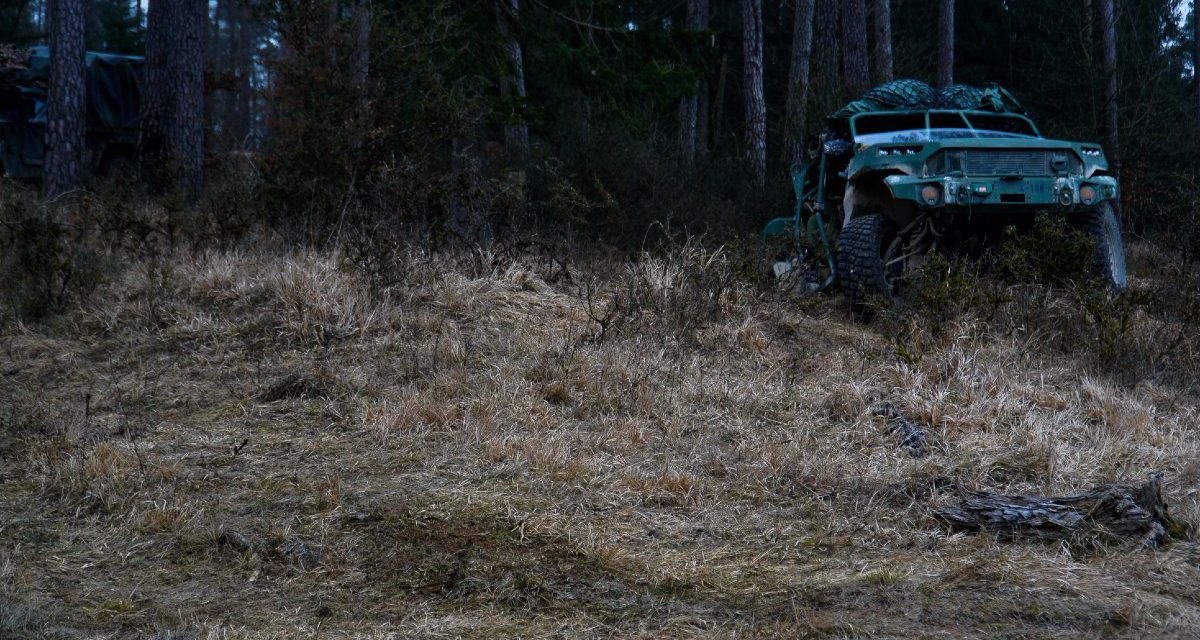
Continuous transformation enables this new approach to mobility. The Infantry Squad Vehicle (ISV), XM30 Mechanized Infantry Combat Vehicle, and Future Long-Range Assault Aircraft are just a few examples of how the Army is prioritizing agility by deliberately trading heavy protective plating for enhanced maneuverability, while developing new protective technologies and prioritizing low-observable features. Transformation in contact units, including mobile brigade combat teams, built around lightweight, agile formations and designed from the ground up for speed, dispersion, and adaptability, are validating this concept’s effectiveness at our training centers. The results are speaking for themselves. Light formations equipped with ISVs achieve 30 percent faster cross-country displacement and significantly extend squad reach; the quicker and more dispersed a unit operates, the harder it is to fix, target, or destroy.
Expanding the Concept of Mobility
To win, units must possess both raw speed and tactical agility, but not just on the ground or in the air. The concept of mobility must span all domains and include unmanned systems, counter-UAS, flexible communications networks, electronic warfare, and signature management. We must think about it as a complex system that enables surprise, coordinated maneuvers, and rapid delivery of fires, and outmaneuvers the adversary’s kill web in order to preserve operational flexibility.
UAS and counter-UAS teams enable greater mobility by ensuring air and ground forces have a clearer picture of the threat array in front of them, while also guiding fires to destroy the threat. Simultaneously, Next Generation Command and Control, with its multimodal communications pathways, will provide leaders with a real-time, common operational picture, even in contested-spectrum environments, to enable rapid and informed decision-making on the move.
Mobility is a key consideration across the electromagnetic spectrum. UAS operators must identify safe flight corridors that weave through the threat’s electronic warfare arrays and avoid jamming. Maneuver forces must understand their unique signatures and take measures to hide within the noise as well as leverage electronic warfare systems to blind or deceive the enemy.
Logistics will also need to become more efficient with low-signature prepositioned caches, autonomous resupply drones (on land, in the air, and at sea), and fuel-efficient platforms that scale with mobile operations rather than anchor them.
Delivering Mobility through Integrated Transformation
Mobility is no longer simply a terrestrial activity, and the mere ability to shoot and move is now an insufficient way to describe maneuver. With the explosive growth of manned and unmanned enablers, the convergence of offensive and defensive fires, and the integration and synchronization of command and control, maneuver is now multidomain and multidimensional. It is all-domain maneuver.
General Washington never accepted the conventional wisdom of his day. Neither can we. Only integrated transformation will deliver the mobility we need, and leaders must demand speed, rigor, and boldness to own the future fight.
Retired General James Mingus served as the thirty-ninth vice chief of staff of the Army.
Lieutenant Colonel Sam Kriegler is an infantry officer and the former deputy of the vice’s initiatives group.
Major R. J. Burton is a logistics officer and Bradley Fellow for the vice’s initiatives group.
The views expressed are those of the authors and do not reflect the official position of the United States Military Academy, Department of the Army, or Department of Defense.
Image credit: Staff Sgt. Bryanne Vega, US Army