Editor’s note: This article is the second in an eight-part series led by retired General James Mingus, the thirty-ninth vice chief of staff of the Army, on transforming the Army to meet the challenges of tomorrow’s battlefield. You can read other articles in the series here.
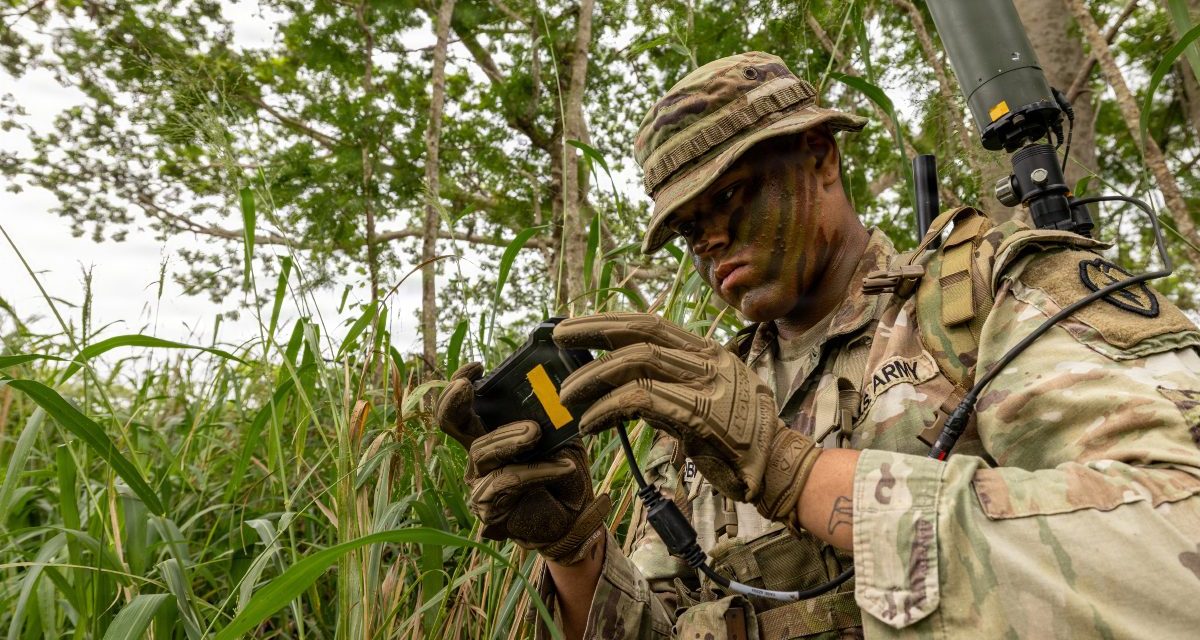
Cold light spills across a European plain, sixty-five kilometers of flat terrain that spans the territory of multiple nations. As the lead platoon moves forward, the squad leader scans the horizon while distant artillery zeroes in, guided by multiple drones stalking out front. He looks to his device for the picture that weaves together US and allied unit locations, overhead sensors, munitions stocks, and national-level intelligence, all in real time. Instead, the feed glitches, data lags, and systems refuse to speak to one another. In that fragile moment, trust breaks, the formation slows, and the enemy gains the upper hand. In modern warfare, where information and shared understanding rules, the network cannot be our opening obstacle.
Why The Need for Change
The current state of Army command and control (C2) reflects decades of incremental additions rather than deliberate design. Tactical networks grew in isolation, producing seventeen distinct battle command systems. Each new capability became a box within a box: One tool solved a specific problem while creating interoperability gaps, redundant data entry, increased maintenance demands, and heavier training loads. This complexity causes leaders to spend a majority of their time reconciling disparate feeds, troubleshooting links, or manually bridging systems instead of focusing on the fight, which results in slower decision cycles, eroded confidence in shared information, and unnecessary cognitive burden on every soldier. Our adversaries are operating on integrated, streamlined C2 architectures that enable swift and decisive action, which is why we are rapidly transforming our fragmented networks to ensure we maintain decision dominance.
Where We Are Headed
The way forward is Next Generation Command and Control (NGC2), a purposeful redesign of the C2 ecosystem built around four tightly integrated layers:
- Data Layer. This layer ensures every echelon, from squad to corps, draws from the same authoritative sources of data to create a common operational picture. This layer is foundational to the success of NGC2.
- Transport Layer. Our transport must provide resilient, multimodal pathways to move information securely and continuously, even under electronic attack or in contested electromagnetic environments.
- Application Layer. Just as your phone hosts a set of apps, NGC2 will deliver intuitive, role-specific tools for core warfighting functions: intelligence analysis, fires coordination, maneuver planning, logistics tracking, and more. Applications will be designed for speed and simplicity, so soldiers can focus on outcomes, not interfaces.
- Infrastructure Layer. This final layer enables on-the-move data sharing through compact, modular hardware. We will replace the battle-hardened green radios we’ve been carrying for decades with small, inexpensive end-user devices connected through a mesh network and supported by vehicle-mounted nodes—pucks on trucks—that connect to the broader network.
NGC2 has moved from concept to fielded capability through transformation in contact, which enables units to work closely with industry to experiment and prototype systems in the field, then scale what works and discard what doesn’t across all four layers. The 4th and 25th Infantry Divisions have been leading the way in this agile development process through their Ivy Sting and Lightning Surge series, during which units introduce discrete NGC2 components or methods into each sprint. These short-duration, collaborative efforts with commercial partners assist in rapid development and ensure the system matures in contact with real users.
In just one example of how this has played out, a division commander identified the need to view administrative and warfighting data on a single device that he could both use in his office and take directly out to the field. As apps have matured, he is now able to view data from the Army’s personnel system and warfighting information from the fires element on one secure tablet—no device switching, no separate logins, no reconciliation delays. This unified access reduces friction and accelerates command tempo.
Additionally, we have restructured our acquisition processes to match this agile approach, discarding the thousand pages of requirements that are outdated by the time they are approved in favor of a concise, flexible characteristics of need format that enables each of the new portfolio acquisition executives to make real-time decisions at the pace of technology. We are also refining how we budget for and field new technology to accelerate delivery to entire formations and keep pace with commercial technology refresh cycles. Though not yet perfect, NGC2 will become the blueprint for how the Army acquires and fields future capabilities and software.
Ensuring C2 Advantage
Ultimately, our objective is to field better-integrated tools that generate shared understanding faster than any adversary can degrade or deny it. That speed preserves trust across echelons, ensures decision advantage to commanders, and enables the joint force to maintain dominance in contested multidomain environments. We’re scaling what works, and we’re cutting what doesn’t. That’s the Army’s continuous transformation strategy in action, and NGC2 is the Army’s path to turning the network from a liability into a decisive advantage.
Retired General James Mingus served as the thirty-ninth vice chief of staff of the Army.
Lieutenant Colonel Berline Marcelin is the speechwriter for the vice chief of staff of the Army.
Major Zak Daker is an aviation officer and the AI advisor to the vice chief of staff of the Army’s initiatives group.
The views expressed are those of the authors and do not reflect the official position of the United States Military Academy, Department of the Army, or Department of Defense.
Image credit: Sgt. Duke Edwards, US Army