
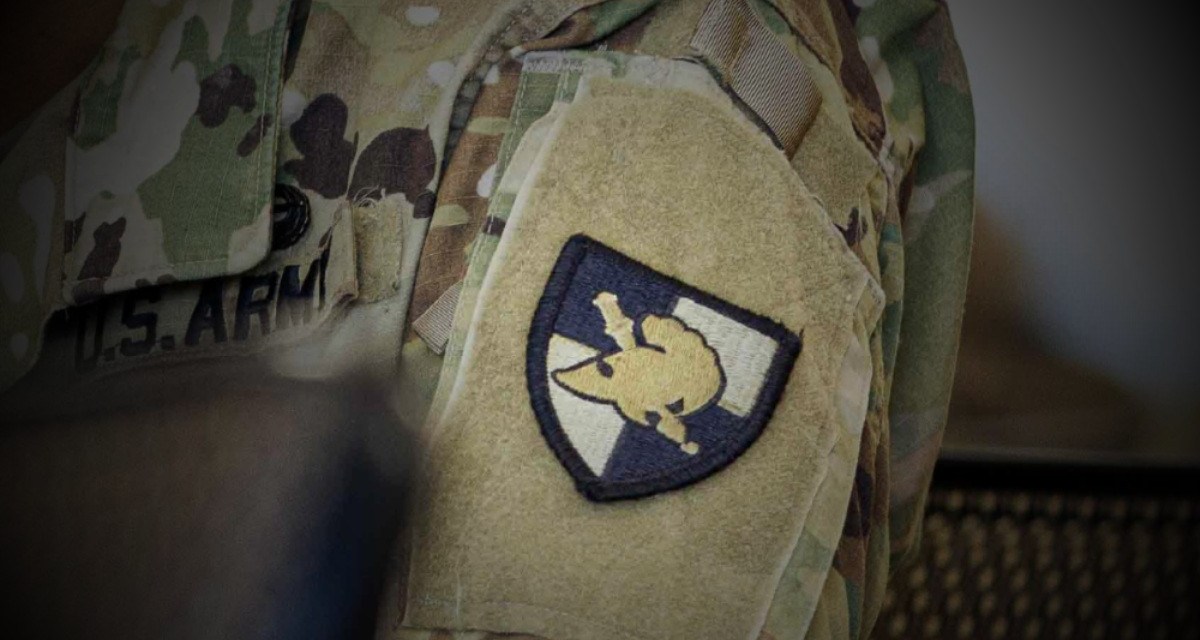
In 1779, General George Washington, looking to stifle British attempts to divide the colonies, chose to headquarter the Continental Army at the “West Point” of the Hudson River, just below the town of Newburgh. The geography was perfect for defending the river. The river narrowed, allowing for a great chain to be pulled from one shore to the other, steep hills provided for artillery overwatch, and the tidal waters forced ships to slowly navigate the channel. Today, West Point retains its strategic importance—not because of its unique place on the Hudson River—but because it is home to the United States Military Academy.
The United States Military Academy at West Point is often called the premier leadership institution in the world. Academy graduates have led our Army, helped build the nation, explored space, and mastered industry. But what is often overlooked about West Point is its equally critical and historic obligation to provide professional military expertise in areas of strategic importance. In fact, this was one of the primary reasons for the creation of a military academy. During the Revolutionary War, the fledgling United States demonstrated little proficiency in several critical fields, such as military engineering and artillery. The lack of technical know-how led to a reliance on European experts. So while Washington understood the geographic advantages of West Point, it took the Polish General Thaddeus Kosciuszko to fulfill Washington’s vision by designing and overseeing construction of West Point’s fortifications.
The newly formed government recognized the national importance of addressing these knowledge gaps, and the responsibility to correct these deficiencies fell to West Point. Colonel Sylvanus Thayer, the fifth superintendent of the United States Military Academy, was instrumental in effectuating the Founders’ vision of a national military academy dedicated to both leadership and technical education. During his tenure from 1817 to 1833, Thayer professionalized West Point by emphasizing discipline, character development, and rigorous academics. Cultivating the expertise so desperately needed by the young nation had a tremendous impact on the United States’ rise as a global power in the late nineteenth and early twentieth centuries. The officers educated under Thayer’s system recognized and adapted to revolutions in military affairs unleashed by the industrial era. From railroads and telegraphs to rifled artillery and airplanes, officers who understood the implications of technological and social change kept abreast of new developments and, in some cases, were themselves the innovators and initiators of change.
Although West Point graduates, such as Dwight Eisenhower and George Patton, are frequently remembered for their military and leadership abilities, many have also drawn on their technical expertise to support and advance the strategic interests of the United States. For example, Colonel George Washington Goethals served as chief engineer of the Panama Canal. President Theodore Roosevelt considered the construction of a transisthmian route to be one of critical strategic importance, and under Goethals’s supervision, the canal was completed nearly two years ahead of schedule. Decades later, a different President Roosevelt approved another project of urgent significance to the United States. The Manhattan Project, the highly complex research and development program that produced the world’s first atomic bombs, was led by Brigadier General Leslie Groves. Groves finished fourth in his class at West Point, commissioned as an engineer officer upon graduation, and later oversaw the construction of the Pentagon.
The academic program at West Point not only taught graduates like Goethals and Groves to think deeply and analytically about problems, but also provided them with the substantive knowledge needed to excel in their disciplinary fields. This approach to education remains the bedrock of West Point’s academic program today. Just as earlier generations of cadets learned by studying and experimenting with the instruments and technologies of the time, today’s cadets gain a strong foundation in small classrooms with attentive faculty. All cadets learn a broad range of subjects, from engineering and cyber foundations to law and military history, in the academy’s core curriculum. Project-based learning is also key to the educational experience. Last academic year, cadets and faculty designed and launched hypersonic rockets, remotely mapped buildings using robots without the aid of GPS, and integrated ethics protocols into artificial intelligence and machine learning models. The integration of new disciplines, including cyber science, bioengineering, aerospace engineering, and war studies, further acknowledges and anticipates the next evolution of warfare.
In recent years, it has become commonplace to describe the value of a college education in monetary terms and to evaluate academic majors based on their return on investment in the postbaccalaureate job market. At West Point, the calculus is very different. West Point graduates are expected to embody the values of the academy’s motto—“Duty, Honor, Country”—and to apply their knowledge and expertise in service to the nation, initially as commissioned officers in the armed forces. This sense of purpose is a driving force that lends direction and focus to the education of cadets. A graduate’s worth is measured by the desire and potential to serve, not earning power.
The academy produces timeless leaders of character by imbuing cadets with the ethic to serve and pushing them to excel militarily, physically, and academically. The violent and chaotic nature of warfare is constant, and so must be West Point graduates’ unyielding tenacity to fight and win our nation’s wars. However, because the character of warfare is ever changing, the academy also produces timely leaders of character. This is done in two parts: first, by exposing them to the latest innovations in science and technology; second, by creating environments that enable cadets to be the innovators and thinkers we expect them to be upon graduation. Both timeless and timely characteristics are needed to anticipate and overcome the complex realities of the modern battlefield and to lead effectively within the world’s most lethal fighting force.
History offers sobering reminders of how failure to adapt can be catastrophic. At the dawn of World War II, many military leaders underestimated the impact of airpower on naval warfare. The sinking of the HMS Prince of Wales and the HMS Repulse by Japanese aircraft shattered the belief that battleships were invulnerable to air attack. Nations that internalized this lesson and shifted to carrier-based operations gained the upper hand in the Pacific. Conflicts raging today offer similar lessons about the lethality of new capabilities like drones and the significance of streamlining manufacturing and procurement processes. These inflection points teach us an enduring truth: Intellectual stagnation is dangerous; innovation and adaptation are vital.
The Founders understood that the nation needed not just principled leaders but also technical experts when they conceived of the United States Military Academy. Education in disciplines relevant to leadership and military art was a national security imperative. Early graduates quite literally shored up the national defense by designing fortifications and strengthening coastal defenses. Succeeding generations used their technical expertise to build bridges, construct canals, and design some of the most devastating weapons ever imagined, all in service to the nation. Today, West Point continues to equip cadets with the knowledge and skills needed to dominate on the battlefield across current and emerging operational environments.
West Point’s mission—to develop leaders of character for the Army and the nation— remains as important today as it was in 1802. Equally important is West Point’s proficiency at educating cadets in disciplines of strategic importance to national security. Driven by duty, honor, country, West Point graduates understand what is expected of them, and they stand ready to serve, as generations have before them, to project lethality and obtain victory in winning the battles for our nation.
Brigadier General Shane Reeves serves as the fifteenth dean of the Academic Board of the United States Military Academy. He previously served as head of the Department of Law at West Point, and he has written extensively on the law of armed conflict and national security issues. He is a member of the Council on Foreign Relations and is the founder of the Lieber Institute for Law and Warfare.
The views expressed are those of the author and do not reflect the official position of the United States Military Academy, Department of the Army, or Department of Defense.
Image credit: Jorge Garcia, US Military Academy (modified by MWI)