
Ukraine has emerged as the world’s most intense proving ground for modern warfare. Yet, these lethal advances in technology and tactics will not remain confined to Ukrainian battlefields. While wars typically end with questions about security guarantees and postwar reconstruction, the end of the war in Ukraine will force an additional question: What happens to the people who acquired the technical know-how to fight the next war? The conflict has already reshaped debates about the future of armed conflict. Many analysts argue that the war marks the maturation of technological trends that now define contemporary warfare, pointing to the diffusion of new technologies that now underpin military operations on both sides. Aerial and maritime drones, AI-enabled targeting systems, and algorithmic tools for logistics and battlefield management are no longer theoretical; they are central tools to how war is fought. Networked drones, commercial sensors, and data-driven targeting have closed the distance from target identification to destruction. In short, kill chains that once took days to unfold now close in hours, even minutes. Equally important, operators have adapted and integrated these technologies in real time. Improvisation and experimentation have become essential for competition and survival on the modern battlefield.
The implications of these shifts will become increasingly apparent. As fighting and diplomacy continue, attention should turn to the thousands of battle-tested fighters emerging from the conflict. Some will return to civilian life. Others may find that transition more difficult. Russia is already beginning to experience the downstream effects of this problem, with returning war veterans linked to an increase in violent incidents involving civilians, underscoring the security risks associated with large-scale postwar demobilization. A significant number of war veterans will seek to monetize the skills and experience they acquired on the battlefield. The war in Ukraine has not just generated a surplus of combatants. It has produced a surplus of specialized military expertise. And the market for their services is already expanding.
Across both sides of the conflict, individuals have gained practical experience in everything from drone piloting to the leveraging of AI to accelerate targeting, logistics, and even battlefield decision-making. These are not the traditional skills of the soldiers of an earlier era. They represent the changing of a guard—a genesis of what will become a revolution in mercenary affairs. And their skills will travel easily across borders and conflicts.
This points to a deeper shift. As warfare becomes more technologically integrated, the mercenary landscape will evolve alongside it. Tomorrow’s mercenaries are less likely to resemble traditional combat forces and more likely to operate at the intersection of technology and armed conflict. Riflemen, artillery operators, and pilots will remain relevant, but they will no longer define the market as states and nonstate actors seek to develop their own technical know-how. In their place, drone specialists, data analysts, systems integrators, coders, and computer programmers will increasingly dominate the marketplace.
The war in Ukraine did not create this shift, but it has dramatically accelerated it. When the conflict winds down, the international security marketplace will be shaped by an emerging class of technologically skilled, adaptive operators looking to profit from their experiences. What lies ahead is not the end of mercenarism, but its newest iteration.
A Ready-Made Market for the Next Generation
A post-Ukraine surplus of technologically skilled operators matters not simply because there is a potential for more mercenaries, but also because the international security environment is already well structured to absorb them. The contemporary market for force already benefits from an ecosystem shaped by persistent conflict, external patronage, and clear pathways to hiring foreign military labor. As a result, skilled veterans emerging from Ukraine and other conflict theaters will be integrated into conflicts that are primed to receive them.
The trend reflects a familiar convergence of supply and demand. On the supply side, conflicts across the Middle East, Africa, Eurasia, and elsewhere have produced a deep reservoir of combat-experienced personnel. Many possess new technical skills that put them at the forefront of technology adoption and rapid integration of modern warfare. On the demand side, states and armed groups facing internal instability, external threats, and technological competition are increasingly seeking avenues to enhance their military capabilities and keep up with the rapidly evolving pace of warfare. The result is a crowded and competitive marketplace where specialized expertise has become particularly valuable.
This market did not emerge in response to the dynamics of the war in Ukraine alone. Conflicts that followed the Arab Spring in the Middle East and North Africa—beginning in Libya and Syria—served as early laboratories for new technologies, from drones to thermobaric bombs, before they expanded through external financial and military backing into sub-Saharan Africa, Southeast Asia, and the Caucasus. Regional powers, including Turkey and the United Arab Emirates, have begun investing in mercenary, private military company, and public-private military ventures in their peripheries. In a sense, these trends normalized, and calcified, the use of external for-profit fighters with varying degrees of autonomy from the states in which they originated.
The infamous Wagner Group exemplified one such absorption pathway. In the Sahel and Central Africa, Wagner Group and its successor, the Africa Corps, exchanged security support for resource extraction projects and political influence. This model demonstrates how mercenary labor can be institutionalized through state backing. While Wagner resembled a more manpower-centric venture, and ultimately a brittle iteration of mercenarism, it helped entrench the idea of outsourcing to new types of mercenaries.
Other states have expanded on the Wagner Group model. Turkish shadow deployments, for instance, often rely on third-country nationals, including Syrian militia members, to guard mining sites, copying a practice adopted earlier by the Wagner Group. Turkey is backing up this approach by supplying three- to four-month training programs in Turkey for Sahelian drone pilots, while also deploying Turkish drone mechanics directly to Sahelian partners. This model allows states to not only import fighters, but also the technical expertise associated with specific platforms. Similarly, in Sudan, the United Arab Emirates has combined material assistance with foreign mercenary labor, including the deployment of Colombian mercenaries. Both countries have learned from the Russian experience, using business intermediaries, shell companies, and third-country nationals to shield their own populations from casualties and negative publicity.
The bottom line is that the global security marketplace is already well acquainted with the evolving landscape of mercenarism and structurally prepared to absorb a new influx of skilled fighters. Ukraine could be understood as an incubator at the intersection of combat experience and technological adaptation, producing veterans proficient in everything from drone operations to using AI to geolocate and analyze open-source data for battlefield logistics. As the democratization of emerging technologies continues and as these new operators enter the market, there will be no shortage of buyers looking to employ them.
Drones, Data, and Defense
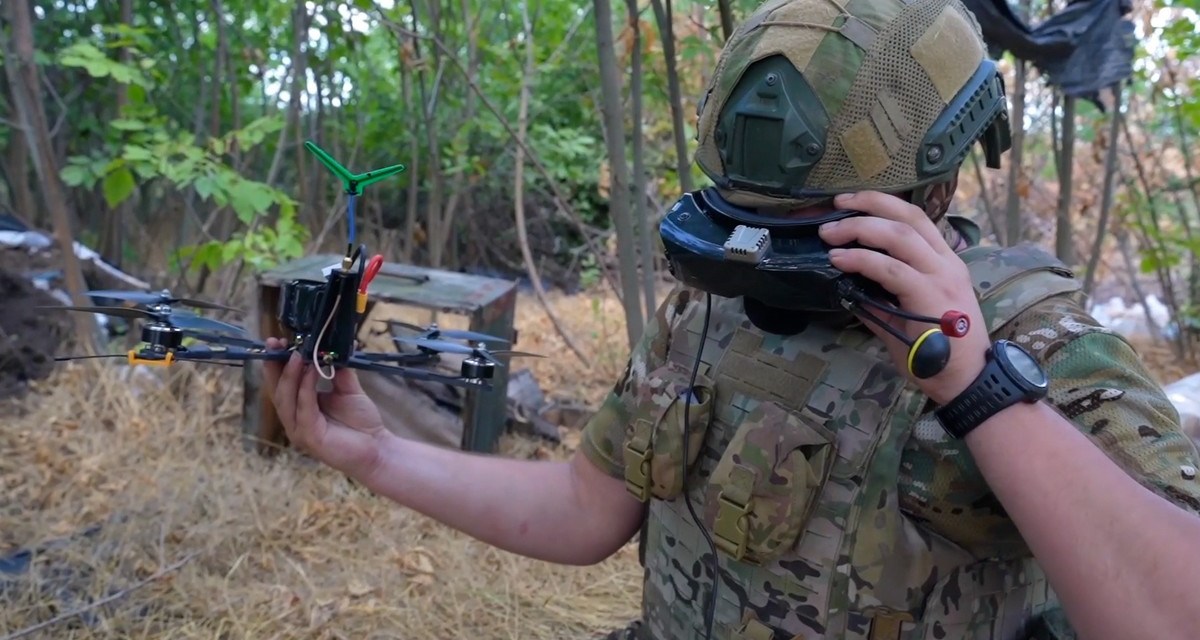
Drones sit at the center of this shift. The diversity of drones and their battlefield performance in Ukraine have elevated them as symbols of modern military power. This has accelerated demand for them, and their proliferation, around the globe. What began with expensive high-altitude long-endurance reconnaissance and lethal systems, like the Global Hawk, has expanded to include medium-altitude systems such as Turkey’s Bayraktar TB2 and Akinci, one-way attack drones like the Iranian Shahed, and commercial drones modified into first-person-view strike platforms. The war in Ukraine has revealed that drone technology is only as good as the training that accompanies it. And with each system requiring operators, technicians, integrators, and so on, there exists a sustained demand for specialized skills even as the technology itself becomes cheaper and more accessible.
Beyond drones, demand will continue to rise for defense programmers and information specialists. Artificial intelligence and automation have lowered the barriers to entry for information warfare, enabling regimes and armed groups alike to shape narratives, recruit supporters, and attack or defend critical infrastructure. Burkina Faso offers a stark example, where AI-generated disinformation campaigns have targeted domestic and international audiences even as violence on the ground worsens. Here, junta leader Captain Ibrahim Traoré has targeted urban populations as well as outsiders with “AI slop” videos depicting international icons like Beyonce and Justin Bieber praising his leadership—an effort to quell internal dissent and bolster legitimacy. Demand for similar techniques is likely to proliferate, opening avenues for entrepreneurial exploitation.
But capabilities extend beyond propaganda. Programmers are increasingly likely to become attractive for their ability to enable effects delivered from long range, against both military and civilian targets. While these techniques are not without precedent—Israel launched its famed Stuxnet cyberattack on Iranian nuclear enrichment facilities in 2011—recent operations demonstrate that operations across geographic obstacles and national borders will be the rule rather than the exception. Ukraine’s Operation Spiderweb attack, which leveraged AI targeting against military aircraft deep within Russia, Russian gig economy–based attacks on European infrastructure, and Israel’s pager attacks on Lebanese Hezbollah demonstrate that programmers are invaluable for attacks on high-value infrastructure. In the latter case, a new book suggests that software from American tech giant Palantir supported Mossad during Operation Grim Beeper. And while experts note that jihadists’ and insurgents’ experimentation with AI has largely concentrated on information operations and recruitment campaigns, there is growing concern that AI, autonomous systems, and other emerging technology will be adopted by these groups for nefarious purposes. As states and armed groups adapt their defensive capabilities, investing in countermeasures from cyber defense to hardening vulnerable infrastructure, demand for technically skilled mercenaries will likely accelerate.
This speaks to a larger point regarding the new generation of mercenaries. Demand is not exclusively driven by optimism of technology, but rather by how technology can change the speed of operations, complicate attribution, and shift the relative battlefield advantage in times of armed conflict. For states facing persistent insecurity, and even cases where they are not, technological capacity is seen as a necessary component of modern militaries and modern warfare.
Transactionalism Favors the Mercenary
Mercenarism doesn’t exist in a vacuum. Its historical antecedents, including the contract soldiers of the papal states of Italy or the Landsknechts of the Holy Roman Empire, existed during extended periods of instability and transactional foreign policy, characterized by weak and frequently changing alliances. The same is true today. As security partnerships fray and alignments become more fluid, transactional relationships increasingly shape how states and nonstate actors pursue security—and mercenaries are well suited to operate in this environment.
Today’s strategic landscape is defined by growing uncertainty about the durability of traditional security arrangements. The transatlantic security project faces internal pressures both in Europe and the United States, while great power competition and regional assertiveness are reshaping long-standing assumptions about the balance of power. At the same time, regional powers like Turkey, Egypt, Saudi Arabia, and the Gulf monarchies have adopted more opportunistic foreign policy agendas. For weaker states and armed groups navigating this changing frontier, reliance on a single external guarantor appears to be increasingly risky. For-hire options provide an opportunity for some insurance.
This shift to transactionalism is already visible in the Middle East and Africa, and it will likely accelerate if and when the war in Ukraine concludes. Rather than prioritizing long-term alignment or shared values, transactional security arrangements reward political flexibility and economic gain. However, transactionalism can generate perverse effects. In Mali, jihadist groups have capitalized on civilian abuses perpetrated by mercenary operations, using such abuses to ramp up recruitment campaigns. Rather than combating insecurity, transactional foreign policy relying on for-profit military actors risks deepening instability and cycles of violence.

As the war in Ukraine has revealed, we have entered an era where technology and accessible systems, from drones to software, are narrowing conventional military advantages and creating demand for new types of skills. At the same time, technological and military skills are becoming increasingly transferable across borders and conflicts. For states, the challenge is greater than managing new technologies. They must cope with the new reality that a growing pool of technically proficient military operators is being forged on today’s battlefields and will change the future market for force.
These new operators will not be driven by a single set of motivations or grievances. Some will carry ideological commitments, including extremist and millenarian worldviews shaped by conflict experiences. Many will be economically motivated, reflecting the poor economic conditions that plague postwar societies. This confluence of mercenarism, greed, grievance, and extremism will fuel religious and ethnic conflict, transnational crime, and insecurity. The end result is not a return to the old forms of mercenarism but a new age where technological expertise becomes as valuable as manpower once was.
Raphael Parens is a senior fellow at the Delphi Global Research Center and a fellow at the Foreign Policy Research Institute. He is an international security analyst focused on Africa and Eurasia. His forthcoming book, entitled Moscow’s Mercenaries: The Rise and Fall of the Wagner Group and coauthored with Colin P. Clarke and Christopher M. Faulkner, will be published in June 2026.
Dr. Christopher M. Faulkner is an assistant professor at the US Naval War College and nonresident senior fellow at Delphi Global Research Center and the Eurasia program of the Foreign Policy Research Institute. He is a coauthor, along with Raphael Parens and Colin P. Clarke, of the forthcoming book Moscow’s Mercenaries: The Rise and Fall of the Wagner Group, available in June 2026. His research focuses on militant recruitment, private military companies, and national/international security. X: @C_Faulkner_UCF
The views expressed are those of the authors and do not reflect the official position of the United States Military Academy, Department of the Army, or Department of Defense, or those of any organization the authors are affiliated with, including the Foreign Policy Research Institute, Delphi Global Research Center, and US Naval War College.
Image: Russian drone operator in Ukraine with first-person-view quadcopter (credit: mil.ru, via Wikimedia Commons)
.png)