A surge in enlistments earlier this year, has diminished concerns about the recruiting crisis that plagued the US military in recent years. From a raw numbers perspective, this is good news—but numbers are only one part of the military recruitment equation. The other part is a question of whether the talent recruited matches the needs of modern warfare. Future conflicts will be fought not only by warfighters on land, at sea, and in the air, but also in the information environment, cyberspace, and the electromagnetic spectrum. Quite rightly, the US Army has responded by expanding recruiting efforts for cyber, intelligence, and electronic warfare specialties. But the service, and others in the joint force, face challenges—stiff competition from the private sector, for example, as well as a public that is increasingly disconnected from, and consequently less inclined toward, military service. Overcoming those challenges will depend not just on doing a better job recruiting the young men and women who have family that have served—the demographic that provides a disproportionate number of service members—but drawing on an expanded population that includes the skills required by the modern battlefield.
One source of lessons can be found in Ukraine, where a military at war has taken a radically different approach to attracting digital professionals capable of filling specialized military career fields.
Ukraine’s Manpower Challenge
Three and a half years into Russia’s full-scale invasion, Ukraine’s armed forces continue to struggle with manpower shortfalls along a front line stretching over six hundred miles. Mobilizing military-aged men has become increasingly unpopular, and has yielded diminishing returns. This challenge is epitomized by the ill-fated Anne of Kyiv Brigade, which experienced high desertion rates even after receiving specialized training from the French Army.
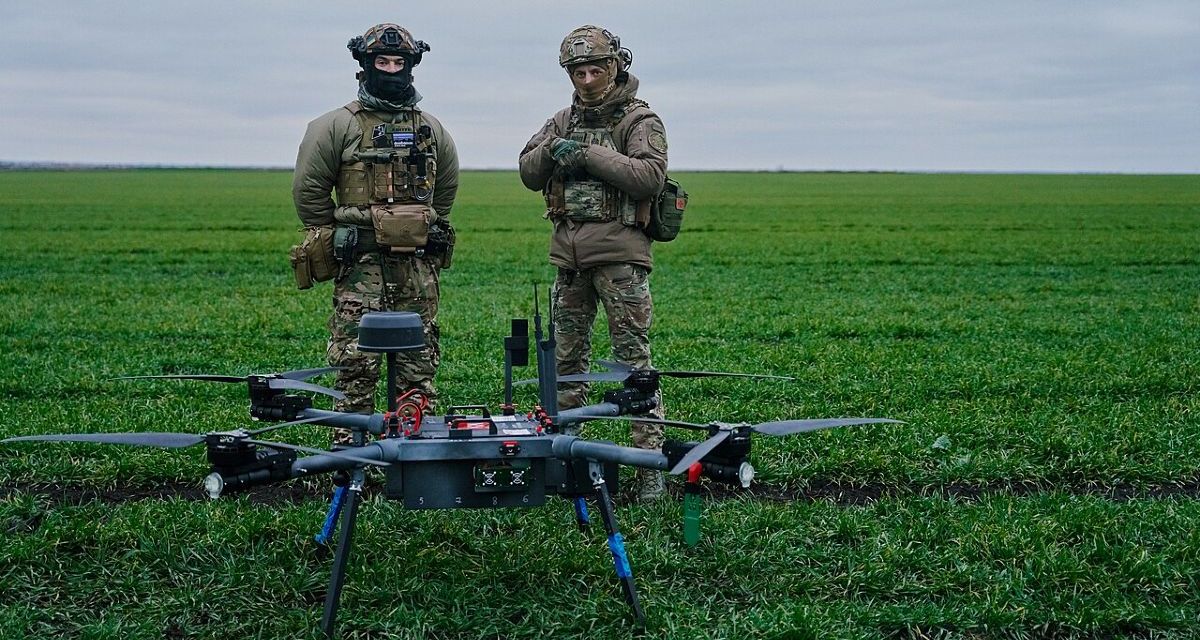
In response, Ukraine’s Ministry of Defense has introduced shorter enlistment contracts and incentive programs to encourage voluntary service. Yet many Ukrainians remain wary of joining, citing equipment shortages, limited training, and of course, the risk of death or lifechanging injury given the ongoing war’s high casualties. Rising to meet this challenge is the Unmanned Systems Forces (USF), Ukraine’s youngest service branch and its most disruptive. With a clear and resonant message—“The most important value is human life”—the USF reimagines military service to appeal to those otherwise disposed against it and seeks talent optimized for the next generation of warfare.
Ukraine Bets on Technological Innovation
At the July 2025 LANDEURO symposium, Major Robert “Madyar” Brovdi, the newly appointed commander of the USF, spoke candidly about the force’s unconventional composition. “Ninety-five percent of [our soldiers] were civilians before the war started. They are businessmen, athletes, lawyers, singers, anyone you can imagine, but not military personnel. Our total strength is just 2 percent of the entire Ukrainian army. Yet we destroy one out of every three enemy personnel and one out of every three enemy targets.”
As Russia continues to exploit its numerical advantage, the USF offers a different approach: leveraging autonomy, precision, and a digitally native workforce to offset manpower disadvantages. Modeled in part after startup technology companies, the USF has attracted not only drone operators and coders, but also entrepreneurs, technologists, and content creators. Major Brovdi emphasized the importance of organizing military units like businesses, namely by encouraging flexibility in organizational culture and awarding authority based on performance over time in service. Within the framework of the Ukrainian military’s NATO standardization, this hybrid military-business model gives Ukrainian commanders a nimble and low-risk, high-reward option to outmaneuver Russian forces.
A Value Proposition for Ukraine’s Digital Generation
Ukraine’s manpower crisis constrained the USF at its inception in 2024. Rather than compete for the coveted 18–24-year-old male demographic, the USF shifted its focus to men aged 25–35 in white-collar professions, a group already targeted for conscription but underrepresented in traditional recruiting campaigns. This demographic brought with it valuable skills: coding, project management, and English fluency. Though historically less inclined to serve, wartime realities and the threat of frontline military service pushed many to seek more technical roles oriented on combat support within the armed forces.
The USF seized this opportunity. Recognizing the need to break from legacy recruiting approaches, its communications team launched a multimedia outreach campaign. In addition to traditional military advertisements, they engaged directly with digital natives via music festivals, podcasts, CrossFit competitions, esports tournaments, and even meme culture. There are also branded t-shirts, energy drinks, and gamified drone footage that showcased USF battlefield successes with a tone and polish that resembled a lifestyle brand mixed with a combat unit.
Notably, the USF recruited Ukrainian comedian and online influencer Andriy Luzan and documented his experiences from civilian to soldier through a four-part YouTube series. Luzan’s unique content creation style mixed with his interviews with his comrades and instructors produced a compelling advertisement for the young branch. The series works as a form of strategic communication in that it entertains, informs, and humanizes military service by showing that Ukraine’s defense is high-tech, inclusive, and achievable even for civilians who do not fit the traditional mold of a soldier.
But behind the marketing was a serious value proposition: a high-impact, lower-risk alternative to infantry service. The USF emphasized quality over quantity and humans over hardware (anyone familiar with US special operations forces’ five guiding truths will recognize this approach). Recruits would be trained as operators tasked with using drones and other types of emerging technology to bridge Ukraine’s manpower gap. In addition to advertising vacancies for first-person-view drone operators, the USF also produces marketing materials that predominately feature combat support roles such as programmers, technicians, and communications officers. This focus on support specialties aligns with the technical skill sets and professional identities of white-collar millennials, offering a way to contribute meaningfully to the war effort without abandoning their careers or incurring the risks associated with frontline service. This reframing addressed core enlistment concerns and positioned the USF as a professional, tech-driven, and mission-oriented community tailored to the risk preferences and professional identities of Ukraine’s skilled civilian workforce.
Lessons for the US Military
Amid a growing civil-military divide and a shrinking pool of physically eligible and willing recruits in the United States, even the recent enlistment surge does not obviate the need to think deeply about how best to bring American men and women into the all-volunteer force. While there are substantial differences between the American and Ukrainian militaries, Ukraine’s recruiting experience offers actionable insights. In a protracted war against a peer adversary the US military is likely to face the same challenges regarding force generation as did Ukraine’s armed forces. Therefore, the US military could benefit from diversifying its talent pool. As former Secretary of Defense Donald Rumsfeld once said, “You go to war with the army you have, not the army you might want or wish to have at a later time.” Ukraine has had to adapt under fire, but by heeding the lessons of Ukraine’s experience, the United States can ensure that when the next war begins, the military it has is the one it needs. Specifically, the Department of Defense can adapt by embracing several key lessons.
First, it should leverage influencers to bridge the civilian-military culture gap. Informal military influencers on platforms like Instagram and TikTok already shape how Gen Z and millennials perceive military life. Like the USF’s campaign with Andriy Luzan, the US military could stand to benefit from offering incentives to influencers to entice them to join. Similar to how the US Army World Class Athlete Program promotes the US Army at the Olympics, there lies an opportunity to recruit select celebrities to promote the military in television, film, and social media.
Second, the US military should expand direct commissioning for midcareer professionals. Recent efforts by the Army to commission tech executives as reserve field-grade officers should be extended across specialties such as cyberwarfare, space operations, and intelligence. This strategy would not only not only bring critical expertise into the force but also diversify its professional makeup.
Finally, the Department of Defense should market nontraditional career paths more effectively. Career fields like the Army Reserve’s 38G (military government officer) program offer meaningful service opportunities for older candidates and midcareer professionals to serve as subject matter experts advising theater-level commands on stabilization and governance. DoD should advertise these roles as flexible, skill-aligned alternatives to traditional enlistment.
As Ukraine integrates autonomous systems and recruits technical experts to compensate for its manpower limitations, the US military should likewise rethink how it maximizes American human capital for future conflicts. As future conflicts will increasingly reward agility, innovation, and cognitive superiority, the US military must reconsider its recruitment and selection processes. Ukraine’s experience shows that the modern battlefield does not only require warriors, but also technologists and digital practitioners. Building a force that reflects the qualities of modern war is no longer just optimal. It is a matter of strategic survival.
Captain Adel S. Hussain is a psychological operations officer with the United States Army Psychological Operations and Civil Affairs Command. He recently served with the Security Assistance Group–Ukraine as an information operations planner.
The views expressed here are those of the author and do not reflect the official position of the United States Military Academy, Department of the Army, or Department of Defense.
Image credit: Sergio Hvostini