Israel’s renewed military presence in southern Lebanon puts an old military problem back in view: Where should a force establish bases?
No matter the operational context—years-long counterinsurgency commitments, high-intensity ground combat, long-range strike campaigns, or forward deterrence—basing combat power and support infrastructure somewhere is a requirement. Bases give ground forces access, protection, reach, and staying power. Advantages like these can justify large troop and resource commitments, especially when no other posture can produce the same effect. But the more difficult problem, and the one that the Army hasn’t taught well, is knowing when a useful base has stopped earning its place in an operational campaign.
Army doctrine recognizes this connection—in part. It describes basing as an indispensable part of operational art and ties it directly to operational reach. Doctrine further says that basing can determine a force’s reach, endurance, depth, and ability to generate combat power. The guidance is strongest on why commanders establish bases; it offers less description of how they should judge positions whose value changes as the campaign develops.
Commanders need to keep basing tied to the campaign they are fighting. Khe Sanh, eastern Afghanistan, southern Lebanon, and Henderson Field show how the value of a position can change over time and why the same problem can produce very different decisions.
Khe Sanh and a Changing Operational Campaign
A base at Khe Sanh in Vietnam made sense in early 1968. General William Westmoreland had strong operational reasons to hold Khe Sanh. The base sat near important approaches from Laos and gave American forces another way to observe and threaten North Vietnamese movement, so Westmoreland viewed the position as important to operations in the area, both near Laos and in western Quang Tri. He argued that, with enemy forces concentrating around it, abandoning Khe Sanh would hand the enemy a major psychological and propaganda victory. He also warned that a broader retreat to enclaves would return violence to populated areas.
By summer, the Marines changed their operational approach. The 3d Marine Division was operating beyond the range of Khe Sanh–based artillery and relying more heavily on mobility and forward fire-support positions. The official history of the Marine Corps in Vietnam described the base by this time as “more of a liability than an asset” because it tied down division troops that could be used in mobile operations.
The value of Khe Sanh changed as the division adopted a more mobile way of fighting. The Marines had developed other ways to reach, support, and maneuver forces in western Quang Tri, reducing how much the campaign depended on the base.
Holding Khe Sanh in early 1968 made sense; leaving it months later did too. The campaign had changed enough to alter the position’s value.
Sunk costs can bias commanders toward keeping a base after its campaign value has changed. Once a force has fought to hold a position, invested in its defenses, built infrastructure, and accepted casualties to sustain it, leaving can feel like wasting those investments. But those costs are already paid. The relevant judgment is whether the base continues to justify the forces and options required to hold it. Eastern Afghanistan posed a related problem: whether continued access and influence still required permanent presence.
Eastern Afghanistan and Permanent Presence
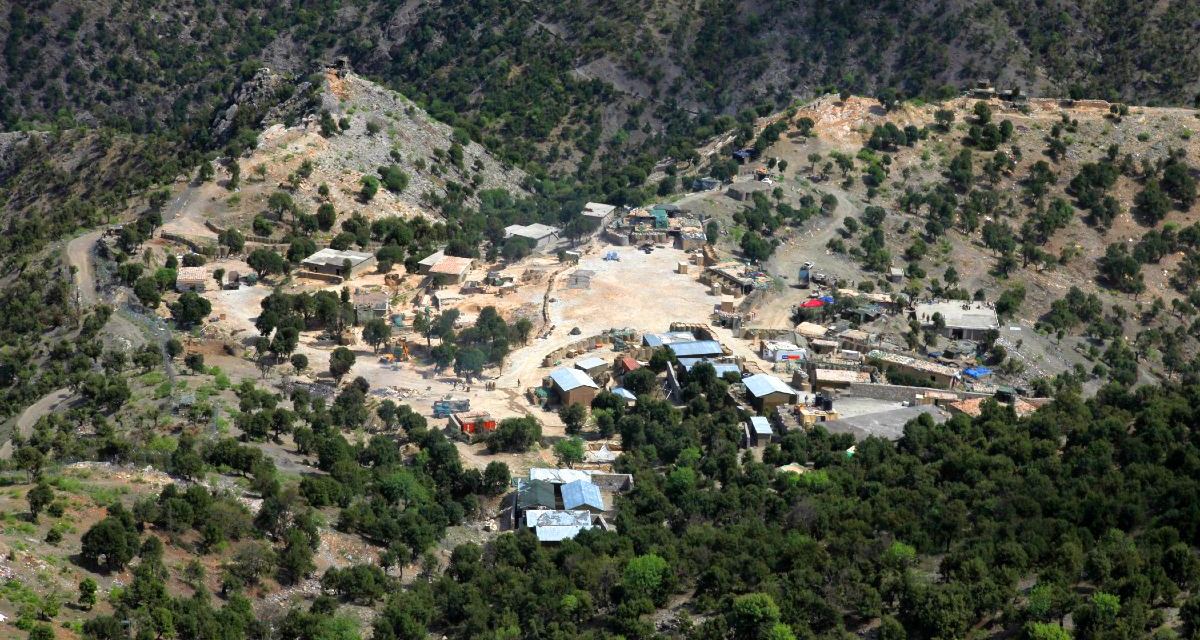
American operations in Kunar Province, Afghanistan, tied security to access, roads, reconstruction, and government presence. Coalition projects in and around the Pech and Korengal valleys connected communities to the Afghan government and opened the Korengal to economic activity. Forward positions gave US forces persistent access to terrain that was difficult to reach and sustain.
By 2010, the campaign placed greater emphasis on populated areas. The brigade commander in the area said the Korengal had once been operationally important but that US forces could continue operating there without a permanent base. The valley could remain accessible without requiring a permanent commitment.
Closing a base altered where forces lived and how quickly they could act, but it did not necessarily eliminate their ability to patrol, strike, reinforce, collect intelligence, support partners, or return when required. That gave commanders another way to think about the value of permanent presence.
Major General John Campbell took the same approach as commander of Regional Command–East. His command closed some positions, transferred others to Afghan forces, reinforced some, and kept selected coalition bases. Campbell described those adjustments as a continuing command responsibility. He also observed that troops in remote combat outposts could become highly static because much of the force was required to protect the positions themselves.
The burden Campbell described was more than logistical. Soldiers committed to defending an outpost were unavailable for other missions. Aviation, intelligence, fires, and command attention carried opportunity costs.
The 2011 Pech realignment makes the choice even clearer. Campbell and a battalion commander argued that the US presence in the remote valley no longer fit the population-focused campaign. Operation Pech Realignment closed bases in the valley, but the command did not treat every base in the valley the same way. Combat Outpost Honaker-Miracle, for example, was left in place to help protect nearby Asadabad from insurgent pressure.
One position could be transferred, another reduced, another reinforced, and still another closed. The decision depended on what each position contributed to the campaign rather than on preserving a basing network intact because it once made sense.
The eastern Afghanistan experience showed that permanent presence was only one way to preserve access and influence. Commanders could adjust the basing network as campaign requirements changed. Southern Lebanon presented a harder version of the same problem, where the value of forward presence had to be weighed against growing costs, enemy adaptation, and the risks of withdrawal.
Southern Lebanon and a Contested Choice
Israel’s security zone in southern Lebanon began with a clear military purpose. The Israel Defense Forces have described the zone as a buffer intended to protect northern Israeli communities from attacks originating in Lebanon. Israel maintained a military presence in southern Lebanon for that purpose until its withdrawal in May 2000.
The arrangement gave Israel distance from its border and placed much of the fighting inside Lebanon. It also reduced the number of Israeli forces required for a full occupation.
Hezbollah changed the character of the fight. Israeli and South Lebanon Army (an Israeli-aligned militia) positions became persistent targets, and the Israel Defense Forces adjusted surveillance, outpost protection, and force employment in response to Hezbollah’s improved methods. Tactical adaptation helped preserve the positions but could not settle whether the larger posture remained worth the commitment.
Israeli Prime Minister Ehud Barak eventually concluded that the security zone no longer served Israel’s military needs. In 2000, he said the zone had ceased to be a military asset and had become a liability. His argument went beyond the immediate casualty count. Barak also questioned whether the continuing military effort remained worth the human and operational cost.
Senior Israeli officers had substantial reasons to resist Barak’s conclusion. Chief of Staff Shaul Mofaz and other senior leaders warned that unilateral withdrawal might encourage Hezbollah attacks inside Israel and force Israeli troops to reenter Lebanon under international criticism and without the South Lebanon Army’s assistance.
Barak and his military critics were weighing different risks. One side saw a forward posture that consumed more effort for a declining benefit. The other side feared the military consequences of surrendering terrain, partners, deterrence, and the ability to shape events north of the border.
Enemy adaptation can reduce the value of a position even when the position remains defensible. A base intended to deny infiltration may become less useful when the adversary develops other ways to attack. A network built to impose costs can also become a predictable set of targets that draws more forces into defending the network itself.
Israel’s current positions in southern Lebanon should be judged by what they continue to provide as the campaign changes. They may offer advantages that cannot be reproduced from Israel’s border, and those advantages may justify substantial costs. Their value will depend on how Hezbollah adapts, what Lebanese forces can assume, what other Israeli capabilities become available, and how Israel’s objectives change. The earlier security zone offers no automatic answer. But it does show why commanders need to keep reassessing what a forward posture provides to the campaign.
Henderson Field provides the counterpoint to southern Lebanon, illustrating when a costly forward position still deserves to be held. American forces accepted severe costs because the airfield provided capabilities the campaign could not readily reproduce elsewhere.
Henderson Field and the Case for Staying
Henderson Field on Guadalcanal during World War II imposed extraordinary costs on American forces. The Navy avoided slow transports in contested waters and instead used fast destroyers to carry aviation fuel, bombs, and Marine ground crews to the airfield. The fight to sustain the island drove repeated naval engagements because neither side could securely maintain its forces on Guadalcanal.
American commanders kept paying those costs because Henderson Field provided capabilities the campaign needed. Completing and operating the airfield allowed US forces to interdict Japanese reinforcements and supplies, while American aircraft controlled the surrounding waters during daylight. Japan planned to land roughly ten thousand additional troops while battleships suppressed Henderson Field. The naval Battle of Guadalcanal limited the reinforcement to about two thousand of this intended number.
Henderson gave American forces an advantage they could not readily reproduce elsewhere. Its aircraft threatened Japanese shipping, supported the Marines ashore, and made daylight movement around Guadalcanal far more difficult for Japan. Losing the airfield would have weakened the campaign at its core.
Henderson is useful because it highlights why cost should not inevitably become the deciding factor. Some bases need large commitments precisely because they generate effects the campaign cannot afford to lose.
Khe Sanh eventually reached a different point. The Marines had developed other ways to support mobile operations, while holding the base increasingly tied forces to a position the division no longer needed. Henderson continued to provide capabilities American forces could not readily reproduce elsewhere.
Taken together, these cases show that base value depends on what a position provides to the campaign, what the force gives up to maintain it, and whether those effects can be produced another way.
Four Ways to Assess Base Value
As campaigns change, commanders and their staffs should reassess base value in four ways.
First, assess whether the position continues to serve the operational campaign. Khe Sanh’s value changed as the 3d Marine Division changed how it fought, even though the position remained defensible and useful for local operations. A base has value because of what it contributes to the campaign, not because of its location, history, or past importance.
Second, assess what capability disappears if the force leaves. Henderson Field provided capabilities American forces could not readily reproduce elsewhere. By 2010, American commanders believed they could continue operating in the Korengal without maintaining a permanent presence. Some bases provide access, fires, protection, intelligence, or logistical support that cannot be replaced. Others provide effects that commanders can generate from another location or by another means.
Third, assess what the force gives up by maintaining the position: the opportunity cost of keeping the base. Fuel, construction, and transportation impose costs, but the larger burden may fall on combat power. Bases consume maneuver forces, aviation, fires, intelligence, engineers, air defense, and command attention. Campbell’s concern about static forces in eastern Afghanistan centered on what troops could not do while committed to protecting remote positions. Commanders should compare the value produced by a base with what those same forces and resources might accomplish elsewhere.
Finally, assess whether the position supports the next stage of the campaign. Some bases create options for what comes next. Others preserve a disposition built for an earlier phase. As the main effort shifts or commanders gain other ways to produce the same effects, a base that once supported the campaign can begin to constrain it.
These assessments can lead to retention, adaptation, transfer, realignment, or closure. They can also produce different answers for nearby positions, as the Pech experience demonstrates.
Keep the Base Tied to the Operational Campaign
Bases acquire permanence easily because forces build routines, infrastructure, command relationships, and history around them. Units learn the surrounding terrain, logisticians build systems to sustain the position, engineers improve it, and headquarters begin planning around its continued existence. These investments can make reassessment harder, but they do not determine the military value of the position.
Much has changed since World War II. The technologies available to commanders are more sophisticated. The speed and reach of modern fires have increased dramatically. The character of conflict has evolved. But the fundamental problem remains: Commanders must judge whether a position continues to justify its costs.
Commanders and their staffs should preserve the military advantages a forward posture was built to create. When those advantages change, basing decisions should change with them. The hard lesson from seventy years of campaigns is that permanence is the enemy of relevance. A commander who waits for the reduced value of a position to become undeniable will have waited too long.
Michael Carvelli is a US Army lieutenant colonel and engineer officer who writes from an operational planning, protection, and engineering perspective.
The views expressed are those of the author and do not reflect the official position of the United States Military Academy, Department of the Army, or Department of Defense.
Image credit: Spc. Victor Egorov, US Army