
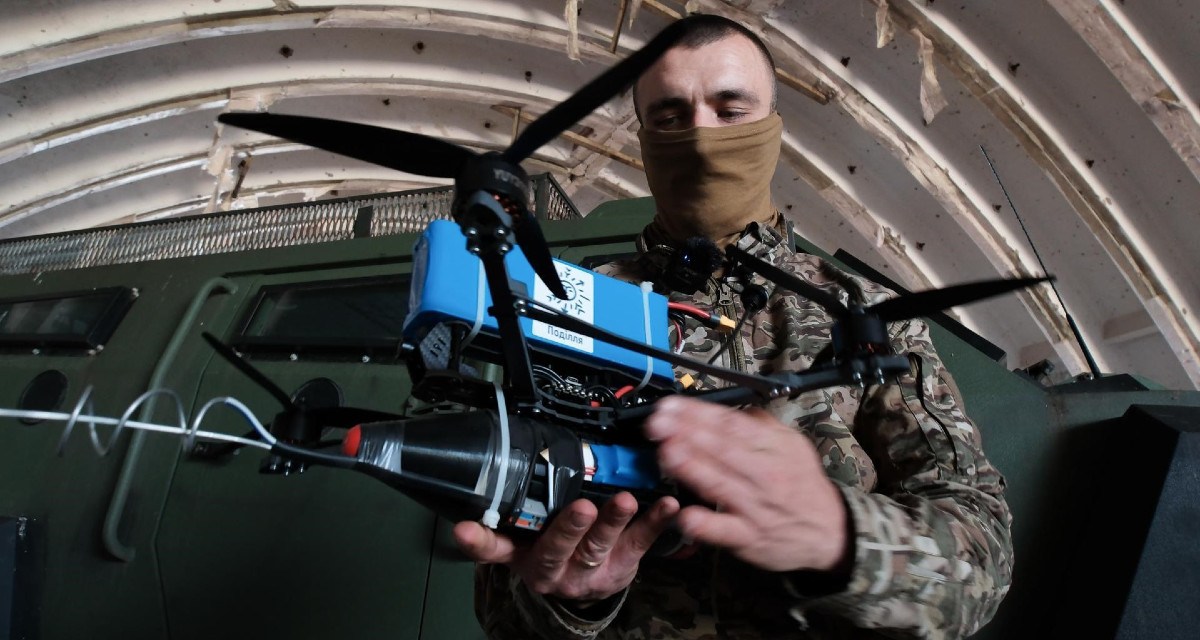
After living in Kyiv, traveling around the country, and observing how Ukrainians employed drones, I knew the US Army would struggle in this kind of fight. And yet, there is an increasingly apparent resistance to learning from Ukraine’s experience. I have often heard from senior leaders that American forces will “fight differently” than Ukraine has, suggesting there is little to learn from the conflict because of its uniqueness. That the US Army has a bias for maneuver is no secret, but an insistence that American-style maneuver warfare obviates the need to learn from Ukraine does not hold up to scrutiny.
When our aviation catalyst team developed a plan to bring Ukrainian forces into the Combined Resolve exercise in April and May 2026, I served as the primary contact for Security Assistance Group–Ukraine in Kyiv and coordinated Ukrainian participation. We expected the US force to lose handily and believed the Army needed a wake-up call. I hoped the US brigade’s simulated losses would lead Army leaders to accelerate drone fielding and training under the Pentagon’s July 2025 “Unleashing U.S. Military Drone Dominance” directive. Unfortunately, I continue to encounter the “we fight differently” argument used reflexively in an attempt to dismiss our own deficiencies and alleviate our need to change.
Retired Lieutenant General Curtis Buzzard argues that the United States and its allies are learning too slowly from the war in Ukraine. He calls for carrying battlefield observations into changes in doctrine, organizations, training, and equipment, then testing those changes and repeating the process. A smart place to start is by eliminating the “we fight differently” argument.
Maneuver Has to Be Demonstrated
An article published earlier this year attributes much of drones’ prominence to deficient maneuver and airpower, emphasizing Russian failures. Its authors advocate studying and using drones while expecting them to remain “dangerous but limited” against proficient combined arms forces.
At Combined Resolve 26-07, Ukrainian drone teams entirely disrupted an American armored brigade’s maneuver. The Wall Street Journal reported that approximately 3,500 Americans participated, primarily from the 3rd Armored Brigade Combat Team, 1st Cavalry Division. Ukrainian operators initially reinforced the resident opposing force. The US brigade had standard electronic warfare and counterdrone systems, yet Ukrainian drones detected their moving vehicles within minutes, aided by the dust the vehicles raised. Simulated strikes followed. The brigade was eliminated in the simulation, and controllers returned vehicles to the scenario to keep the exercise going. The Ukrainian teams achieved these results despite artificial limitations imposed on them during the exercise.
What unfolded on the rolling Bavarian hills was straightforward. On one side, an American armored formation attempted to attack using current doctrine. On the other, Ukrainian teams combined persistent reconnaissance, specialized crews, direct communication across units, and a shared picture in DELTA, Ukraine’s battlefield information system, to create a horizontal kill web. Their advantage came primarily from this system of fighting, which allowed them to wreak havoc on the US armored force. The outcome demonstrated current Army doctrine’s mismatch with modern battlefield realities.
(Incidentally, the Ukrainians offered to use US-made drones for the exercise, but the US manufacturer could not supply the requested quantity in time. If we claim the Army is a maneuver force, we must back that claim with formations that can move, fight, and resupply under enemy drone observation and attack.)
US forces improved during the rotation, and the Ukrainians later switched sides and helped the Americans employ drones offensively. This exercise’s value is clear: Our formations need this experience, and the opportunity to learn drone lessons, from both success and failure, before entering combat.
A similar warning emerged from Estonia’s Hedgehog exercise in May 2025, which also included Ukrainian participation. In interviews with Estonian Public Broadcasting, participants described Ukrainian integration of drones and DELTA. Reserve Major Sten Reimann warned that familiar large daytime convoy movements could cost a brigade most of its combat equipment by evening.
In a November 2025 essay, British military expert William F. Owen questions drawing conclusions from watching a Russian army that is “very badly trained and very badly equipped.” But Russian shortcomings do not demonstrate American readiness. The only thing that can demonstrate it is credible self-evaluation. And which exercise can we point to that shows that an American formation can withstand enemy drone observation and attack while accomplishing its mission? US Army units cannot assume an enemy will allow them to fight as they prefer.
During Operation Vivaldi, Ukraine’s Third Army Corps spent months setting conditions by attacking Russian drone networks and their supporting logistics before conducting mechanized attacks. In one reported assault, four armored vehicles broke through Russian lines and deliver dismounted infantry near Russian drone positions. Brigadier General Andrii Biletskyi, commander of Third Army Corps, alluded what an achievement this was when he described the difficulty of employing armored vehicles in a drone-saturated environment: “Using armored vehicles is effectively a special operation in itself. It requires extremely detailed planning and synchronization of a huge number of assets.”
Vivaldi’s months of preparation and coordination were part of the cost of creating openings for mechanized maneuver. The US Army seeks similar opportunities through convergence, combining capabilities against decisive points to create advantages a formation can exploit.
Protect the Bases That Sustain Maneuver
Airpower can disrupt an enemy’s ability to observe, communicate, and attack. Russia uses standoff glide bombs to support ground operations while reducing aircraft exposure to Ukrainian air defenses. Ground forces also need protection against small drones in the air-ground littoral, the low-altitude airspace above them. Assessments of American airpower should specify which drone threats it suppresses, for how long, and which threats ground forces must still confront.
Advancing forces depend on fixed bases, ports, and airfields. Aircraft require fuel, ammunition, maintenance, and the personnel and equipment that provide them. Those facilities need protection from drones throughout the campaign. The March 1, 2026, drone attack at Port Shuaiba, Kuwait that killed six American soldiers at a fixed facility supporting American forces emphasizes this deadly reality.
Test Counter-drone Defenses Under Operational Conditions
To be sure, there is an allure to the argument that counter innovations can restore maneuver, and that these should be prioritized over the alternative of adopting Ukraine’s approach to drone warfare. But with any counterdrone innovation, what specific threat can it defeat? Can it sustain protection through repeated engagements while the formation conducts its mission? What demands does it impose on operators, power, ammunition, maintenance, and other friendly systems? Those questions require answers before we can assume freedom of maneuver will be restored.
During my assignment in Ukraine, Ukrainian operators repeatedly told me about American systems that had failed in combat. I saw American equipment sitting unused while units conducted combat operations with Ukrainian systems they preferred. The operators I spoke with generally favored Ukrainian-developed drones designed for specific missions, citing performance and cost. They were willing to accept American systems free of charge but prioritized Ukrainian systems when spending their own funds. They also said equipment that worked one week could be ineffective the next. A recurring complaint was that American drones were overengineered and burdened with features intended to serve too many missions. American systems also failed in Ukraine because they were unprepared for its operational environment. When I asked Ukrainians what drones they wanted, the requests I received were invariably for Ukrainian systems.
A US Army brigade discovered a related testing problem during a Middle East deployment from 2023 to 2024. Two of the brigade’s battalion commanders documented how they tested prototype lasers and counterdrone missile systems against drones built from different materials than the Iranian unmanned systems they actually faced. The test drones were easier to shoot down, creating false confidence in the prototypes’ effectiveness.
Brave1’s Test in Ukraine initiative offers foreign developers a route to testing defense technologies with Ukrainian users. American drone, counterdrone, and electronic warfare companies should use such programs to test and refine their systems as battlefield conditions change. Tests of defensive systems should identify the threats they can defeat and the conditions in which protection fails.
Integrate Drones into the Force
The Army must integrate drones into every warfighting function, including maneuver, where unmanned systems can strengthen initiative and tempo.
During my assignment in Ukraine, I observed soldiers using a shared common operational picture that retained imagery, source information, locations, and updates. The US Army should obtain or reproduce that capability so crews can use and update the same records during their missions.
Ukraine’s Ministry of Defence reported 200,218 confirmed drone strikes recorded in DELTA during June 2026, compared with 105,798 in January. Those records include strikes against personnel, vehicles, weapons, shelters, and enemy drones. But inside this date is a more detailed story. In his account of operating first-person-view drones in Ukraine, Jakub Jajcay reported intended-target hits with detonation on 43 percent of his team’s flown sorties, falling to 20–30 percent when requested missions that could not be attempted were included. This highlights how important it is that commanders compare weapons by the effect required, cost, availability, speed, and risk to soldiers. It also reveals how risky it is to dismiss drone warfare lessons from Ukraine based on the vague notion that we fight differently.
Still, the temptation to do just that endures among observers who believe that “skill, aggression, and smart tactics will always overcome technology.” History tells a different story. At the Hayfield Fight in 1867, American soldiers and civilian hay cutters defended a fortified corral with newly issued breechloading Springfields and civilian-owned repeating rifles. Faster reloading and sustained fire from cover helped them repel Cheyenne, Arapaho, and Sioux attacks. At Kings Mountain in 1780, Patriot riflemen used trees and rocks for cover and exploited their rifles’ greater accuracy against Loyalists armed primarily with muskets. The weapons available shaped the tactics each force could employ and the firepower it could deliver.
In both of these cases, technology told, which makes it curious to assume that drone technology will not. Drones complicate movement, resupply, and the occupation of terrain. Combined arms formations need tactics that account for those effects.
Organize Around the Mission
Ukraine’s Unmanned Systems Forces employ aerial, ground, and maritime systems. Poland activated its own unmanned systems component in January 2025 and established an inspectorate within its Armed Forces General Command, the organization responsible for training, readiness, and force generation. Russia copied Ukraine by announcing its own Unmanned Systems Forces branch in November 2025. All three countries have assigned dedicated organizations the responsibility for unmanned systems.
Meanwhile, the US Army recently returned the 3rd Battalion, 504th Parachute Infantry Regiment from its experimental unmanned assault battalion role to airborne infantry duties. While assigned to Ukraine, I escorted the battalion’s leaders to meet Ukrainian drone units, manufacturers, and experts. Our Ukrainian hosts questioned the fit between the battalion’s parachute-infantry mission and the way their drone units fought, almost exclusively from fortified positions. In my judgment, the mismatch between those missions made a parachute infantry battalion a poor starting point for the Army’s first dedicated drone formation. But that does not mean the Army does not need an assigned drone experimentation unit.
Such a unit, however, is not in itself enough to adapt to the rapidly changer character of modern, drone-enabled warfare. Buzzard, the former commander of Security Assistance Group–Ukraine, has recommended three changes: a dedicated unmanned systems branch within the Army, unmanned systems integrated throughout existing formations, and separate dedicated units capable of massing effects with traditional strike capabilities.
Test American Advantages Against Ukrainian Experience
Under the Army Transformation Initiative, commanders should test adaptations with other units and send the results to the schools responsible for validating tactics and training the force.
For example, if a company changes its convoy tactics and successfully gets through a dangerous supply route, the brigade commander should have another company try those tactics under comparable conditions. If the second company can repeat the result, the brigade commander should send the test conditions and results to the Transportation School so it can validate the tactics and update convoy training.
Training centers should also include fiber-optic drones in exercises and plan for the risk of cable fouling vehicle tracks and the work of clearing the cable afterward. And US Army Europe and Africa should continue to fund interpreters, drones, and repairs so units can repeat these exercises with Ukrainian partners.
What Does Success Look Like?
Every formation should be able to employ its own drones while defending itself against enemy drone attacks. That requires layered protection suited to the formation’s mission and echelon, drawing on electronic warfare, kinetic weapons, and physical barriers. Commanders will know the changes have worked when their formations can do both and still accomplish the mission under the toughest conditions they can reasonably expect in combat, without exercise controllers having to dial back the threat.
Commanders should test their formations against the drone threat in demanding exercises and use the results to change how their units train, equip, and fight. In other words, to fight differently.
If American military leaders dismiss this conflict as a case of two bad armies fighting, or collect its lessons without acting on them, American soldiers will bear the consequences. They should not have to discover under fire what we had the opportunity to learn and address before sending them into combat.
Chief Warrant Officer 3 James L. Andreasen is an Apache instructor pilot and UAS master trainer at the US Army Aviation Center of Excellence. He served six months with Security Assistance Group–Ukraine in Kyiv and was the primary in-country contact coordinating Ukrainian participation in Combined Resolve.
The views expressed are those of the author and do not reflect the official position of the United States Military Academy, Department of the Army, or Department of Defense.
Image credit: RBC-Ukraine