The recent White House summit with Beijing produced an agreement to address US concerns regarding critical mineral shortages. This is an important step—but a small, first one. Much more is needed on this diplomatic front as both economic strength and military capability rely heavily on fragile industrial ecosystems built around obscure ostensibly minor materials measured in kilograms.
The global scandium market demonstrates exactly how microscopic material bottlenecks can cripple massive defense programs, on top of their consequences for advanced civilian technologies. Annual consumption of this specialty metal would barely fill a single railcar. Yet, it dictates the production of advanced aerospace systems, additive manufacturing, and next-generation defense electronics. The market is opaque, highly concentrated, and dangerously dependent on Chinese processing capacity at the exact moment when American and allied military demand is peaking.
Beijing can sever supply chains and impose export controls overnight. Conversely, establishing new mines, refining systems, and aerospace qualification programs to sustain modern military power requires years of capital investment. Industrial deterrence operates on a far slower clock than geopolitical confrontation.
The US Geological Survey estimated global consumption of scandium oxide in 2025 at sixty metric tons, representing almost a 50 percent increase from the year earlier. Even after that jump, scandium remains an extraordinarily small market by global commodity standards. When added to aluminum in concentrations of less than one percent, scandium significantly improves strength, corrosion resistance, and weldability without imposing major weight penalties. For aerospace manufacturers that work to increased range, payload, fuel efficiency, and structural endurance to maximum degrees, those gains are essential.
The F-35 program already incorporates aluminum-scandium alloys. Besides fighter aircraft, scandium-stabilized fuel-cell systems are gaining traction for deployed battlefield energy generation. Simultaneously, aluminum scandium nitride films are emerging as essential components in the advanced communications infrastructure required for next-generation autonomous systems and military networks.
Unlike other materials essential to defense manufacturing like copper, lithium, or nickel, scandium is not mined anywhere in the world. Rather, it is produced as a byproduct of titanium dioxide production, nickel processing, and uranium mining. Beijing exploited this through decades of state-backed refining investment, permissive industrial policy, and byproduct recovery infrastructure that Western economies largely ignored as commercially uneconomical. Today, China controls over 90 percent of global refined scandium chemical production and effectively all metallized scandium used in advanced semiconductor applications.
Opportunities to address this issue in the United States and allied countries have potential. Scandium-bearing laterites in eastern Australia have some of the best grades in the word. The Syerston deposit in New South Wales exemplifies this advantage: Its 2025 resource update establishes proven and probable reserves of at least 1,311 tons, and it is amenable to conventional open-pit extraction with low strip ratios and no blasting. Deposits in Canada and the United States typically grade an order of magnitude below the best Australian laterites, requiring the processing of far larger ore volumes, with commensurately higher capital intensity, deeper mining, and more complex refractory metallurgy. These structural differences in grade, mining depth, metallurgical simplicity, and scalability are critical for a market projected to grow around fivefold, to approximately three hundred tons per year, by 2030.
Military Power and a Pacing Threat
As F-35 production scales up, alongside the development of next-generation fighter aircraft and hypersonic munitions, the requirement for lightweight, high-strength materials is accelerating rapidly. Additive manufacturing compounds this demand. Airbus Group’s APWorks developed Scalmalloy specifically for 3D-printed defense components. Simultaneously, the Lockheed Martin Skunk Works division is prototyping advanced aluminum-scandium fighter parts. Additive manufacturing allows damaged components to be replaced instantly on the battlefield and produces complex, lightweight geometries impossible to achieve with conventional machining. Metallized scandium remains mandatory for the aluminum scandium nitride films inside bulk acoustic wave filters. These piezoelectric components are essential for 5G and 6G communications and autonomous military networks.
Defense procurement must now compete directly with growing civilian technology requirements. Bloom Energy has been cited as the largest scandium consumer in the world accounting for approximately 74 percent of total global consumption, with a typical Bloom Energy server of 100 kW containing thirteen to fifteen kilograms of scandium oxide. This dependency stems directly from the core architecture of its solid oxide fuel cells, whose demand is rapidly growing as a power source for AI data centers. Bloom Energy’s outsized consumption has made it a pivotal actor in global scandium supply chain development. Amid investor concerns over China’s April 2025 rare-earth export restrictions, Bloom’s CEO K. R. Sridhar clarified that the company is not dependent on China for scandium and sources it from multiple geographies across multiple continents. These concerns over Chinese dependence affect companies like Bloom, but also defense manufacturers, and they compete against one another for scandium supply.
Beijing’s historical dominance in byproduct recovery kept commercial scandium oxide prices artificially low, averaging $640 per kilogram. To guarantee material access, the US Defense Logistics Agency bypassed commercial markets entirely, awarding a $40 million sole-source contract to Rio Tinto for 6,384 kilograms of Quebec-sourced scandium oxide, with the solicitation requiring a 99.8 percent purity. That procurement implies a price of $6,250 per kilogram. This massive 900 percent premium represents the financial penalty of outsourcing critical refining infrastructure.
Washington and its allies are actively financing a parallel supply chain to escape this vulnerability. The Pentagon awarded $10 million in Defense Production Act funding to NioCorp for a Nebraska facility projecting 104 metric tons of annual output. ElementUS Minerals received an additional $29.9 million to extract scandium from Louisiana industrial waste streams. Internationally, the US Export-Import Bank issued a $67 million letter of interest for Australia’s Syerston project, prompting Lockheed Martin to secure an option for fifteen tons of annual output from the site.
China’s export control regime for critical minerals has progressively extended from raw materials to the capital equipment and technical services required to process them outside China. The first significant step was taken in December 2023, when China banned the export of rare earth extraction, separation, and smelting technologies, as well as technology for producing rare earth metals, alloys, and permanent magnets, by adding these to its Catalogue of Technologies Prohibited or Restricted from Export. This covered core processing know-how rather than physical equipment.
Controls on physical processing equipment followed in October 2025, when China’s Ministry of Commerce and the General Administration of Customs jointly placed over twenty categories of rare earth production and processing equipment under mandatory export licensing. They also extended controls to the associated technology and services, covering not only process specifications and design drawings but production line assembly, calibration, maintenance, repair, and upgrade services, meaning that Chinese engineers and technicians providing field support for overseas rare earth processing operations now require a government license to do so. Following US-China summit in South Korea later that month, China temporarily suspended some of these measures. However, as China Briefing notes, the suspension applies only to the October 2025 measures and not controls announced six months earlier, which placed seven medium and heavy rare earth elements, including scandium and yttrium, under mandatory export licensing. These remain fully operative.
Industrial Deterrence Requires Industrial Redundancy
The global scandium market perfectly encapsulates the threat from China. This structural deficit cripples advanced military economies, a reality highlighted during the most recent US-China summit. The White House announced Beijing would address US concerns regarding critical mineral shortages, including scandium. Yet China’s Ministry of Commerce made no corresponding mention of rare earths in its own summary.
The growing danger is the erosion of industrial confidence. Aerospace qualification programs and semiconductor fabrication require predictable, multidecade material access. Uncertainty surrounding long-term supply delays capital investment, discourages scaling, and fragments allied production planning. True industrial deterrence requires absolute confidence about supply chains surviving geopolitical stress without collapsing.
Washington and its allies must approach scandium as the ultimate standard for achieving industrial resilience with three priorities.
First, policies must aggressively target midstream processing and metallization capacity. The critical bottleneck in specialty mineral markets is the refining, separation, and industrial processing infrastructure required to transform raw material into usable defense inputs. China built its scandium monopoly through decades of investment in these exact midstream ecosystems. Rebuilding allied supply security requires capitalizing and scaling these specific refining nodes, particularly across partner nations like Canada and Australia.
Second, specialty metals markets must be classified as critical defense infrastructure. Markets as small and opaque as scandium will never generate sufficient resilience through free market forces alone. Strategic stockpiles, Defense Production Act financing, long-term offtake agreements, and allied procurement coordination are absolute baseline requirements for sustaining advanced manufacturing in the tech sector and for military capabilities.
Third, there needs to be an immediate shift from peacetime efficiency to wartime endurance. The legacy logic of optimizing supply chains for low costs falsely assumed perpetual global stability. Sustaining military power against a strategic competitor rewards total redundancy, geographic diversification, surge capacity, and industrial recoverability under extreme stress. Establishing these capabilities will be very expensive and time-consuming, but it does highlight the brutal cost of allowing critical industrial ecosystems to consolidate inside adversarial borders.
The scandium market amounts to only a few dozen tons annually, but the strategic stakes are massive. Securing technological overmatch for deterrence and for the next war requires assured control of the obscure industrial ecosystems that manufacture those weapon systems in the first place.
Macdonald Amoah is an independent researcher with interests across critical mineral supply chains, advanced manufacturing gaps, the industrial base, and geopolitical risks in the mining sector.
Morgan D. Bazilian is the director of the Payne Institute for Public Policy and professor at the Colorado School of Mines.
Jahara Matisek, PhD, is a US Air Force command pilot, senior fellow at the Payne Institute for Public Policy, and a visiting scholar at Northwestern University. The views in this article are his own and do not represent those of the US Air Force, Department of War, or any part of the US government.
The views expressed are those of the authors and do not reflect the official position of the United States Military Academy, Department of the Army, or Department of Defense.
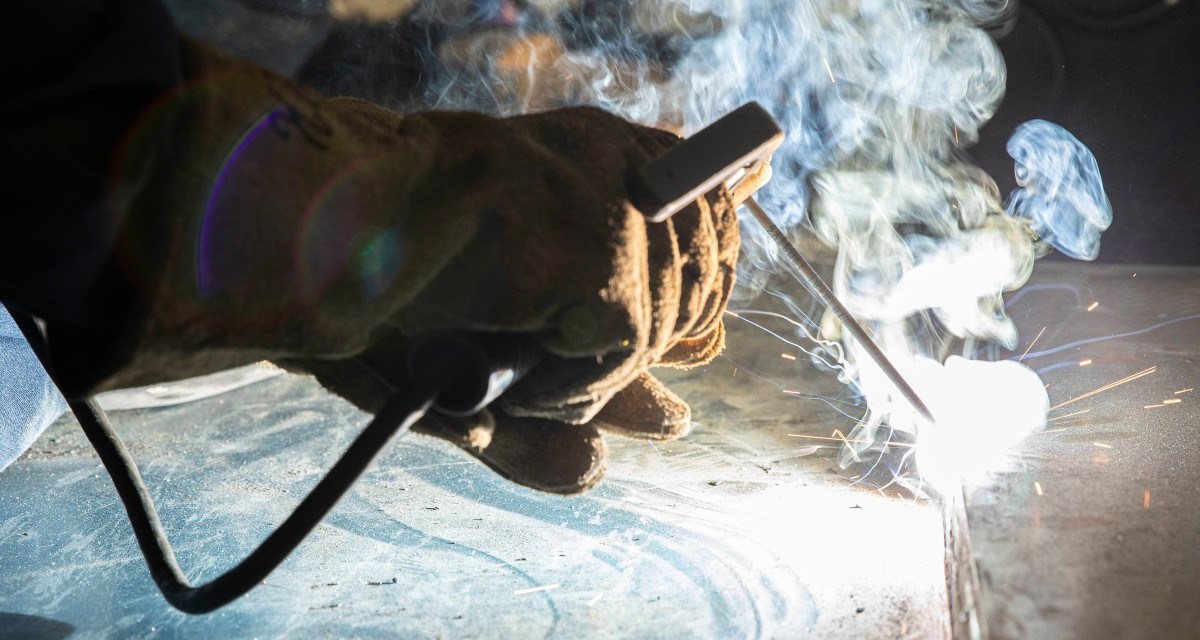
Image credit: Mass Communication Specialist 3rd Class Amber Speer, US Navy