Admiral Brad Cooper, commander of US Central Command, recently declared that the United States has “flipped the cost curve” in drone warfare. “The days of using high-value defenses to shoot down cheap targets are behind us.”
Admiral Cooper is correct. Using a PAC-3 to kill a $500 drone is not sustainable, and the push to field lower-cost solutions is long overdue. But solving this drone problem creates the risk of letting cost-exchange logic metastasize into procurement decisions that govern our defense against a wide range of aerial threats.
While often thought of as a cost problem, air and missile defense is better understood as a reliability problem under conditions of zero tolerance for failure. In this light, modern interceptors are not overpriced tools for cheap threats; they are, in fact, the only systems capable of guaranteeing the defeat of the most dangerous weapons on the battlefield. And over the past two years, they have done exactly that.
There Is No Cheap Answer to Ballistic Missiles
A cost-exchange critique misunderstands both what these systems are built to do and what happens when they are absent. Air defense is not only about matching the material cost of a threat. It is about guaranteeing its defeat every time in an environment where a single failure can have strategic consequences. Therefore, the relevant comparison is not between the interceptor and the threat it destroys, but between the interceptor and the loss it prevents.
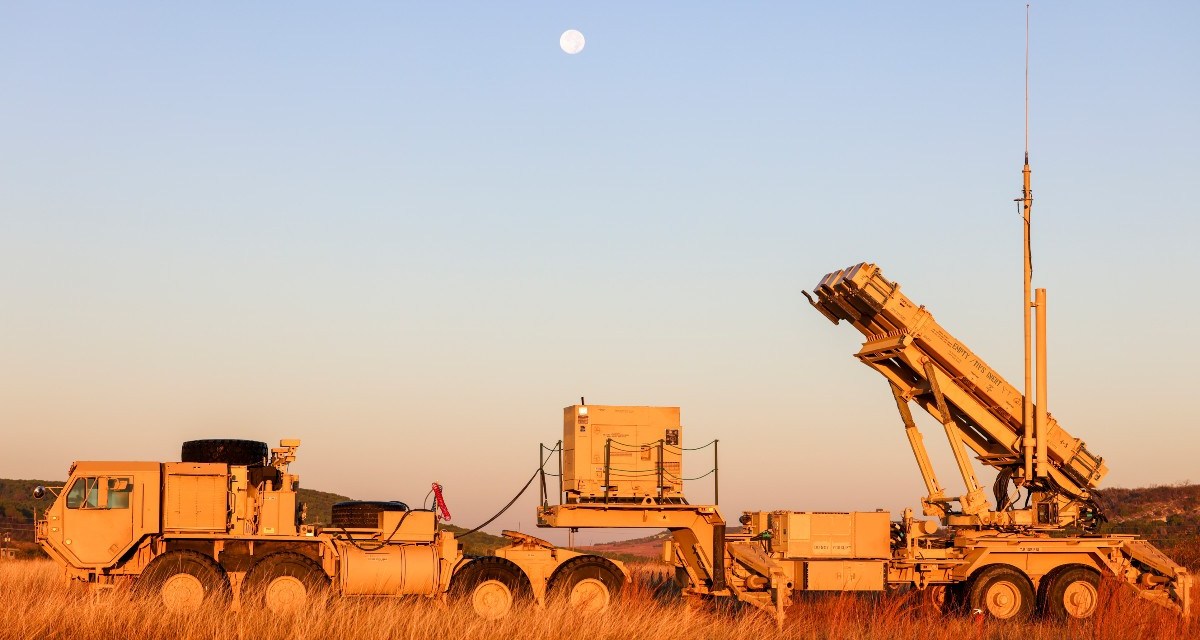
In October 2024, Iran launched two hundred ballistic missiles at Israel in a single night. These were not improvised weapons or expendable drones. These missiles travel at multiple kilometers per second and carry warheads capable of devastating airbases, cities, and infrastructure. There is no cheap solution to defeating them. There is no substitute for systems like Patriot, THAAD, Aegis, and Arrow because the threat demands exactly the capabilities these systems provide.
Without interceptors, even a limited penetration rate would have been catastrophic. If 10 percent of the missiles Iran launched at Israeli cities had reached their targets, Israel would have absorbed twenty 750-kilogram warheads detonating in crowded urban centers. At higher rates, civilian casualties in in densely populated cities like Tel Aviv could have mounted into the hundreds or even thousands while critical infrastructure would have suffered long-term disruption. (Those who doubt should consider the damage done by Russia’s latest air raid against Ukraine, or how Ukraine’s new long-range drone attacks are crippling Russia’s oil exports.)
Instead, only a handful of Iran’s missiles penetrated defenses—some deemed less destructive were deliberately allowed through as Israel conserved interceptors—and the resulting damage was minimal. No system achieves a 100 percent intercept rate, nor is that the sine qua non of air defense. Air defense exists to prevent catastrophic outcomes. By that measure, the October defense succeeded completely. This is the baseline against which interceptor cost must be measured.
Interceptors are expensive because physics leaves no alternative. Critics evaluate systems designed to defeat the most demanding threats by how they perform against the least demanding ones. They argue that high-end interceptors are too expensive relative to low-cost drones and one-way attack munitions. These concerns are valid—to a point—but it must also be understood that those interceptors are not competing with lower-cost systems for the same mission. They occupy a threat-tier that cheaper systems cannot reach.
Air defense is not a menu of interchangeable options. It is a layered architecture built around dependency. Lower-cost systems are essential for handling large volumes of cheaper threats, as they improve efficiency and preserve magazine depth. But such weapons rely on the upper tier for detection, tracking, and engagement of high-end threats. Remove the long-range interceptors and their associated sensors, and the system becomes cheaper, but also incapable of defending against the very weapons most likely to produce catastrophic outcomes.
The answer to the drone cost problem is to accelerate the procurement of lower tiers like Coyote in order to strengthen the foundation those systems depend on for detection, tracking, and engagement of threats they cannot handle themselves.
At the same time, we must build interceptors at scale and provide long-term demand to the supply chain to drive down costs. We must also build out the supplementary layers to share the burden. Directed-energy systems such as Israel’s Iron Beam or America’s HELIOS promise cost-per-shot figures measured in single digits of dollars. The LUCAS program is developing low-cost cruise missile analogues to fill a similar role. Similar efforts are underway to develop low-cost interceptors for lower-level threats like one-way attack drones and other weapons. Investment in capabilities like these is urgent and overdue. An “all of the above” approach is warranted.
Efficiency Does Not Equal Effectiveness
But efficiency is not the same as effectiveness. A layered system does not fail when it is inefficient. It fails when missiles strike critical defended assets.
The defensive equation does not stand alone. Modern sensors extend detection ranges outward, allowing threats to be engaged at distance—by aircraft or forward-positioned systems—before they close on defended targets. Those same sensors reveal launch points, enabling strikes that disrupt attacks at their sources. Air defense is not only a shield. It is also a means of offensively shaping the battlefield.
In 2022, a Ukrainian Patriot crew shot down a Russian A-50 airborne early warning aircraft (valued at $350 million) and an Il-22 airborne command post 150 kilometers behind the front lines. That intercept degraded the Russian air picture over a significant portion of the theater and provided a return on investment that no cheaper munition could have delivered, because no cheaper munition has the ability to make that shot.
Again, the relevant comparison is not between the interceptor and the drone; it is between the interceptor and the loss it prevents. A $9 million SM-3, or a $4 million PAC-3 MSE, is not expensive relative to a $2.5 billion destroyer, a $13 billion carrier, or the lives of the sailors aboard either.
When the asset is irreplaceable, cost becomes secondary to outcome. This is the logic of air defense.
Total Domain Dominance
Strategic air defense reshapes the air domain through its presence. It forces adversaries into standoff weapons, higher-cost platforms, and degraded intelligence, surveillance, and reconnaissance.
An interceptor is a long-range, high-altitude, multimission strategic asset that happens to be able to shoot down drones. The reason enemy strike packages do not include manned bombers overflying American forward bases is not because the threat doesn’t exist. It is because air defense makes that calculus prohibitive.
You don’t buy air defense for the drone it hits today. You buy it for the aircraft it prevents from ever coming near.
The deterrent operates continuously and silently, making it invisible to cost-exchange analysis. The absence of attack is the return on investment.
Load-Bearing Long-Range Air Defense
There is a natural, understandable tendency to make this conversation about unit cost. The correct conversation is about architecture. Cheaper solutions (LUCAS, low-cost interceptors, and directed-energy weapons) are needed to further optimize the layered system. The long-range interceptor and its associated sensors are the foundation. Removing the foundation to save money on materials and the cheaper layers above it, however effective against drones, provides no meaningful defense against the advanced ballistic missiles, hypersonic glide vehicles, and long-range cruise missiles that peer adversaries are fielding at scale.
Flipping the cost curve on drones is the right call. The mistake would be flipping it on the systems that defend against threats no drone-killer can touch. The only thing more expensive than an interceptor is an interceptor that wasn’t there when the ballistic missile arrived.
Peter Mitchell is a US Army officer and air defense expert. You can follow him on X @peternmitchell.
The views expressed are those of the author and do not reflect the official position of the United States Military Academy, Department of the Army, or Department of Defense.
Image credit: Staff Sgt. Christopher Neu, US Army