
Every major war reshapes how future wars are fought. Victory and defeat matter, but they are rarely a conflict’s only legacy. Wars expose weaknesses that peacetime exercises fail to reveal, challenge long-held concepts embedded in military doctrine, and force organizations to adapt under conditions training environment can replicate. The lessons rarely remain confined to the countries involved. They influence doctrine, force structure, procurement priorities, operational planning, and professional military education for decades.
The pattern is familiar. World War I forced militaries to rethink maneuver, firepower, logistics, and the relationship between offense and defense in the age of industrialized warfare. World War II fundamentally changed combined arms operations while demonstrating the decisive role of airpower and amphibious warfare. Fifty years later, the 1991 Gulf War showed how precision-guided munitions, stealth technology, satellite navigation, and networked command and control fundamentally changed the tempo of conventional warfare. Each conflict reshaped military thinking long after the fighting had ended.
Looking back, those turning points seem obvious, but recognizing them while a conflict is still unfolding is difficult. History suggests that militaries rarely fail because they lack information. More often, they fail because they recognize fundamental change too late.
Ukraine may ultimately prove to be one of those inflection points. No conflict offers a perfect blueprint for the next war. Every war is shaped by its own geography, technology, and political context. The value of Ukraine lies less in predicting the future than in revealing which long-held ideas deserve renewed scrutiny.
Much of the public discussion has understandably focused on familiar measures of war: territory gained or lost, casualty figures, long-range strikes, and the pace of offensive operations. Those indicators matter because they help explain how the conflict is unfolding. They may not, however, prove to be the war’s most enduring contribution to military thought.
The more consequential development is not what the battlefield is destroying. It is what the battlefield is revealing about the future of warfare itself. Persistent observation is forcing militaries to reconsider concepts that have shaped doctrine, operational planning, and the conduct of war for generations.
The End of Hidden Movement
One of the enduring principles of warfare has been the advantage conferred by moving without being seen. Whether advancing under the cover of darkness, using terrain to mask an approach, employing camouflage, or conducting deception operations, concealment has long provided forces with the freedom to move on the battlefield. It never guaranteed success, but it made surprise possible, complicated an adversary’s decision-making, and created opportunities that might not otherwise have existed.
That expectation is beginning to change.
General David Petraeus recently described what he called a “death zone” extending roughly thirty-five kilometers on either side of portions of Ukraine’s front line. The precise distance varies with terrain, weather, electronic warfare, and local conditions, but the number itself is less important than what it represents. Across large portions of the battlefield, persistent observation has compressed the time between detection and engagement to the point that movement itself has become one of the greatest operational risks.
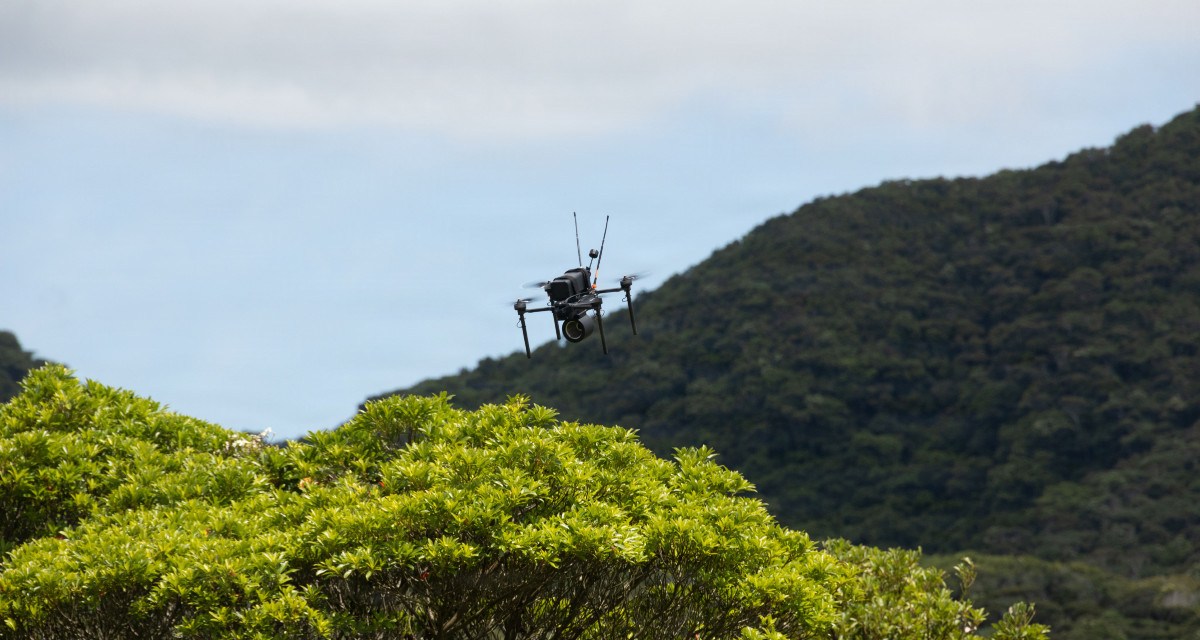
No single technology created this shift. Rather, it is the convergence of distributed sensing, reconnaissance platforms, satellite imagery, thermal imaging, digital communications, and increasingly sophisticated software capable of rapidly identifying and prioritizing targets. Individually, none of these capabilities fundamentally changes warfare. Together, they are transforming how militaries detect, track, and engage their adversaries while steadily eroding the battlefield’s capacity to conceal movement.
For much of modern warfare, the interval between detection and engagement often provided commanders valuable time to assess the situation, make decisions, and synchronize combat power. Today, that interval is shrinking. Detection, identification, decision-making, and engagement are increasingly compressed into a single sensor-to-shooter sequence measured in minutes and, in some cases, seconds.
This shift extends well beyond tactical reconnaissance. It challenges long-held concepts of concealment, maneuver, command and control, and sustainment that have shaped military operations for generations. The challenge is not that concealment has disappeared. It is that the conditions under which it can be achieved are rapidly changing. Every military now faces the same underlying question: How do militaries preserve freedom of maneuver on a battlefield where movement is increasingly subject to persistent observation?
Transparency Changes More Than the Battlefield
Persistent observation is changing more than how militaries find and engage targets. It is reshaping the foundations of military planning. For decades, concealment was never perfect, but it was achievable. Commanders expected they could move forces under favorable conditions, establish logistics hubs beyond the immediate fight, reposition headquarters when necessary, and exploit gaps in an adversary’s awareness. Those expectations influenced everything from force design to campaign planning. As persistent observation becomes an increasingly permanent feature of the battlefield, many of those long-held ideas deserve renewed examination.
Command and control illustrates the challenge. Battlefield leadership has traditionally depended on understanding conditions at the point of contact. Throughout history, commanders accepted the risks of moving forward because firsthand observation often produced better decisions than reports transmitted from afar. As movement becomes increasingly observable, effective command depends less on physical presence and more on resilient communications, distributed sensing, and mission command. The ability to understand the battlefield without standing on it is no longer simply an advantage. It is becoming an operational necessity.
The same evolution is reshaping sustainment. Ammunition, fuel, food, water, medical supplies, and replacement equipment must still reach frontline units. Those requirements have not changed. What has changed is the ability to move and distribute them without creating a detectable signature. Large supply nodes, predictable routes, and concentrated resupply operations increasingly invite detection. In response, both Russia and Ukraine have dispersed logistics, experimented with autonomous ground vehicles, and adopted more distributed approaches to sustainment. The objective is no longer efficiency alone. It is sustaining combat power while remaining difficult to find.
Defensive operations are evolving for much the same reason. Fighting positions that once offered relative security can now be identified and engaged with remarkable speed. Units are responding by dispersing over wider areas, reducing their signatures, and accepting less physical concentration in exchange for greater survivability. Protection increasingly begins before the first shot is fired.
The debate surrounding tanks reflects the same underlying principle. Armored warfare has repeatedly been declared obsolete—following the introduction of antitank guided missiles, attack helicopters, and precision-guided weapons. Each prediction ultimately proved incomplete because armored doctrine adapted while the operational requirement endured. Ukraine suggests the same lesson may apply today. The question is no longer whether armored forces remain relevant. It is how combined arms formations will preserve freedom of maneuver, concentrate combat power, and exploit opportunities on a battlefield where movement is observed almost as soon as it begins.
The increasing use of fiber-optic-guided first-person-view drones in Ukraine illustrates that adaptation. By replacing radio links with fiber-optic cables, operators have reduced their vulnerability to electronic warfare while restoring capabilities that had become increasingly contested. The capability itself is less important than what it reveals. Every effort to improve detection, disruption, or targeting is quickly met by an equally determined effort to adapt.
Every improvement in detection has historically produced an equally determined effort to avoid detection. Camouflage evolves. Electronic warfare adapts. Decoys become more convincing. False signatures become more valuable. Advances in reconnaissance have never eliminated deception; they have simply forced it to evolve.
This cycle is not new. The introduction of radar reshaped aerial warfare. Precision-guided munitions altered battlefield dispersion. Every major advance in observation has produced corresponding innovations in deception, concealment, and survivability. Persistent observation is simply the next chapter in that continuing competition.
That may prove to be Ukraine’s most enduring contribution to military thought. Persistent observation is not ending the competition between observation and concealment. It is accelerating it. Every improvement in battlefield awareness generates new methods of concealment, deception, and maneuver. The future battlefield is less likely to be defined by a single technology or weapons system than by a continuous competition between observation, adaptation, and deception.
Seeing the Next War
Every generation of military planners and intelligence professionals inherits a framework shaped by the last war. Their responsibility is determining which ideas still fit the evidence and which no longer do. That responsibility extends beyond adopting new technologies. It requires questioning the concepts, doctrine, and planning frameworks that guide military thinking before the battlefield forces those adaptations upon them.
That has always been one of the military profession’s greatest challenges because the most consequential changes in warfare are rarely obvious while they are unfolding. They emerge gradually, often dismissed as isolated innovations or temporary adaptations before fundamentally reshaping doctrine, force structure, and operational planning. By the time those changes are widely recognized, the battlefield has usually moved on.
Ukraine may ultimately prove to be one of those inflection points. The conflict has accelerated the adoption of new technologies, but its more enduring significance may be far more fundamental. Persistent observation is one expression of a broader shift. More importantly, it is forcing militaries to reconsider long-held concepts that have shaped the conduct of warfare for generations.
The implications extend well beyond Eastern Europe. Every military preparing for future conflict must ask whether its doctrine, training, force design, and professional military education reflect the battlefield that is emerging rather than the one they were designed to fight. New capabilities will continue to emerge, and so will the methods developed to counter them. The enduring challenge will be recognizing when those advances fundamentally alter the foundations of military operations and adapting before an adversary does.
Wars are often remembered for the battles they featured or the technologies they introduced. Their greatest influence, however, is usually found in the questions they force future generations to ask. Ukraine’s lasting legacy may not be a particular technology. It may be the reminder that no assumption, however deeply embedded in doctrine or tradition, is exempt from reexamination.
The decisive advantage will belong not simply to the force with the most advanced sensors, but to the organization that recognizes meaningful change first and adapts more quickly than its adversary.
Sarah Adams is a former CIA targeting officer with experience in Department of Defense research and development focused on intelligence modernization, operational capability development, and emerging technologies. She writes on foreign military affairs, intelligence, and the changing character of warfare and is the host of The Watch Floor.
The views expressed are those of the author and do not reflect the official position of the United States Military Academy, Department of the Army, or Department of Defense.
Image credit: Lance Cpl. Haley Munoz, US Marine Corps