Mika, Poland, November 15, 2025. Night has already fallen over the Masovian countryside when an explosive charge detonates on the Warsaw–Lublin railway. Farther south, on the same route near Puławy, the overhead power line is damaged, and a clamp is placed on the tracks. After an investigation, Polish authorities identified two Ukrainian nationals suspected of cooperating with Russian services. It was established that they had escaped across the Polish-Belarusian border. Prime Minister Donald Tusk called the attacks unprecedented, and prosecutors treated the incidents as acts of sabotage carried out by a foreign intelligence service.
Events such as the one in Mika show how fragile wartime logistics are. The Warsaw–Lublin railway is a key route for military and humanitarian aid to Ukraine. A small device placed on the tracks triggered a whole sequence of repairs, further inspections, and disruptions. In a confrontation in the Baltic region, similar attacks would likely be repeated on a much larger scale.
Therefore, the current European discussion on rearmament cannot be concentrated solely on defense budgets. It should also include such prosaic questions as how European states plan to move equipment from warehouses to deployed units in the opening hours of a crisis, and how quickly damaged vehicles can be taken from the front line to rear-area workshops and returned to service. The critical sections of this chain will run through Germany and Poland. Testing whether this system can operate under repeated pressure should be an essential part of Europe’s war planning.
The Clock Is Already Running
Credible military and logistical readiness remains one of the strongest means of deterring Russia. The Kremlin’s main advantage at the outset of a conflict in the Baltic region would be a war economy already in operation. Four years of full-scale war have forced Russia’s industry, public finances and state administration to adapt to sustained mobilization. This head start would give the Kremlin an advantage in a conflict’s opening weeks and months. Sabotage such as the attack at Mika could cost Europe precious hours in inspections, diversions, and repairs. From the outset of a crisis, the speed of its response would matter as much as the forces and equipment it had prepared.
The industrial component of such response would be especially beset by delay. Germany’s chemical, automotive, optical, and machine-tool industries could support a rapid expansion of military production, but only if government, industry, and the Bundeswehr had prepared for it together. They would need to decide in advance which plants must remain operational, which civilian orders could be postponed, and how scarce electricity would be allocated when civilian and military demand collided.
During the Cold War, a significant part of NATO’s continental industrial and logistical base was located in West Germany, close to the expected central front. Today, Germany hosts much of the relevant industrial base, while Poland must provide secure and resilient routes toward the east, where the Baltic states would form the most exposed part of NATO’s northeastern flank. The geography has changed, but the division of responsibility has not fully caught up. German planning and Polish infrastructure would have to function as one system, yet it remains unclear who would be responsible for keeping it moving after the first disruption.
What the Next Zloty Buys
What Warsaw surely knows is how to increase its defense budget. In 2026 Poland will spend 200 billion zlotys, which is 4.8 percent of its GDP. More than half of this sum will be spent on new military equipment. The scale is impressive, but it raises a harder question: What should the next zloty buy? Instead of being put toward another 500-million-dollar military platform the next zloty may be better spent on recruiting and training repair units, developing antidrone and missile-defense capabilities, and strengthening the security of transport routes. Yet the repair network depends on another vulnerable system: energy.
In 2024, the EU was 96.6 percent dependent on imports of crude oil and petroleum products; Germany’s overall energy dependency rate was 67 percent. Europe has multiple suppliers, storage capacity, and a large refining system, so its fuel reserves would not disappear overnight. The more immediate problem is distribution: Fuel may be available elsewhere in Europe but fail to reach a factory if a port or railway connection is disabled.
Gas and electricity create different vulnerabilities. Military production would increase demand just as civilian industry tried to preserve its own output. Households would eventually bear part of the cost. A more immediate operational risk would be a blackout caused by sabotage against the power grid. The loss of a large power transformer would be particularly difficult to manage. According to an International Energy Agency report, a replacement may take up to four years to manufacture and deliver.
A blackout would not only shut down factories. It could also halt operations at workshops and railway facilities needed to return damaged equipment to service. In a prolonged conflict, repair would become as important as replacement. A new armored vehicle may take months to produce and deliver, while a damaged one could return much sooner if the right parts, tools, and mechanics were available. Poland would therefore serve not only as a corridor for equipment moving east, but also as a repair base for vehicles arriving from the opposite direction. This would expose another weakness: European armies operate many different platforms, each requiring its own spare parts, diagnostic tools, and maintenance procedures. The result can be absurd: A machine worth millions may spend weeks waiting for one certified part or one mechanic authorized to touch it. Poland, Germany, and the manufacturers would need to agree in advance what could be repaired locally, which components should be stored nearby, and when substitutes could be used. Such arrangements should be tested before a crisis rather than improvised after damaged vehicles begin arriving.
When the Chain Breaks
The European Union’s military mobility package is intended to allow troops and equipment to move across Europe at speed and on a large scale. NATO has its own Logistics Action Plan, covering military movement, host-nation support, interoperability, and the sustainment of deployed forces. Poland and Germany have also signed a new defense cooperation agreement, which includes closer industrial cooperation, joint training, and exercises, with particular attention paid to the Baltic region. Publicly available documents, however, do not make clear whether the same exercise follows equipment from a German factory, through a Polish depot, and toward a Baltic unit, while assuming that a railway line, power connection, or port has been disabled. They say even less about the journey in the opposite direction, when damaged vehicles begin returning to workshops.
The expansion of German ammunition production shows why such planning cannot be left until a crisis. When Rheinmetall opened its new plant in Unterlüß in September 2025, the company planned to produce 25,000 artillery shells before the end of that year. It expected to deliver 140,000 in 2026 and reach an annual capacity of 350,000 only in 2027. The figures show the delay between a political decision and actual production. When Unterlüß reaches its planned capacity, Europe’s transport routes and depots must be ready to move the additional ammunition.
The Flags Will Be Fine
Poland is spending heavily, Germany is expanding production, the EU is addressing military mobility, and NATO is exercising the reinforcement of its eastern flank. The weakness lies in counting each improvement separately. These efforts now need to function together. Europe’s preparations should therefore be tested as one system—starting with a broken link to measure how quickly the rest of the system adjusts.
Poland and Germany already have enough institutions, declarations, and flags around conference tables. What they still need is an exercise that begins with a failure. A railway line is cut before dawn or a transformer fails at the workshop just as the first damaged vehicles are due to arrive. Such a test would bring the exercise closer to wartime reality.
Fortunately, Europe has friends who already know what to do. Ukrainian personnel have spent years recovering equipment from fields, replacing unavailable components, and keeping damaged infrastructure alive with whatever remained at hand. Their methods may lack the elegance of Brussels corridors, but they have been tested under fire.
Mika was a small warning. In a Baltic conflict, such incidents would become part of Europe’s daily reality. If that day ever came, we would quickly find out whether Europe’s leaders had prepared its infrastructure and industry for the demands of war.
Paweł Witczak is an analyst specializing in European security, Germany, and transatlantic relations. He works at the Institute for Eastern Studies Foundation in Warsaw and writes on European security, geopolitics, and strategic dependencies. He holds a postgraduate diploma in Eastern studies and a master’s degree in American studies from the University of Warsaw.
The views expressed are those of the author and do not reflect the official position of the United States Military Academy, Department of the Army, or Department of Defense.
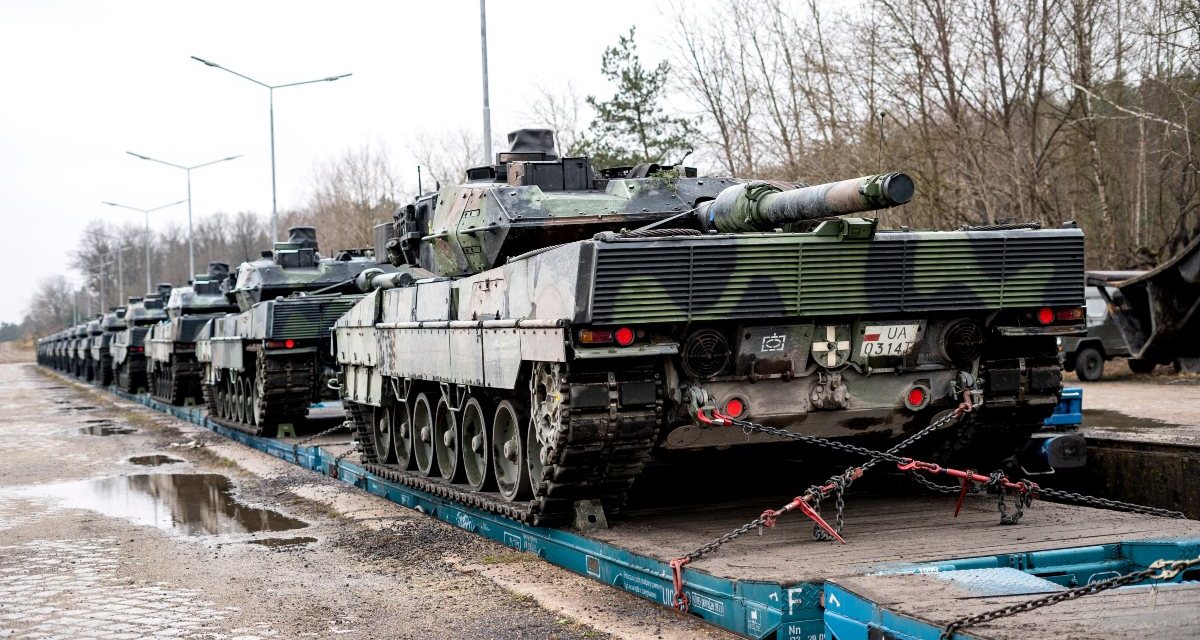
Image credit: Sgt. 1st Class Kyle Larsen, US Army