
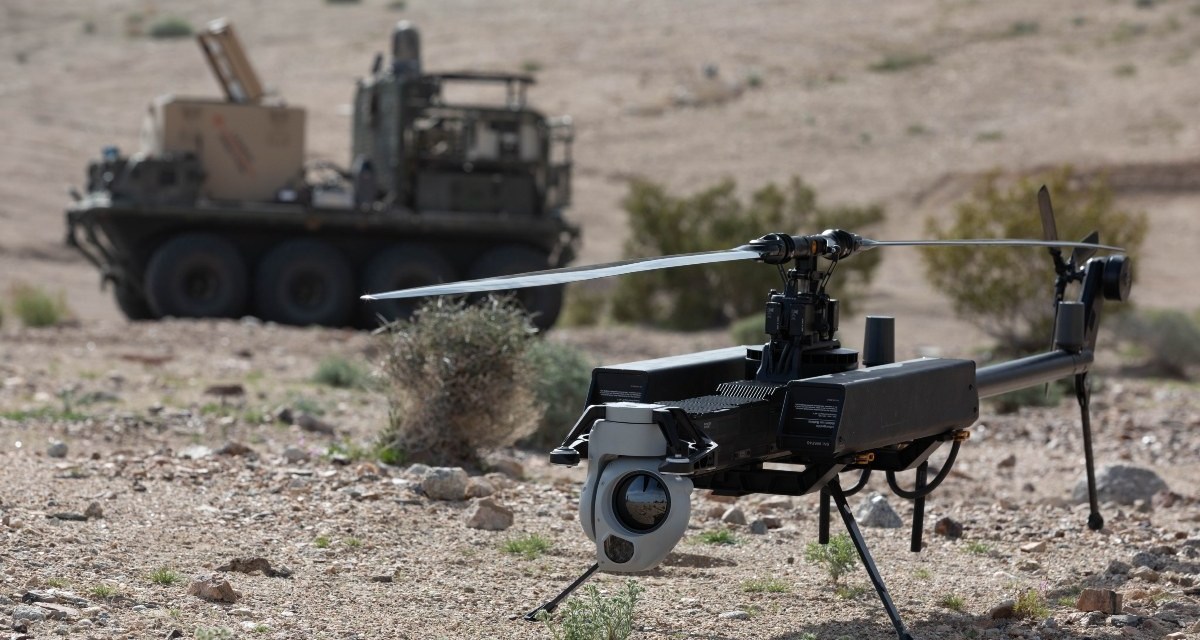
In Ukraine, the battlefield has become transparent. The sky over the front line is saturated with sensors and strike platforms. Small drones hover constantly above, watching trenches, vehicles, and supply routes in real time. First-person-view drones strike within seconds of detection. The result is a battlefield where movement is exposed and survival increasingly depends on who can see first. Many observers have concluded that whoever dominates the air with drones will dominate the war. They are only half right.
There is no longer any serious debate about whether unmanned aircraft systems have changed warfare. Tactical concealment has become much more difficult. Even moving in a rear area is not without risks. Formations that previously maneuvered beyond direct observation now assume they are always watched from above. In Ukraine, soldiers routinely describe the front line as under constant observation.
The Russia-Ukraine war has confirmed that drones are the defining weapons of modern tactical warfare. But while drones have undeniably transformed how engagements are fought, they have not changed the factors that ultimately determine who wins wars. War remains a contest of endurance, logistics, physical control, and sustained presence. Armies must still move supplies, reinforce positions, evacuate casualties, and hold terrain against an attack. They must maintain lines of communication, secure key ground, and persist under pressure. A drone can observe a trench and strike it immediately. It cannot, however, occupy a crossroads, guard a supply route, or physically control a piece of terrain.
The same battlefield that demonstrates the dominance of drones in the air also reveals their limits. As drones proliferate, so do the means to counter them. Ukraine’s one-way attack drone interception rate hovered around 80 percent as of December 2025. Passive defensive measures like camouflage, concealment, and deception have evolved in response to the proliferation of drones. Active measures like electronic warfare systems disrupt navigation and control links to a drone’s operator. The airspace over the front remains lethal, but it is increasingly contested and increasingly defined by attrition. Ukrainian air defense forces neutralized 96 out of 105 attack drones on a single day recently. These measures allow a smaller, more technically capable military to achieve a strong defense. However, they do not allow for decisive maneuver to seize terrain.
At the same time as drone proliferation has grabbed headlines, a quieter technological shift is also underway. Militaries are investing heavily in a different class of unmanned systems designed not for observation and strike from above but for action on the ground. Autonomous unmanned ground vehicles are being developed to move supplies, carry sensors, transport munitions, relay communications, and support maneuver forces in contested environments. Unlike aerial drones, these systems are built for persistence. They do not provide temporary windows; they provide continuous presence.
This difference is central to understanding the future of warfare. Airpower provides an effective way to set conditions. With the addition of unmanned ground systems, maneuver is possible. Unmanned air systems have changed warfare. Unmanned ground systems will determine who wins it.
Technology and the Conditions for Decisive Maneuver
Decisive maneuver is not simply moving from one point to another, but movement that compels enemy forces to react under conditions that are unfavorable to them. Decisive maneuver creates advantage through tempo and exploiting those hard-earned favorable conditions. It requires more than seeing and disrupting the enemy. It requires the ability to move, to persist, and to sustain combat power while doing so.
Aerial drones dominate in seeing the enemy beyond line of sight. They provide real-time intelligence at unprecedented scale and fidelity. They also contribute heavily to effects through loitering munitions and precision-strike drones. In Ukraine, this combination has compressed kill chains and reduced the time between detection and engagement to seconds. However, observation and strike alone do not produce decisive maneuver.
Mobility and sustainment determine whether a force can continue to exploit what it sees. A unit that detects an opportunity must be able to quickly reposition to a greater position of advantage. A force that disrupts an enemy formation must be able to advance or consolidate gains. A formation that seizes terrain must be able to hold and reinforce it. These requirements remain grounded in an unchangeable reality. They depend on movement across terrain and the continuous delivery of all classes of supply.
Aerial drones are poorly equipped to move a large amount of supplies. They do not transport ammunition at scale. They struggle to evacuate casualties. They do not seize and control terrain. They are very good at shaping the conditions of battle. However, they do not fulfill all the requirements of maneuver.
Unmanned ground systems can offer a means to move supplies under observation, to reposition sensors and weapons without exposing crews, and to maintain tempo in an environment where every human movement is targeted. They do not replace manned maneuver, but they can enable those forces to maneuver decisively despite this new unyielding exposure.
The central strategic shift, then, is not from air to ground. It is from observation-centric warfare to persistence-enabled maneuver. Decisive maneuver in the next conflict will not occur because drones observe the battlefield, but because ground systems allow forces to move, sustain, and exploit.
The Physics of Persistence
The growing importance of ground robotics is rooted in the limitations of physics. Aerial and ground systems operate under fundamentally different physical constraints, and those constraints shape what each can realistically contribute to combat power. Understanding this is essential to understanding why unmanned ground systems are positioned to enable decisive maneuver even in environments dominated by aerial drones.
The most immediate difference is endurance. Small aerial drones are limited by battery capacity and lift efficiency. Even highly optimized platforms typically operate for less than an hour before requiring recovery or replacement. Heavier drones can remain airborne longer, but they do so at the cost of increased size, cost, and detectability. Ground platforms do not face the same limitations. A ground vehicle can carry larger energy reserves, swap batteries more easily, or run hybrid propulsion systems. Endurance for ground systems is measured in hours or days rather than minutes. The Squad Multipurpose Equipment Transport, for example, can carry up to one thousand pounds of equipment and operate for as long as seventy-two hours without resupply. Persistence, not speed, is an unmanned ground vehicle’s defining characteristic.
Payload capacity enables true magazine depth and movement of supplies. In contrast, every gram added to the frame of an air vehicle reduces flight time and maneuverability. This creates strict limits on what drones can carry, whether sensors, weapons, or supplies. Ground systems are constrained primarily by drivetrain strength and terrain, not lift. They can transport ammunition, water, medical supplies, power systems, communications equipment, or weapons that would be impractical for small air platforms. Ground systems scale payload in ways air systems simply cannot.
Weapons are not the only thing maneuver elements need on the current battlefield. They maneuver with sensors, communications nodes, electronic warfare systems, power generation, food, water, and ammunition, all of which combine to constitute combat power. These capabilities impose weight, volume, and energy demands—and satisfying these demands requires continuous movement across the battlefield. There is no practical way to sustain these payloads in forward positions without protected, persistent ground mobility. As forces become more distributed and technologically enabled, the requirement to move these capabilities becomes as critical as the capabilities themselves.
Unlike ground vehicles, it is not feasible for unmanned aircraft to add armor, which is why even large military drones rely on altitude and distance for survivability rather than protection. They cannot carry significant armor without sacrificing flight performance. Ground systems, by contrast, can incorporate shielding, low profiles, terrain masking, and hardened components. They can take advantage of cover, concealment, and defilade. They can stop behind obstacles and can remain stationary and difficult to detect.
The ground environment contains obstacles, slopes, vegetation, structures, trenches, debris, mud, snow, and rubble. These features complicate mobility, but they also provide concealment and protection. A system that can navigate terrain effectively gains access to a three-dimensional landscape of cover and masking opportunities that air platforms cannot exploit. This is particularly important in environments saturated with sensors. The ability to operate behind terrain can be more valuable than the ability to move quickly above it.
These physical realities do not make aerial drones less important; on the modern battlefield, they are necessary for certain tasks, but not all tasks. Drones are exceptionally effective at rapid sensing, targeting, and strike. They excel at reaching places quickly and observing from above. Ground systems excel at remaining, carrying, supporting, and sustaining. They operate where maneuver ultimately occurs and where campaigns are decided.
A military that relies only on ground systems will lack awareness and speed. But the flipside of this fact is equally true: A force that relies only on air systems will lack endurance and presence. Exploitation requires something that can move into that space, remain there, and continue operating.
The physics of persistence explains why this role naturally favors ground platforms. A system that can carry more, last longer, remain concealed, and operate continuously is better suited to sustain tempo under continual observation. As battlefields become more observable due to widespread sensing, the ability to persist despite that transparency becomes more valuable.
Airspace is relatively simple because it is continuous, open, and largely unobstructed. Obstacles are rare, and when they exist, they are usually visible from a distance. Navigation can be handled remotely by human operators or through GPS guidance, inertial systems, and relatively straightforward collision avoidance. Even in contested conditions, the physical environment of the air domain remains consistent.
The proliferation of drones has made it easier to see the battlefield and strike quickly. The next step in military adaptation is making it possible to achieve operational objectives.
Implications for Future Warfare
If unmanned ground systems are essential to restoring decisive maneuver, then the implications extend beyond technology. They reach force design and acquisition priorities.
The Army’s acceleration of the Squad Multipurpose Equipment Transport Increment II—now referred to as the Ground Optionally Autonomous Transport, or GOAT—reflects this urgency. In February 2026, Army officials confirmed that the prototyping timeline had been compressed, with its test cycle reduced by two and a half years. Rather than waiting until 2028 for operational evaluation, systems built by American Rheinmetall Vehicles and HDT Expeditionary Systems are set to be delivered to a unit for user assessment.
The shift is not incremental. GOAT aims to double payload capacity, targeting up to 2,500 pounds of equipment, while increasing exportable power for drones and communications systems, reducing acoustic signature, supporting wireless mesh networks, and transitioning from tele-operation toward greater autonomy. The two vendors have received a combined $22 million to deliver eight prototypes each, with the potential for a production decision covering more than two thousand systems.
Prioritization of this program reflects a recognition that protected mobility and distributed sustainment are known operational necessities. When users touch prototypes earlier, feedback cycles compress. When timelines accelerate, institutional commitment deepens. Once reliable systems prove their value by soldiers in an operational environment, adoption can scale rapidly.
Lethal strikes in Ukraine show that drones have made the battlefield more visible and forces more easily targetable than ever before. But visibility and long-range strikes alone do not decide wars. Armies still win by moving, sustaining, and holding ground at decisive moments. As those near the forward line of troops become increasingly detectible, the ability to persist and maneuver under observation will determine success. The military that learns to do this first will restore decisive maneuver.
James Chaney is an active duty US Army acquisition officer specializing in robotics and autonomous systems. He has served in requirements and capability development roles focused on ground autonomy and robotic platforms, including assignments supporting Ukraine security assistance.
The views expressed are those of the author and do not reflect the official position of the United States Military Academy, Department of the Army, or Department of Defense.
Image credit: Sgt. Charlie Duke, US Army