
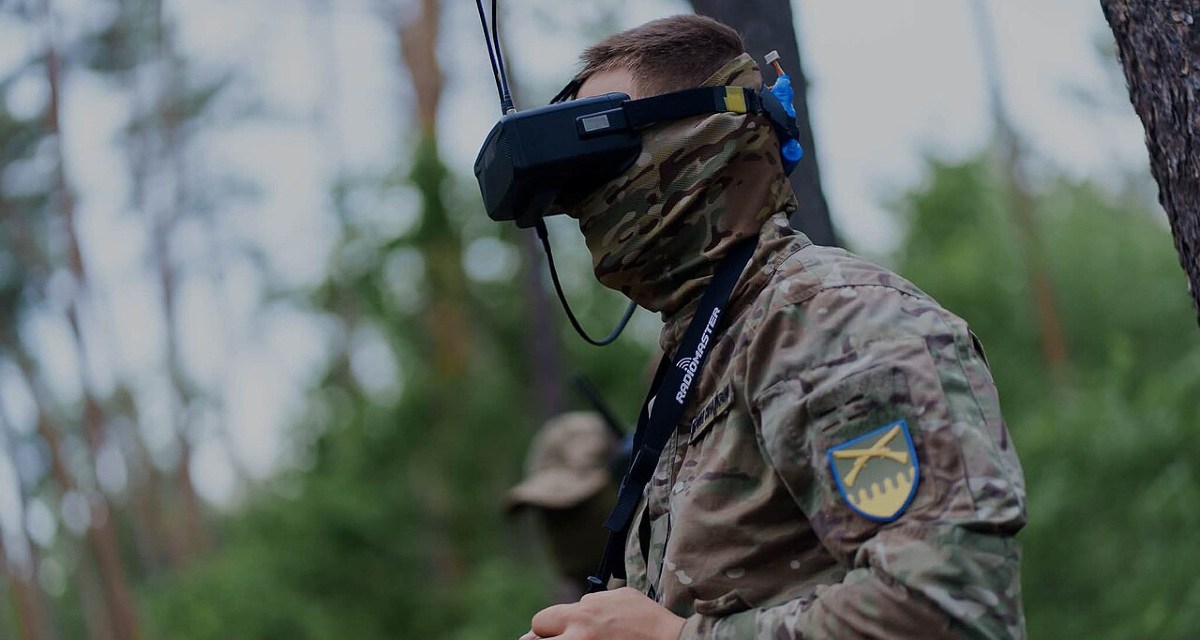
During my time in Ukraine I saw more than a country at war. I saw a defense innovation ecosystem in which the daily imperative to survive drove rapid learning and adaptation. It also exposed a serious weakness in the American model of military technology development. A Ukrainian drone can be jammed, modified to counter the jamming, and sent back into the fight in less time than it takes the US defense system to process a request. That gap is more than a bureaucratic frustration. It is a strategic vulnerability.
When Russian forces jammed a drone’s signal, Ukrainian engineers often developed a fix within days, and sometimes within hours. They changed frequencies, replaced antennas, or adopted new navigation methods. Once the solution worked, it got back to the front quickly. In many cases the drone was flying again within a day or two. As I watched this responsiveness in action, I kept comparing it to how the same problem would move through our system. A US unit that identifies an urgent requirement for change submits a request. The issue enters a process built for review and control. If it is serious enough it may be classified as a Joint Urgent Operational Need or a Joint Emergent Operational Need. Even on that accelerated track it can take up to a year to field an initial solution and as long as two years to deploy it fully. By then the threat may have changed several times. The system will have done what it was designed to do, but too slowly to matter.
The Real Innovation Gap
The problem is that we do not evaluate our defense industry, or our own institutions, based on how well they adapt when conditions change. We evaluate them based on how well they perform against requirements written in advance. The central flaw is not a lack of talent or technology. It is that we reward compliance over adaptation. We write a requirement, give it to industry, and then judge the final product against that same requirement. In effect we provide the answer key and then reward companies for following it. That approach may work for predictable procurement. It does not work for war.
Even our existing rapid acquisition pathways, including the Middle Tier of Acquisition and urgent operational needs processes, still largely judge solutions against requirements written in advance. They can accelerate delivery of a planned solution, but they do not systematically measure or reward a company’s ability to adapt when the threat changes after the requirement is locked. War is dynamic. Adversaries do not announce their next moves, and the most dangerous threats are often the ones that did not exist when the requirement was drafted. The jamming frequencies used against US systems in a future conflict will not match the ones described in a document written years earlier. They will be the ones an adversary developed last week. Yet we continue to favor companies skilled at preparing for planned events rather than those capable of solving new problems quickly. These skill sets are fundamentally different. One produces compliance. The other fosters adaptation. Innovation experts describe this as the adaptability gap, the distance between how much an organization claims to value adaptability and how much it actually invests in it. In the US defense sector this gap has become structural.
Changing How We Evaluate
If the threat changes in real time, the Department of Defense’s evaluation model must change with it. Rather than judging fixed products against static standards alone, the department should assess a company’s broader innovation ecosystem and its ability to adapt capability at operational speed. To implement this change, the department should update DFARS 215.304. That provision already governs evaluation factors used in departmental source selections and provides precedents for assessing attributes beyond the immediate end item, including small business participation, manufacturing readiness, supply chain risk, sustainment, and supplier risk. The regulation therefore already recognizes that a company’s ability to deliver capability depends on more than whether a product meets a point-in-time specification. The central question should be whether its engineers, software teams, production lines, legal staff, and product designers can absorb new battlefield data and convert it into a workable solution in weeks rather than years.
That shift requires new criteria. Contracts could specify maximum two-week turnaround for software updates. This timeline is fast enough to drive real change from today’s multimonth cycles, yet realistic enough to assess responsiveness. Procurement processes could include demonstration phases in which companies must design, test, and field modifications within defined periods using recent threat scenarios. The goal is not to weaken standards. It is to operationalize them in alignment with the demands of modern conflict.
The Department of Defense already has both an immediate mechanism to implement this change and an enduring organization to scale it. Under Project Agincourt, the Direct Reporting Portfolio Manager for Unmanned Systems (DRPM-UxS) is directed to lead the near-term transition and develop the pathway to the Autonomous Warfare Command. While carrying out its current responsibilities, the DRPM-UxS can pilot a revised acquisition model for testing adaptability.
Consider how we often test autonomous systems today. Requirements may state that platforms must operate in a contested electronic warfare environment. Manufacturers arrive at the test range already knowing the frequencies they will face. They prepare for those expected conditions, pass the test, and move toward procurement. A more realistic evaluation would expose the system to the latest electronic warfare signals captured from active battlefields, signals that may not have existed when the requirements were drafted. The system will likely fail. That is not the end of the test. It is the beginning of the real one. At that point we should measure how quickly a company can diagnose the problem, rewrite the software, validate the fix, and scale it into production. If that timeline is measured in years rather than weeks, the company should not win the contract.
Some will argue that the United States is not at war and therefore lacks access to the right battlefield data. That is not a sufficient excuse. Ukrainian partners confront these threats every day. They offer two clear ways to make our testing more realistic. The first is data. Ukrainian partners can share current threat information, from captured jamming signals to evolving enemy tactics, that can keep US testing relevant. The second is access to the environment itself. Ukraine’s Brave1 defense technology cluster runs a program called Test in Ukraine that allows systems to be exposed to live Russian threats in operational conditions. That model is already expanding. New initiatives linking Ukrainian defense firms with NATO partners are creating pathways for allied companies to test systems against real-world threats and learn from one of the most combat-tested innovation ecosystems in the world. The infrastructure for more realistic testing is not hypothetical. It is already taking shape.
This approach comes with legal, security, and intelligence-sharing challenges. Sensitive battlefield data cannot simply move across borders without safeguards. While such concerns are valid, they are implementation problems, not reasons for inaction. With the right protocols and close coordination, realistic testing is possible.
The Culture Must Change Too
This approach will fail, however, if the Department of Defense demands adaptability from industry while exempting itself from the same standard. The department is emphasizing adaptation, but meanwhile, regulations and policy lag. Today’s incentive structures do not reward program managers for learning quickly. They reward them for clean audits, predictable timelines, and avoiding budget turbulence.
During my time in Special Forces acquisition we had a simple motto: Fail fast. Learn quickly whether something works, stop funding what does not, and move resources to what does. Scaling that mindset across the broader defense enterprise will not be easy, but it is necessary. Performance metrics should track how quickly teams respond to emerging threats and how effectively they adapt. Pilot programs should reward timely iteration, even when it includes short-term failure. Promotions and recognition should go to leaders who move quickly and extract useful lessons from rapid testing, not just those who hit traditional milestones. If we are serious about closing the adaptability gap, we must be willing to accept the risk and invest the necessary money, time, and people.
Testing for adaptability does involve risk. Some tests will fail. Some funding will go to efforts that do not succeed. That is not waste. It is the cost of learning faster than the adversary. A culture that treats every failed test as a scandal will produce a military that looks efficient on paper and loses in practice.
The Window Is Narrowing
Ukraine did not build an adaptive defense industrial base because it had perfectly written requirements. It built one because it had no alternative. The old model would have cost it the war, so Ukraine replaced it with an ecosystem that learns under pressure. The United States still has time to reform how it tests, fields, and rewards innovation. But that window is narrowing. Russia is adapting in real time, and China is building the industrial and mobilization capacity to outproduce and outlast its opponents in a high-intensity fight—a scale the United States is not yet built to match. The central question is no longer whether America can build advanced systems, but whether those systems and the institutions behind them can evolve fast enough to matter.
Colonel Rachael Hoagland is an Army acquisition corps officer with more than twenty-nine years of service. She most recently served in a dual-hatted role as Science and Technology Division chief and director of the Joint Capabilities Acquisition Cell, and she spent nine months in Ukraine working directly with operational units, the Ministry of Defence, the Defence Procurement Agency, and the domestic defense industry.
The views expressed are those of the author and do not reflect the official position of the United States Military Academy, Department of the Army, or Department of Defense.
Image credit: Ukrainian Ground Forces