The specter of large-scale combat operations dominates contemporary US military professional discourse. A conflict against a peer or near-peer adversary like China or Russia will demand a profound shift in the US Army’s focus, training, and culture. To get ahead of this demand and effect this before facing the imperative of doing so under fire, senior leaders have rightly emphasized a single, vital attribute: lethality. But discussions of lethality often reduce it to mere weapon-system performance or kill counts. This is dangerously insufficient. With the potential for large-scale combat operations, we must embrace a more demanding and holistic definition that moves beyond the tables or charts employed in semiannual training briefings. Lethality is not just a capability; a lethal organization is both able and willing to bring a level of violence that is unacceptable to the enemy. A lethal unit applies violence that shatters an enemy’s will to fight. It does so with skill, tempo, and aggression that discourages an adversary from standing before it. Lethality is a fusion of advanced technology, rigorous training, and, most critically, a hardened, aggressive, and offensive mindset embedded in organizational culture. We believe cultivating lethality is an imperative for the US Army given the current strategic environment and the potential for large-scale conventional conflict. Defining and measuring this conceptualization of lethality has its challenges, but this topic must be addressed as the Army attempts to forge a more lethal force, ready to deter and, if necessary, dominate in large-scale combat.
For too long, the concept of lethality has been narrowly defined by technical specifications and quantitative metrics. While important, these fail to capture the true essence of battlefield dominance. The Army’s own doctrine defines lethality as “the capability and capacity to destroy,” but this must be expanded. A more potent definition, and one we hope to advance, is a willingness and ability to bring a level of violence that is unacceptable to the enemy. This definition moves beyond the physical act of destruction to consider an organization’s ability to impose psychological effects on an adversary through violence and the application of force. Lethality is more than expert qualification on an assigned weapon system. Organizations must be lethal to a point where they can shock, paralyze, and render the enemy incapable of effective resistance.
The character of combat against an adversary who is truly a peer is fundamentally different from that of the conflicts of the past two decades. The battlefield will be characterized by unprecedented intensity, scale, and lethality. Several key conditions of modern conflict, as observed in conflicts like the war in Ukraine, underscore the imperative for this new understanding of lethality. First, the battlefield will be transparent with ubiquitous sensors, from satellites to unmanned aircraft systems. This transparency, combined with the proliferation of precision-guided munitions of various sizes—from tactical to strategic platforms—means that anything that can be observed can potentially be targeted. Second, sustainment nodes, command posts, and massed formations will be prime targets. The “King of Battle” will regain the throne as combat will be dominated by massed indirect and direct fires. The ability to synchronize fires from all domains to suppress, obscure, and destroy the enemy will be decisive. Conversely, the inability to do so leaves US forces in a fair fight, which is a losing proposition. Third, the assumption of secure supply lines is a luxury the Army will not have. Adversaries like China will actively target sustainment infrastructure from the homeland to the forward edge of the battle area, demanding a more resilient, dispersed, and adaptive logistics enterprise. Finally, the human cost of large-scale combat operations will be vastly larger than the United States has seen in generations, as operations generate casualties at a rate not seen since World War II. The ability to treat and return soldiers to duty will be a critical component of maintaining combat power. This includes not just battle injuries, but also the significant impact of disease and the immense psychological stress of high-intensity combat. In this environment, a force that is not ruthlessly proficient, adaptable, and resilient will be rapidly attrited and defeated. A willingness to inflict unacceptable violence is not a matter of aggression for its own sake; it is a prerequisite for survival and victory.
To improve lethality—units’ willingness and ability to bring a level of violence that is unacceptable to the enemy—the Army must be able to measure it. Current metrics are often inadequate, focusing on narrow inputs rather than battlefield outcomes. For example, rifle qualification on a static range has little bearing on a soldier’s ability to engage targets under the stress of combat. Live-fire exercises at combat training centers show a significant disparity between marksmanship in controlled settings and combat accuracy under stress. If senior leaders want to obtain a better understanding of the development of lethality across the Army, have ammunition allocations for training been increased? Have units dedicated more time to ranges and training? How many formations are led by appropriate or assigned ranks and grade? Are opposing force units at combat training centers operating restrained or unrestrained? Are leaders held accountable for organizational performance in venues like the combat training centers? Is our personnel management system prioritizing experience in tactical formations or broadening assignments? How much personnel change occurs at the platoon and company level each year? How many training events in a given unit’s calendar are truly built around combat scenarios? Are units promoting and stewarding a culture that encourages lethality?
Senior leaders’ focus on lethality is important. But it cannot be a mere buzzword; it must remain a clear-eyed recognition of the brutal realities of modern warfare. As the Army pivots to face peer adversaries, it must shed the habits of the past and embrace a more comprehensive and demanding vision of lethality—one defined by the unwavering will to impose unacceptable violence on the enemy. This requires more than just advanced technology; it demands a fundamental shift in training, personnel management, and culture. By redefining lethality, measuring what truly matters, and implementing rigorous, realistic training, the Army can forge a force that is not only capable of destroying the enemy but of breaking the enemy’s will to fight. In the unforgiving crucible of ground combat, there is no substitute for lethality. It is the price of admission to the modern battlefield, and the key to deterring our adversaries and, if war comes, securing victory.
Major Charlie Phelps is a Special Forces officer and currently serves as a company commander in 10th Special Forces Group (Airborne).
Sergeant First Class Teddy Ruecker is a Special Forces noncommissioned officer currently serving in 10th Special Forces Group (Airborne).
The views expressed are those of the authors and do not reflect the official position of the United States Military Academy, Department of the Army, or Department of Defense.
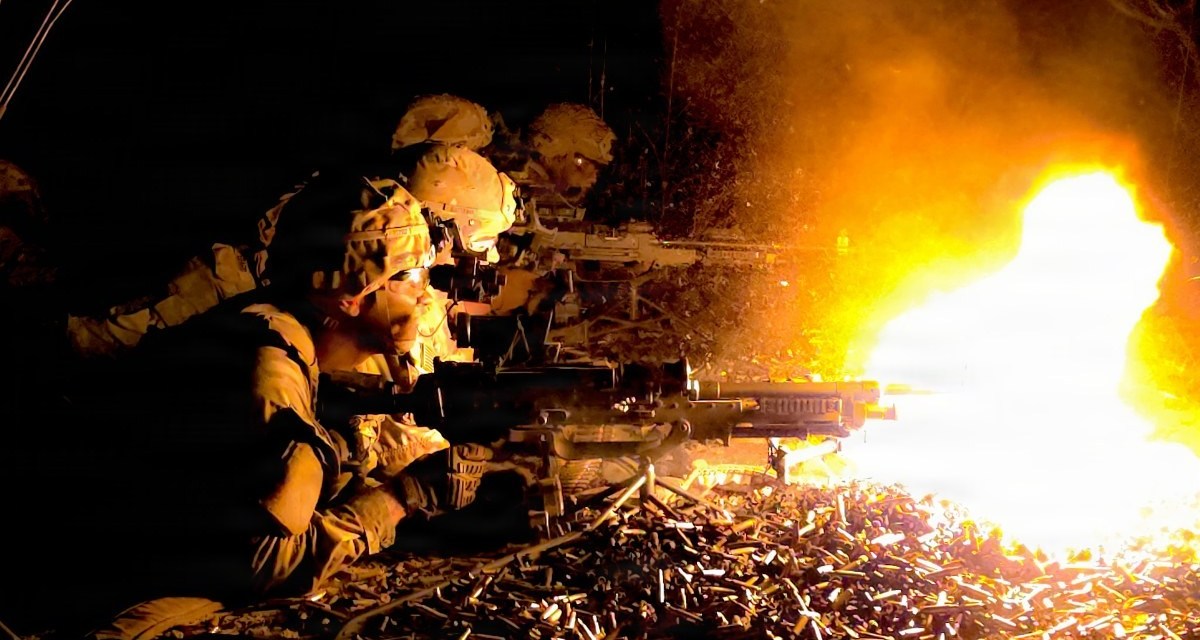
Image credit: Sgt. Alexander Knight, US Army