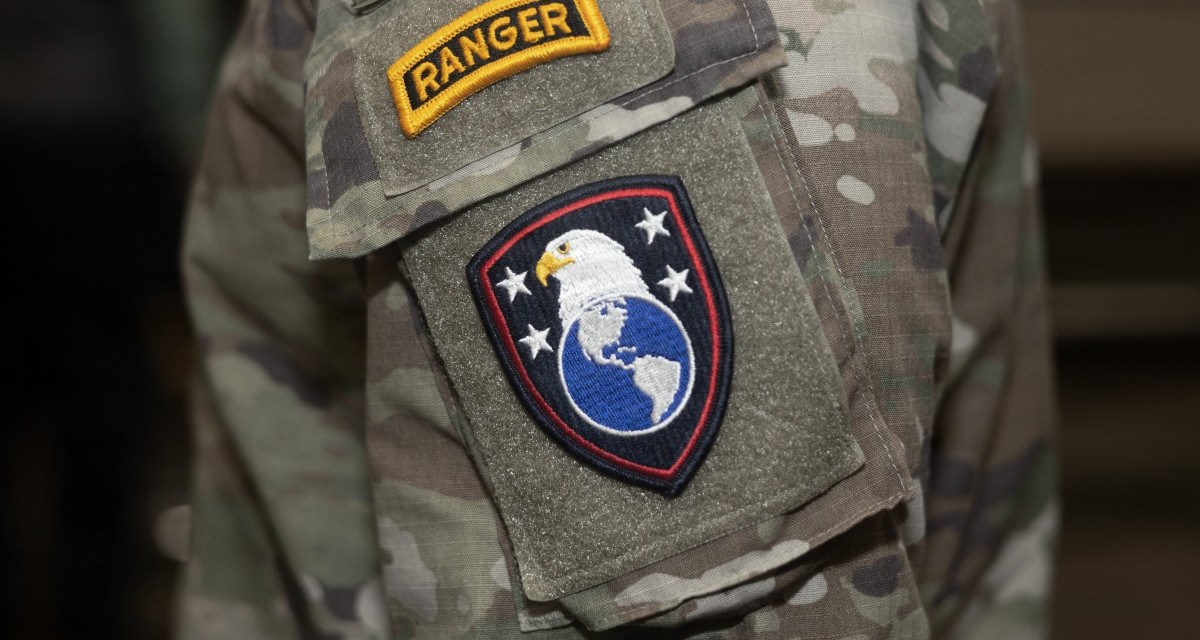
In May 2025 I was assigned to the core team that planned the consolidation of three Army commands—Army North, Army South, and Forces Command—and the establishment of the new Army Western Hemisphere Command. As we worked through the command’s concept, we came up with something of an elevator pitch, telling senior leaders and stakeholders that the command would “mind the GAPP”—from Greenland to Attu, from the polar bears to the penguins. A new command would take on the responsibility of three separate, major commands, as well as take responsibility for the Army’s role in securing this vast area of responsibility. Why? History makes clear the innate strategic wisdom of this move, while the complexity and urgency of the current threat environment demand it.
The establishment of the US Army Western Hemisphere Command (USAWHC) represents the most significant reorganization of Army theater-level command in the Western Hemisphere since the creation of US Northern Command (USNORTHCOM) nearly a quarter of a century earlier. The command’s creation reflects a strategic judgment that the current threat environment in the Western Hemisphere has reached a complexity and urgency not seen since the Cold War, which the existing command architecture was structurally unsuited to address. Understanding the wisdom of that judgment requires examining how the United States has historically managed the relationship between hemispheric security and global power projection.
The foundational strategic logic is straightforward: The United States cannot project power globally when its homeland and immediate approaches are under threat. Two centuries of American military history has repeatedly validated the principle of a hemispheric security prerequisite. Each major failure to secure the hemisphere produced a crisis that redirected military resources inward, degraded the nation’s capacity to act abroad, and ultimately compelled institutional reform.
The War of 1812 established the precedent. Britain, engaged simultaneously in the Napoleonic Wars, calculated that neutralizing American interference was strategically preferable to tolerating it. By blockading American ports, disrupting Atlantic trade, and projecting power from its Canadian and Caribbean positions, Britain demonstrated that an underdeveloped continental defense created exploitable vulnerability. The burning of Washington in 1814 was not merely a symbolic embarrassment; it was evidence that the young republic could not assert itself abroad while paralyzed at home. The postwar institutional response—a permanent standing army, a professional officer corps, and a sustained investment in coastal fortification—reflected a recognition that hemispheric security was a prerequisite for national relevance.
The Zimmermann Telegram illustrated the same dynamic at a higher level of strategic sophistication. Imperial Germany, facing American entry into the European theater of World War I, sought to fix US military attention in the Western Hemisphere by inducing Mexico to open a southern front with the promise of recovering Texas, New Mexico, and Arizona. The proposal was, in essence, an application of hemispheric coercion as a strategic tool: create a security dilemma close to home sufficient to absorb American capacity that otherwise would challenge German forces in Europe. Mexico’s decision to decline the offer does not diminish the strategic logic. Germany had correctly identified the mechanism by which hemispheric insecurity could constrain American global power.
The most operationally consequential illustration of this principle occurred during World War II. Following Pearl Harbor and America’s entry into the war, Germany launched Operation Drumbeat, deploying U-boats along the American Atlantic coast and in the Gulf of Mexico. In the first six months of the campaign, German submarines sank 585 merchant vessels carrying three million tons, an attrition rate that threatened the war effort. Simultaneously, Operation Pastorius inserted eight trained saboteurs via U-boat with orders to attack critical infrastructure, including power generation facilities and rail lines. Meanwhile, the Abwehr, Germany’s military intelligence agency, maintained a spy network spanning Argentina, Brazil, Chile, Paraguay, Ecuador, and Mexico, transmitting targeting intelligence to Berlin at upwards of fifteen messages daily. Moreover, in 1943 the Abwehr attempted to bomb the Panama Canal. Unfortunately, the United States prioritized force generation for distant theaters and accepted risk in the hemisphere—a calculation that proved enormously costly. Restoring the coastal convoy systems diverted ships and crews away from the theater of operations. Personnel were required to patrol the American coasts, protect critical infrastructure, and dismantle foreign intelligence networks. Meanwhile, the construction of more liberty ships to overwhelm the German wolfpacks required a diversion of resources and time away from necessary landing craft. Ultimately, all of this combined to delay the build-up for Operation Overlord. The lesson was not merely tactical; it was institutional. With an undefended hemisphere, the global campaign bears the cost of recovery.
The Cuban Missile Crisis demonstrated the most acute expression of the hemispheric security prerequisite. The Soviet emplacement of nuclear-armed ballistic missiles in Cuba—positioned ninety miles from America—placed US cities, military installations, and strategic assets at risk. The Strategic Air Command placed 186 nuclear missiles on full alert while Soviet submarines armed with nuclear torpedoes positioned themselves off the American coast. The Joint Chiefs of Staff even recommended preemptive airstrikes. A combination of naval quarantine, nuclear deterrence, and diplomatic negotiation resolved the crisis—but it demonstrated with unmistakable clarity that a hostile foothold in the hemisphere could hold American decision-making hostage. Regrettably, Cuba subsequently became a permanent Soviet intelligence collection platform and a base for proxy operations throughout Central America and the Caribbean. This provided Moscow with sustained capability to undermine US regional influence throughout the Cold War.
The attacks of September 11, 2001 added a distinct dimension to this historical pattern. Nineteen operatives exploited structural communication gaps between domestic federal agencies to conduct the most lethal terrorist attack on American soil. The 9/11 Commission findings identified institutional fragmentation as a primary enabling condition. The legislative and organizational response was comprehensive: In 2002 USNORTHCOM activated, consolidating for the first time authority over the defense of the American homeland under a single military commander, while the Department of Homeland Security consolidated twenty-two federal agencies. Subsequent events like Hurricane Katrina and the COVID-19 pandemic reinforced the idea that homeland security concerns will generate demands on military capacity that constrain the joint force’s readiness and ability to operate globally.
The historical record establishes a consistent pattern: Adversaries with global ambitions have repeatedly sought to exploit the Western Hemisphere as an indirect approach against the United States. The failure to maintain adequate hemispheric security has invariably degraded American capacity to pursue its strategic interests abroad. The premise for USAWHC’s establishment was that the conditions that produced each of those crises now exist simultaneously. Furthermore, the command architecture that preceded it was insufficient to address these crises in an integrated way.
The Army’s Response to the Current Threat Environment
The strategic rationale for USAWHC rests on a threat profile that is, by any measure, the most complex facing the hemisphere since the height of the Cold War. Three distinct but interrelated challenges define the current environment: great-power strategic encroachment, transnational criminal organizations operating with paramilitary sophistication, and the structural gap between two combatant commands that adversaries have learned to exploit.
China’s presence in the Western Hemisphere has expanded substantially over the past decade and now constitutes a strategic infrastructure effort rather than a commercial one. The Port of Chancay in Peru, a $1.3 billion deepwater facility with majority ownership held by a Chinese state-owned enterprise, provides Beijing direct maritime access to South America along with influence over supply chains relevant to US force flow. The Espacio Lejano Deep Space Station in Neuquén, Argentina operated by the People’s Liberation Army Aerospace Force, conducts intelligence collection on American military movements and space-based assets. Further still, Chinese signals intelligence facilities in Cuba, including a large antenna array located less than one hundred miles from Florida, monitor US military communications and space launch activities. Until recently Chinese firms held port facilities on both ends of the Panama Canal—through which approximately 40 percent of US container traffic transits. Finally, the PLA’s intermediate-range ballistic missile inventory, including DF-21 and DF-26 systems with ranges of 1,500 and 4,000 kilometers, would extend potential strike depth toward the continental United States if deployed in the Pacific, Latin America, or the Caribbean. The aggregate effect of these investments is a layered capability to complicate US intervention in the Indo-Pacific theater by creating strategic dilemmas closer to home.
Furthermore, Russia’s posture in the hemisphere reflects a deliberate reactivation of Cold War–era networks. Russian presence in Nicaragua, Venezuela, and Cuba mirrors the footprint maintained during the Soviet period. Cyber operations targeting American power grid infrastructure and surveillance activities tracking military movements represent the updated application of a strategic concept—using the hemisphere as a platform for indirect pressure on the United States—that is decades old but newly resourced.
Transnational criminal organizations present a third category of threat that does not map cleanly onto traditional combatant command boundaries. Organizations trafficking fentanyl and other drugs into the United States contributed to over one hundred thousand American overdose deaths in 2023 alone—more than the total American losses in the Vietnam and Korean Wars combined. Even though the United States has made great strides in reducing overdose deaths since then, the threat from transnational criminal organizations remains. These organizations operate with a sophistication that includes global logistics networks, paramilitary security elements, and the capacity to corrupt or destabilize governance structures in transit states. Critically, the geographic boundary between USNORTHCOM and US Southern Command (USSOUTHCOM) does not constrain their operations. They exploit that boundary as a gap in American command architecture, operating through weak-governance states in ways that have historically evaded integrated response.
It is this last point that most directly explains USAWHC’s structural rationale. The establishment of USAWHC did not occur in a vacuum but rather emerged from the institutional legacy of three commands that served the Army faithfully. US Army Forces Command (FORSCOM), long served as the Army’s service force provider and the principal trainer of conventional forces for global deployment, fulfilling the mobilization and readiness mission rooted in Cold War preparation for major combat operations in distant theaters. US Army North (ARNORTH), established in 2006 as the theater army for USNORTHCOM, concentrated its efforts on homeland defense, defense support to civil authorities, and the complex interagency relationships that govern military operations within the United States. And US Army South (ARSOUTH), as the theater army for USSOUTHCOM, cultivated decades of security cooperation relationships across Central and South America and the Caribbean, building the partner capacity and military-to-military trust that remains one of the United States’ most durable competitive advantages. Each command performed its mission with professionalism and distinction.
Yet the very architecture that organized these functions reflected a world that no longer exists. The boundary between ARNORTH and ARSOUTH is a gap that adversaries exploit with growing sophistication. ARNORTH and ARSOUTH each operated with distinct authorities and processes that did not adequately address the transition of threats from one area of responsibility to another. Furthermore, the simultaneous emergence of great-power competition, transnational criminal networks operating at continental scale, and adversary infrastructure investments spanning both combatant command areas of responsibility demands an institutional response that none of the commands could provide. USAWHC represents not a repudiation of FORSCOM, ARNORTH, and ARSOUTH, but a recognition that the strategic environment has changed in ways that requires transforming those foundations into a unified command architecture equal to the complexity of the threat.
Therefore, the command organized its operational portfolio around five core mission sets. Defense support to civil authorities encompasses support to national special security events and the protection of critical infrastructure from both physical and cyber threats. Southern border security involves coordinated operations with Department of Homeland Security and federal, state, and local law enforcement to achieve operational control of entry points exploited by criminal organizations. Rapid response for domestic and regional crises requires the command to maintain tailored, trained, and postured forces capable of deployment across the hemisphere on short notice—a mission set that demands both readiness and scalability. Panama Canal security ensures freedom of commercial and military transit through a chokepoint of irreplaceable strategic value. And security cooperation and partner capacity building sustains the military-to-military relationships that extend American reach and reduces American burden across the hemisphere.
Rather than responding to crises after they develop, USAWHC will employ exercises, security cooperation activities, and theater-setting operations to rehearse contingency plans and establish positional advantage before operational demands materialize. Interagency relationships with the intelligence community, law enforcement, and partner-nation militaries are capabilities developed over time rather than relationships established at the onset of a crisis. The command’s staff navigates a complex legal landscape—Titles 10, 14, 32, and 50 authorities—simultaneously, a requirement that reflects the cross-domain nature of the threats and the interagency character of the response.
The clarity created by the institutional complexity of this architecture is not incidental. It is a deliberate response to the complexity of the threat environment. The threats confronting the United States in the Western Hemisphere do not respect service boundaries, legal authority distinctions, or combatant command geographic lines. The design of the command structure matches that reality.
Forward Defense + Partner Integration + Holistic Competition = Hemispheric Defense in Depth
Western Hemisphere Command’s establishment marks the beginning of a sustained institutional effort rather than the resolution of a temporary organizational problem. Three enduring imperatives shape the command’s strategic trajectory: the principle of forward defense, the centrality of partner relationships as a comparative advantage, and the development of purpose-built capabilities for a theater that is operationally distinct from the commands with which the Army has the most institutional experience.
Forward defense is foundational to USAWHC’s operating concept with direct historical grounding. The same dynamic characterized each of the crises examined in the first section of this analysis: A threat permitted to mature within the hemisphere ultimately constrains American strategic options, requiring costly remediation. The operational conclusion is to conduct the defense of the continental United States beyond its borders. By the time a threat reaches American shores—whether in the form of adversary infrastructure, intelligence collection platforms, or the consequences of regional instability—the available response options are more limited, more expensive, and less effective than those available when the threat is nascent. Therefore, USAWHC will orient its campaign approach toward shaping the environment during competition, denying adversaries the footholds they seek, and maintaining the positional advantage that makes deterrence credible without requiring a reactive crisis response.
Partner relationships represent USAWHC’s most significant and least replicable comparative advantage. China’s investment in the region—$518 billion in bilateral trade in 2024 alone—reflects a deliberate effort to build the economic leverage and institutional relationships that could translate into political influence and military access. The United States possesses something China cannot readily replicate: decades of military-to-military partnerships built on shared values, common doctrine, and demonstrated reliability. However, that advantage is not self-sustaining. It requires consistent investment in security cooperation activities, professional military education exchanges, combined exercises, and persistent engagement that builds institutional trust over time. Partner nations have their own security interests. By aligning those security interests with American interests in regional stability, the United States increases its position as the security partner of choice, gaining a competitive advantage against extra-hemispheric great powers. Building those relationships before a crisis is not merely preparation; it is deterrence in its own right.
The development of purpose-built capabilities for this theater addresses a gap that will become more consequential as the command matures. The Western Hemisphere presents an operational environment that is substantively different from the theaters in which the Army has invested most heavily over the past three decades. Operations in this theater require proficiency in interagency coordination, an understanding of legal authorities that govern the full spectrum from domestic civil support to theater warfighting, expertise in countering transnational criminal organizations, and the institutional knowledge to operate effectively across the domestic-international boundary that many of the command’s missions straddle. These are not marginal competencies; they are the core operational requirements of a command with this mission set.
The long-term threat trajectory suggests that the operational demands on USAWHC will increase rather than diminish. As China’s intermediate-range ballistic missile inventory expands and its precision improves, the potential for adversary strike options against the continental United States from positions in the Western Hemisphere grows more serious. As Chinese port infrastructure and intelligence collection capabilities in the region mature, the challenge of denying adversary access and maintaining information advantage becomes more complex. As transnational criminal organizations continue to develop their logistics, financial, and paramilitary capabilities, the challenge of securing the southern approaches intensifies. The command is building the institutional frameworks—campaign plans, theater-setting activities, partner capacity programs, and legal and interagency relationships—that will determine whether the joint force can respond effectively to these challenges when they demand operational rather than competitive responses.
The historical pattern that justified USAWHC’s creation is not merely retrospective. The United States has consistently underinvested in hemispheric security during periods of perceived stability and then has consistently paid a significant price in strategic opportunity cost, operational delay, and, in the worst cases, American lives. The War of 1812, the Zimmermann Telegram, Operation Drumbeat, the Cuban Missile Crisis, and the attacks of September 11 each represent a variant of the same strategic failure: An adversary exploited a gap in hemispheric security that the United States had chosen not to close.
The current threat environment does not permit that choice. China, Russia, and transnational criminal organizations are operating in the Western Hemisphere with a sophistication, persistence, and integration that has no modern precedent outside the Cold War. They are treating the hemisphere as a unified theater of strategic competition. The institutional response—Western Hemisphere Command—reflects the judgment that the United States must do the same. A secure hemisphere is not a supporting condition for American global power projection. It is a prerequisite.
Joshua Dulaney is an Army strategist who served as a core member of the Army Transformation Initiative team at FORSCOM, responsible for planning the consolidation of FORSCOM, ARNORTH, and ARSOUTH. He currently serves as a strategy and policy analyst at US Army Western Hemisphere Command.
The views expressed are those of the author and do not reflect the official position of the United States Military Academy, Department of the Army, or Department of Defense.
Image credit: Pfc. Alexis Fischer