Throughout the long history of war, militaries have understood a simple truth: Combat effectiveness requires cohesion. Soldiers fight, endure, and survive not primarily for abstract ideals or distant institutions, but for the small group beside them. That insight has spanned cultures, remained consistent across wars, and held true even as technologies have changed the character of warfare. What has changed is not the requirement for cohesion, but the environment in which it must now be built and sustained.
Today’s soldiers operate in a world of constant connectivity. They are embedded in dense networks of communication that extend far beyond their units, their installations, or even environments in which they are deployed. This reality has produced undeniable benefits, particularly for families and long-term morale. Yet it has also altered how cohesive teams are formed and maintained, how stress is processed, how identity is anchored, and how leaders detect risk inside small units. These changes matter because cohesion is not an abstract sentiment. It is a functional capability. And like any capability, it can erode silently if it is not deliberately maintained.
The modern military often treats cohesion as an outcome rather than a system. It is discussed as morale, climate, or trust, often measured through surveys or post hoc assessments. But cohesion is better understood as a network of relationships. It lives in the density, reciprocity, and durability of ties within a primary group. It is visible in peer regulation, shared coping, and early warning long before problems rise to the level of formal misconduct or degraded performance.
When those networks weaken, leaders do not immediately lose authority. They lose visibility—and understanding—of the teams they lead.
Units rarely fail suddenly. Risk accumulates quietly as soldiers spend less time together, process stress individually, and increasingly rely on external networks for emotional regulation and meaning. By the time performance degrades or incidents occur, the social fabric that once provided early warning has already thinned.
History reminds us that cohesion has always required deliberate structure. During World War II, the US Army cohorted soldiers together from initial training through deployment. They trained together, deployed together, and returned together. The Vietnam War exposed the fragility of cohesion under individual replacement policies, where soldiers rotated in and out of units without shared experience. The Army relearned the lesson and returned to cohorting models because survival and resilience depended on prolonged time together.
Yet broader institutional forces have quietly reshaped those conditions. With the shift to the all-volunteer force, the military entered a competitive labor market. Recruitment and retention required attention to individual incentives. Private or semi-private barracks rooms replaced open bays. Greater emphasis was placed on personal space, autonomy, and quality-of-life amenities. These changes were necessary to sustain end strength and professionalism. But they also altered how soldiers spent nonduty hours.
The operational demands of the post-9/11 wars intensified these trends. Repeated deployments and force generation pressures required the services to compete for talent while sustaining high rotation rates. Leaders sought to stabilize families and mitigate retention risk. Amenities expanded. Connectivity improved. Deployed environments increasingly resembled a “home away from home,” a dynamic Leonard Wong and Stephen Gerras identified in a 2006 study of soldiers in Iraq. The goal was understandable: protect morale and maintain force numbers. The unintended effect was to shift identity and emotional processing outward from the primary unit network toward family, individual interests, and external digital communities.
At the same time, daily shared practices quietly diminished. Fewer soldiers conduct physical training together as cohesive units. Fewer eat meals collectively in garrison. Living arrangements emphasize privacy over proximity. Time that once defaulted to shared interaction now defaults to individualized space. None of these changes were malicious. Many were well-intentioned responses to recruiting realities and retention pressures. But collectively they reduced the very time together that primary group cohesion requires to form and function.
Research across conflicts reinforces this reality. Studies from World War II through Iraq consistently show that primary group cohesion is the dominant motivational force in combat. Soldiers endure fear, fatigue, and loss primarily for those they know intimately and trust with their lives. These bonds are not created by task alignment alone. Task cohesion can produce coordination. It does not reliably generate the resilience required under prolonged stress. That resilience emerges from social cohesion and is operationalized through primary groups small enough for sustained, face-to-face relationships.
Primary group cohesion involves limits on the size of the group because it depends on how many people an individual can truly know, read, and depend on under pressure. Within those limits, cohesion sustains performance under stress, regulates behavior through group norms, and enables collective processing of traumatic or ambiguous events. It also functions as a distributed early warning system. When cohesion is strong, small deviations in behavior are noticed quickly and corrected laterally, long before leaders must intervene.
What is often underappreciated is how those bonds are formed. Research from early during the Iraq War found that cohesion was often built not only in shared hardship, but in the long, unstructured hours of boredom that make up soldiering. Time spent together cleaning weapons, riding in vehicles, waiting for missions, talking about home, arguing about sports, or simply sitting together created the familiarity that makes trust possible. Boredom was not wasted time. It was connective tissue.
Long before modern doctrine, soldiers understood this intuitively. In the Iliad, Homer describes warriors gathering at the end of battle, recounting the day’s events, arguing over decisions, mourning the fallen, and making meaning of chaos together. Around ancient fires, soldiers processed fear, confusion, and grief collectively. The campfire was not formal therapy. It was shared narrative construction. It was where experience became identity and where leaders could see who was shaken, who was angry, who was withdrawing.
Across centuries, that postbattle gathering persisted. From the contubernium of the Roman legions to the Civil War mess group to the World War II squad, soldiers sat together after the fight. They replayed events, corrected exaggerations, laughed at mistakes, and quietly absorbed loss. The campfire represented protected time together after stress. It required proximity. It required shared hardship. It required the absence of distraction.
The campfire built cohesion because it turned experience into shared meaning. In my book Connected Soldiers, I described how this dynamic played out in Iraq. During our 2003 deployment, togetherness was unavoidable. We lived, worked, recovered, and waited together. Communication with home was infrequent. After patrols or firefights, we gathered naturally around vehicles or meals and talked through what happened. That time was not structured. It was not ordered. It was essential.
When I returned to Iraq in 2008, the physical environment had changed. Individual living spaces expanded. Connectivity was constant. After traumatic events, soldiers often returned to private rooms and their external networks rather than remaining embedded in the group. Shared hardship remained. Shared processing thinned. The difference was not discipline. It was network structure.
Today the campfire has been replaced by illuminated screens. After missions, soldiers often retreat into individualized digital spaces. Stress is still present. Hardship is still real. But emotional processing increasingly bypasses the small unit network. Fear and frustration are often shared outward before they are shared inward. Constant connectivity accelerates this shift.
Modern soldiers are never fully disconnected from the outside world. Stress, emotion, and information flow instantly across boundaries that once buffered units during deployment. Family crises, political conflict, social media outrage, and real-time commentary now accompany soldiers into combat zones and austere outposts. This does not simply add stress. It reroutes how stress is processed.
Instead of being absorbed and metabolized within the unit, stress increasingly bypasses peer networks and moves outward. Coping becomes individualized. Emotional regulation shifts from collective processing within the group of soldiers who shared the experience to private reach-back. Identity fragments as soldiers balance competing affiliations and develop individual narratives to process shared experiences. None of this is inherently pathological. But it reduces the time, space, and repetition required for cohesion to form and function.
Recent naval investigations following multiple mishaps aboard a carrier strike group illustrate this broader trend. Readily accessible Wi-Fi altered daily routines and reduced collective professional engagement and informal peer correction. Technology was not identified as the sole cause of failure. But unmanaged connectivity reshaped attention, preparation, and cohesion.
This is the leadership challenge of the present era.
Cohesion does not collapse because soldiers use technology. It degrades when leaders assume it will emerge naturally despite structural and cultural changes that actively work against it. The military remains an open system. External environments inevitably shape internal behavior. Treating cohesion as an inevitable byproduct of everyday unit activities or military life in general rather than as a capability invites blind spots.
Leaders today face a paradox. Soldiers may be physically colocated yet socially dispersed. Units may execute missions competently while cohesion erodes beneath the surface. Traditional indicators lag behind reality because the informal networks that once surfaced problems early have weakened.
The solution is not to eliminate technology. It is to deliberately design cohesion into daily routines, training, and recovery in ways that account for the connected environment. This requires reframing cohesion as something leaders actively structure rather than something they periodically assess. It means recognizing that time together is not interchangeable. Quality matters more than quantity. Unstructured, tech-free, face-to-face time is not a luxury. It is a requirement for sustaining the networks that underpin readiness.
Shared hardship remains essential, but it must be paired with shared processing. Physical training together matters. Eating together matters. Living in ways that create proximity matters. Time without screens matters. Informal storytelling matters. Leader presence without directing matters. These moments are where identity consolidates, trust is built, and early warning emerges.
Equally important is recognizing isolation early. Withdrawal, excessive external connectivity, declining peer correction, and reduced informal interaction are not simply signs of fatigue or routine. They are indicators of network thinning. Leaders who understand cohesion as a network watch for these patterns and intervene before risk accumulates.
Cohesion in a connected world does not happen by accident. It must be deliberately engineered, protected, and renewed. Militaries have done this before, sometimes consciously and sometimes intuitively. The difference today is that the forces working against cohesion are stronger, faster, and more pervasive.
Technology does not break cohesion. But it removes the margins that once sustained it automatically.
Preserving combat effectiveness in modern war requires leaders to see cohesion clearly, not as a feeling to be measured, but as a living network that must be continually reinforced. The units that succeed will be those that deliberately create the time, space, and structure in which trust, mutual obligation, and early warning can flourish despite constant connectivity.
John Spencer is chair of urban warfare studies at the Modern War Institute, codirector of MWI’s Urban Warfare Project, and host of the Urban Warfare Project Podcast. He served twenty-five years as an infantry soldier, which included two combat tours in Iraq. He is the author of the book Connected Soldiers: Life, Leadership, and Social Connections in Modern War and coauthor of Understanding Urban Warfare.
The views expressed are those of the author and do not reflect the official position of the United States Military Academy, Department of the Army, or Department of Defense.
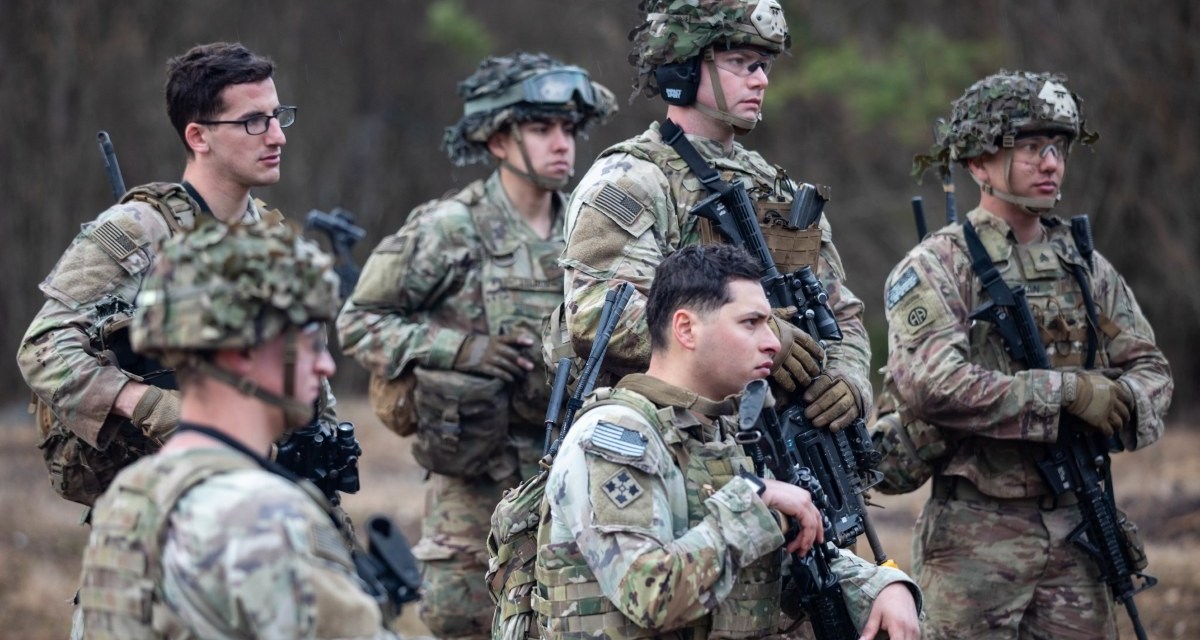
Image credit: Cpl. Alisha Grezlik, US Army