
The Global War on Terrorism left the US Army with unresolved, pernicious habits. Foremost is a preference for the tactical level of war, which is exposed when allegations of strategic failure are countered with claims that we won every tactical engagement of GWOT. As we in the Army focused predominantly on this most intimate level of war, our ability to think operationally and strategically atrophied. We also developed an allergy to risk. Wars waged under exacting political scrutiny and often prosecuted without full public transparency conditioned military leaders to prefer the comfort of status quo over the risk of action. We therefore elevated tactical decision-making to ever higher levels, an approach antithetical to the mission command we preach as gospel. Finally, a sticky belief remains that war can be neat and clean.
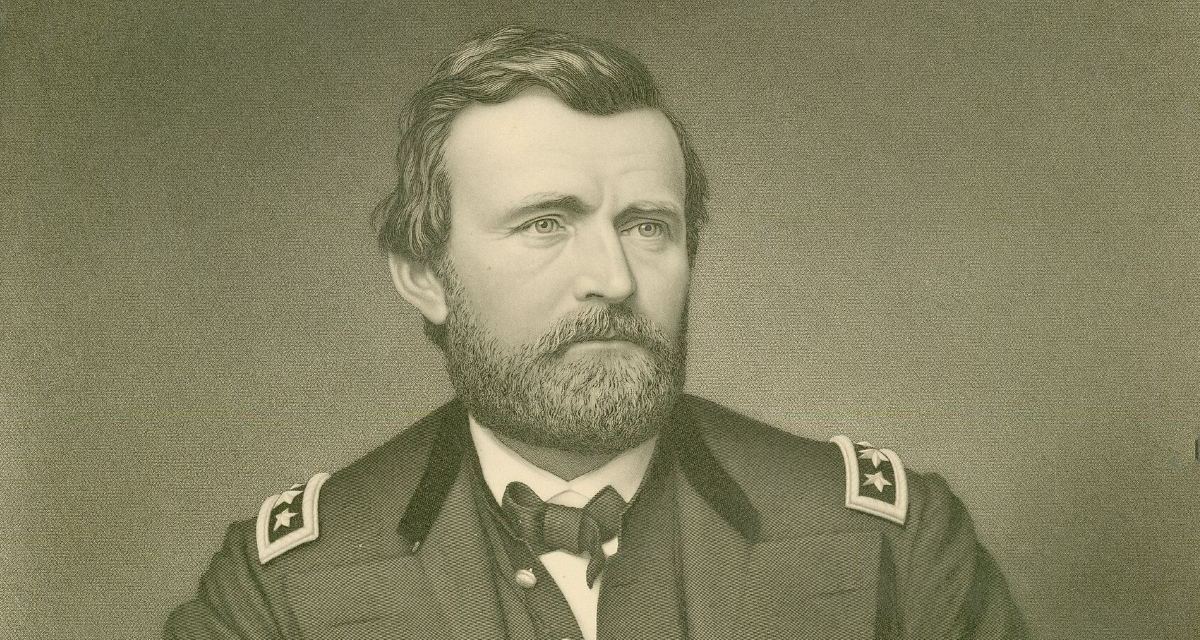
In the Personal Memoirs of U. S. Grant, a set of guiding principles emerges, which Grant adhered to closely throughout his command of the Union Army. Many of the challenges he faced are analogous to those the Army faced in GWOT; more importantly, the lessons we can derive from the way he overcame them will only become more salient whenever the next fight begins, presumably large-scale combat. As the Army prepares itself for this possibility, it should learn four lessons in particular from Grant. Doing so will enable the Army to kick our GWOT habits and truly prepare for a future battlefield more complex, more lethal, and more punishing of failure than any in our Army’s history.
1. Tactics are meaningless in the absence of strategy.
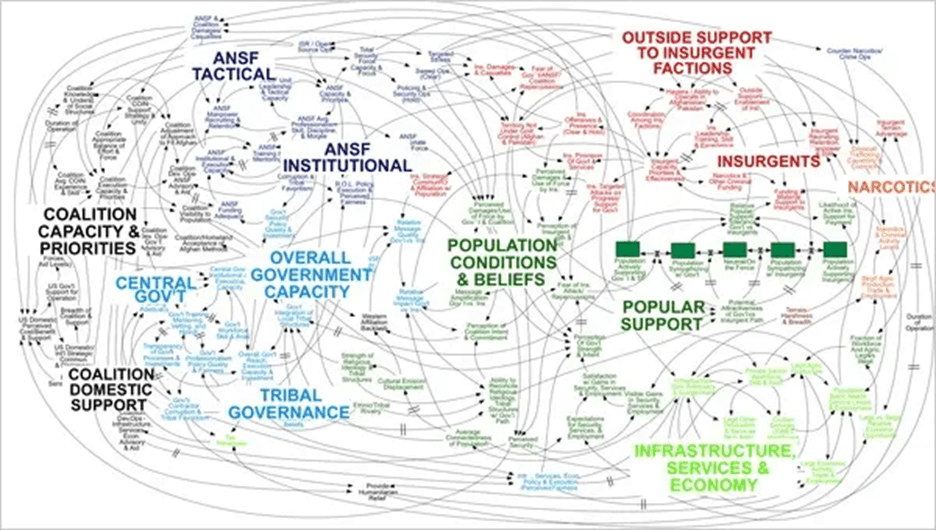
In contrast to the Union’s experiences against the Confederacy early in the Civil War, the modern US Army appeared tactically indomitable during GWOT. We (almost) never lost a tactical engagement. However, we rarely translated tactical victories into operational, let alone strategic, success. In the longest of our twenty-first-century wars—Afghanistan—generals and their staffs developed indecipherably convoluted or unclear strategies, as exemplified in the notorious angel hair spaghetti diagram below, or were unable to square their strategies with the reality on the ground. Unclear or complex strategy makes impossible the sequential planning and execution of campaigns to attain the desired object. And so one tactical success could never build upon another to effect a campaign, and campaigns could never build upon themselves to achieve strategic victory. British General David Richards, who commanded NATO forces in Afghanistan in 2006, conceded as much: “We were trying to get a single coherent long term approach—a proper strategy—but instead we got a lot of tactics.” Or as his successor, US General Dan McNeill said, “There was no campaign plan.” We would be wrong as Army officers to absolve ourselves of any responsibility for this strategic failure by blaming undefined or opaque political objectives. As I learned from R-Day at West Point and onward, a commander shares in every success and is responsible for every failure of his formation.
Here we arrive at Grant’s first lesson: Keep strategy simple. Ultimately, all wars are won through attrition—whether of men, matériel, or morale—a tenet of war Grant quickly grasped and made central to his theory of victory. Until the Battle of Shiloh in 1862, he had “believed that the rebellion against the Government would collapse suddenly and soon, if a decisive victory could be gained over any of its armies.” However, his decisive victories at Fort Henry and Fort Donelson having failed to secure the Confederacy’s surrender, Grant “gave up all idea of saving the Union except by complete conquest” and thereafter ruthlessly pursued the Confederacy’s destruction.
By 1864, Grant settled on a theory of victory congruent with his view on attrition. Assuming command of all Union forces, he wrote to Major General Henry Halleck, Army chief of staff, declaring his intention “to beat [Confederade General Robert E.] Lee’s army if possible north of Richmond; then after destroying his lines of communication on the north side of the James River to transfer the army to the south side and besiege Lee in Richmond.” He devised a series of campaigns to actualize this theory into a coherent strategy. Major General George Meade’s Army of the Potomac was to hunt down Lee’s Army of Northern Virginia and to threaten Richmond, Major General Frederick Steele was to seize Mobile, and Major General William T. Sherman was to eviscerate Georgia and keep Confederate General Joseph E. Johnston occupied, all while several other generals severed lines of communication and razed the Confederacy’s breadbasket—the Shenandoah Valley. Grant insisted these campaigns begin simultaneously to deny the Confederates any opportunity for one unengaged army to reinforce the other, as they had been able to do up until then with great success. This strategy Grant executed violently and relentlessly. Sloth and hesitation drew his ire: In Spring 1865 Grant authorized Major General Philip Sheridan to relieve Major General Gouverneur K. Warren “if his removal was necessary to success” due to “Warren’s dilatory movements in the battle of White Oak Road.” Sheridan did not hesitate.
I don’t mean to suggest Grant’s campaigns were simple or easily executed. In fact, they were complicated and their success represents a symphony of all combat power elements—leadership, information, mission command, fires, intelligence, movement and maneuver, sustainment, and protection—across multiple subordinate commands. For instance, information being vital to the coordination of his armies, Grant established as standard procedure for every brigade and division to establish telegraphic communication immediately upon making camp. This task was always swiftly accomplished, with Grant emphasizing that “no orders ever had to be given to establish the telegraph” between headquarters. Meanwhile, understanding that logistics were the lifeblood sustaining his campaigns, Grant ensured “there was never a corps better organized than was the quartermaster’s corps with the Army of the Potomac in 1864.” All these support and combat elements worked in synchrony toward achievement of a common object—vanquishing the Confederacy.
2. Risk is the seed of victory.
That audacity remains a principle of the offense in Army doctrine might come as a surprise. After all, too many commanders during GWOT were queasy making affirmative decisions when the chance of failure or reproach exceeded zero. This reluctance hasn’t changed much in the intervening years, as many others have observed. At any rate, institutionally we tend to overcomplicate and bureaucratize risk, just as with strategy. Multipage deliberate risk assessments, frequently requiring a lieutenant colonel’s endorsement and sometimes even a colonel’s, are needed before almost any type of training event, sometimes even a simple road march.
Grant in contrast embraced risk because taking chances is the only way to win. For instance, having got his forces across the Mississippi and finally on the same bank as Vicksburg, Grant determined to defeat the Confederate armies piecemeal. But the plan he devised required a glutton’s appetite for risk and a chess master’s mind for strategy. Recognizing that he “must first destroy all possibility of aid,” Grant “determined to move swiftly towards Jackson, destroy or drive any force in that direction and then turn upon [Pemberton’s fifty thousand troops].” In opening with the seizure of Jackson, Grant would be unable to protect his lines of communication. He therefore boldly decided to eliminate this weakness, cutting “loose altogether from [his] base and mov[ing] [his] whole force eastward.” As he recounts afterward: “I then had no fears for my communications, and if I moved quickly enough could turn upon Pemberton before he could attack me in the rear.” Grant’s gamble paid off. Vicksburg soon fell.
His gamble, though audacious, was far from reckless. To the contrary, it was ruthlessly calculated. As he explained to Sherman, who initially opposed Grant’s plan on the grounds that it violated established military theory, “the country is already disheartened over the lack of success on the part of our armies; the last election went against the vigorous prosecution of the war. . . . If we went back so far as Memphis it would discourage the people so much that the bases of supplies would be of no use. . . . The problem for us was to move forward to a decisive victory, or our cause was lost.”
3. Wage war violently and relentlessly.
Maligned by many contemporaries and later by historians as a butcher, Grant instead possessed a sober accounting of victory’s cost and was prepared to demand payment in full. In his early campaigns he never negotiated with defeated Confederate commanders, earning the nickname “Unconditional Surrender” Grant. By this method he eliminated significant enemy combat power, hastening the Confederacy’s demise. Then in 1864 Grant wrote Sherman “If we give [the Confederates] no peace whilst the war lasts, the end cannot be distant.” Accordingly, Sherman, whose forces went on to capture Columbia, South Carolina after their devastating campaign across Georgia, “remained in Columbia until the roads, public buildings, workshops and everything that could be useful to the enemy were destroyed.” Grant’s command philosophy is summed up in a directive to Sheridan: “Follow [the enemy] to the death.”
Grant’s approach to war contrasts with the Army’s over the last twenty-five years. The Global War on Terror deceived Americans into believing war can be surgical, neat, and conducted with minimal human suffering. Yet war was never tidy, even when we relied nearly exclusively on drones and special operations. Distance, disinterest, and dishonesty largely sheltered American citizens, elected officials, policymakers, and even many soldiers from the rubbled buildings and smoldering cars with charred human remains that followed drone strikes or special operations raids. Society came to expect an unreasonable level of restraint from commanders, an expectation that the military seemingly never challenged.
In modern times we artificially separate a government and its military from the society it represents and the national sources of its power. But as Grant recognized and internalized, in war commanders may need to destroy infrastructure in pursuit of defeating the enemy, which causes unfortunate, yet unavoidable, collateral civilian suffering. Consequently, he bombarded besieged Vicksburg despite some civilians electing to remain, he permitted Sherman to destroy any and all infrastructure that could benefit the Confederate cause, and, ultimately, he sought to win not through a single decisive victory, but through conquest.
Make no mistake, I am not arguing for the deliberate and avoidable targeting of noncombatants or destruction of purely civilian infrastructure. We must uphold the Geneva Conventions and adhere to the Law of Armed Conflict. I do contend, however, that in war leaders ought not unduly constrain military action and senior commanders must not shy from ferocity if the alternative is prolonging conflict (and therefore unnecessary suffering) or worse, defeat.
At any rate, Grant was neither thoughtless nor wanton nor even uncaring in the destruction he wrought. Following the Siege of Vicksburg, for instance, he paroled the vanquished Confederates rather than imprison them, knowing many would desert. Demoralized as they were, they returned home and infected their families and neighbors with dismay in supposed Confederate superiority. Later in the war, as Sherman marched through Georgia, “strict injunctions were issued against pillaging, or otherwise unnecessarily annoying the people.” And reflecting upon the final assault on Cold Harbor, Grant acknowledges regret, writing that “no advantage whatever was gained to compensate for the heavy loss we sustained.”
4. Mission command begets battlefield success.
Tactical decision-making during GWOT became concentrated at higher and higher commands, a natural consequence given the political landscape and technology that enabled commanders to peer down from above into tactical operations. Decisions remain elevated today, despite many recognizing that mission command must be reembraced. As the Army adjusts to a new era of combat in which we must anticipate communication being degraded or denied, relearning mission command is fundamental to victory.
In his memoirs, Grant provides a master class for commanders in mission command. On numerous occasions, he relates the clear intent given to subordinate commanders, along with the attendant authority to exercise initiative in attaining it. In one example, as Sherman prepared his Georgia campaign, Grant wrote him, “I do not propose to lay down for you a plan of campaign, but simply lay down the work that is desirable to have done and leave you free to execute it in your own way.” Around that same time, he wrote to Major General David Hunter that “if on receipt of this [order] you should be near to Lynchburg and deem it practicable to reach that point, you will exercise your judgment about going there.”
Meanwhile, at Cold Harbor, Grant grew frustrated with subordinate commanders who failed to seize the initiative when the Confederates freely offered it up. He thus ordered Meade “to instruct his corps commanders that they should seize all such opportunities when they occurred, and not wait for orders, all of our manoeuvres being made for the very purpose of getting the enemy out of his cover.”
For leaders who may find themselves commanding in large-scale combat, it will be essential to avoid becoming like Grant’s hesitant subordinate leaders at Cold Harbor. The Army must therefore begin now to reinculcate a culture embracing of mission command, and it is incumbent upon senior commanders to lead the way in effecting this change.

At present the Army is focused exclusively on preparing for large-scale combat. In this effort, many lessons are being drawn from the war in Ukraine and then applied to our tactics, techniques, and procedures, to our formations, and to our procurement. However, we ought not to become so focused on the future that we neglect to fix what remains broken now. The character of war may be changing, but heeding Grant’s lessons and learning from our past can help guide us to victory in the future.
Major Rudy Weisz is a Special Forces officer serving in 10th Special Forces Group (Airborne).
The views expressed are those of the author and do not reflect the official position of the United States Military Academy, Department of the Army, or Department of Defense.