The US Army is rediscovering the division as the warfighting formation. During the post-9/11 wars in Iraq and Afghanistan, the brigade combat team became the Army’s primary warfighting unit. Brigades trained, deployed, and fought largely independently. Company commanders and platoon leaders were responsible for integrating attached fire support teams, engineers, intelligence collectors, and signal assets into maneuver formations. Successful integration depended on early collaboration, integrated leader development, and habitual relationships. When these conditions were absent, integration became improvisation under the pressure of final manifest call and line-of-departure actions.
Modern battlefields demand longer ranges, more sensors, and tighter coordination between warfighting functions. Many of those capabilities that were previously pushed to the tactical edge now sit at the division level. Consolidating capabilities such as artillery, intelligence, signal, cyber, and electronic warfare at this level reflects the realities of the changing character of warfare—and makes the Army more lethal and more optimized for the modern battlefield, particularly in the long-range joint fight of the Pacific.
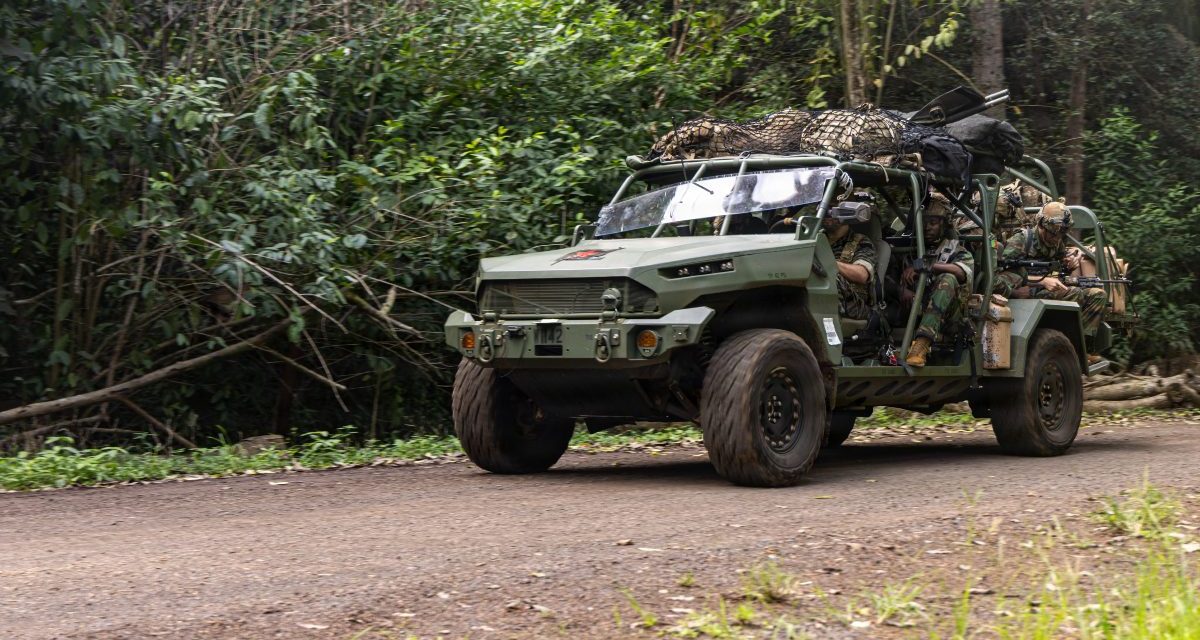
The Army has been experimenting with this shift. Designated as one of the Army’s transformation in contact formations, the 25th Infantry Division is testing a leaner structure designed for the Indo-Pacific theater. Infantry Squad Vehicles, unmanned aircraft, electronic warfare teams, and a new High-Mobility Artillery Rocket System battalion are expanding the division’s reach. At the same time, several capabilities once embedded inside brigades have moved to division-controlled battalions. Central to this shift is the integration of division-separate battalions—units subordinate to the division headquarters rather than being assigned to intermediate brigades—that provide artillery, intelligence, signal, engineering, and sustainment capabilities directly to the division commander. These changes are being tested through training and deployments across the Pacific, including exercises and operations in the Philippines under Operation Pathways. These experiences, along with a Joint Pacific Multinational Readiness Center rotation across the Hawaiian Islands in November 2025, highlighted four principles for how divisions must integrate these formations and fight effectively.
Principle 1: Division-separate capabilities must be clearly defined and vigorously trained.
During the brigade combat team era, fire support teams, engineers, intelligence collectors, and signal specialists were a part of maneuver units and developed habitual relationships. Those relationships helped units understand capabilities and requirements and allowed formations to integrate quickly during operations. Even within that construct, however, integration was not simple. Tasks such as providing security for signal collection teams or electronic warfare elements often required deliberate planning and coordination.
The emerging division structure further separates these relationships by moving intelligence, signal, and other enabling capabilities out of maneuver brigades and into division-separate battalions. Effective employment now requires even more deliberate integration between brigades and these formations. These battalions require clear mission definition and deliberate training to perform different roles within the division fight.
The 25th Infantry Division organized the intelligence and electronic warfare battalion and the signal battalion under the division artillery headquarters. This structure connects training management with the operational integration of sensing and long-range fires. As battlefield distances increase, the division artillery headquarters plays a growing role coordinating sensors, intelligence collection, and long-range strike capabilities that previously existed inside brigade formations.
A small team in the intelligence and electronic warfare battalion, another division-separate battalion, can reinforce command posts, support intelligence planning and analysis, or operate independently to sense and collect information that answers priority intelligence requirements and enables strike operations. Each role requires different training, sustainment, and protection. Clear mission definition allows the same formation to shift between supporting command posts and operating forward across the battlefield.
Division-separate combat power enables every warfighting function, but only when commanders at battalion, brigade, and division level clearly understand capabilities, limitations, and employment requirements.
Principle 2: The reformation of brigade combat teams is a deliberate operation.
Divisions are now the unit of action, but brigades can still fight as brigade combat teams. As fires, engineer, and sustainment units move to division-separate formations, relationships between those formations and maneuver units can no longer be assumed. Division-separate capabilities that require maneuver brigade support must therefore be reformed under operational control of those brigades well before operations begin.
Friction during the Joint Pacific Multinational Readiness Center 26-01 rotation emerged when late integration of engineer assets into maneuver brigades created unrealistic defense preparation timelines and poorly integrated obstacle belts. This friction was not caused by lack of capability but rather by late task organization and unclear command relationships.
Division-separate battalions must understand how they integrate with brigades and where they will mass in support of the division’s main effort. Fires integration provides a clear example. As divisions expand long-range fires and sensing capabilities, including High-Mobility Artillery Rocket System units, launched effects, and long-range reconnaissance aircraft, these capabilities may shift between enabling brigade operations and supporting division-level targeting. Task organizing field artillery battalions between brigade support and division support can disrupt established relationships and targeting processes when these transitions are not deliberately planned and rehearsed. Reformation remains a perishable warfighting skill that requires deliberate and continuous practice.
Principle 3: Every division-separate headquarters is a warfighting headquarters.
Division-separate battalion headquarters cannot function solely as force providers. They must operate as warfighting headquarters with clearly assigned missions in the division fight. Divisions carry too many operational tasks to allow subordinate headquarters to exist solely for force generation.
We tested this concept during the Joint Pacific Multinational Readiness Center rotation, where headquarters operated under degraded communications and persistent information disruption. The intelligence and electronic warfare battalion was tasked with managing the deep division fight. Working directly with the division artillery strike cell, the battalion synchronized intelligence, surveillance, and reconnaissance and effects while issuing orders to dispersed unmanned aircraft systems, electronic warfare, and signal collection teams operating above the brigade combat team level. The battalion staff accelerated sensor-to-shooter timelines, enabling faster detection and strike across the division’s deep fight.
Similarly, sustainment headquarters within the 25th Infantry Division’s sustainment brigade were assigned responsibility for defending the division support area, integrating threat analysis, coordinating air and missile defense, and maneuvering subordinate units. These warfighting missions clarified priorities, improved survivability, and freed division-level capacity for broader operational planning. Through Operation Pathways, battalions in the division sustainment brigade play increasingly complex roles in setting the Indo-Pacific theater, exercising command and control of sustainment and engineering functions that require leader initiative and agility beyond traditional mission sets.
Principle 4: Mobile brigade modernization can’t outpace the division-separate battalions.
Modernization within mobile brigades cannot outpace the division-separate battalions that sustain and enable maneuver. Division-separate formations require mobility, communications, and night-fighting capability sufficient to sustain the operational tempo of mobile brigades. Supporting units that cannot move, communicate, or operate at the same pace as maneuver forces risk reduced operational relevance.
In training, mobility mismatches between Infantry Squad Vehicle–equipped mobile brigades and legacy fires, engineer, and sustainment platforms frequently slowed operations and risked surrendering initiative. The introduction of High-Mobility Artillery Rocket System units expanded division lethality but increased operational distances and sustainment demands across restrictive terrain.
Expanded maneuver distances increased the division’s fuel distribution challenge, requiring fuel resupply forward of traditional logistics nodes. Experiments conducted by the division sustainment brigade with tactical refueling from a vehicle-based platform proved effective but represent only an initial step toward resilient distributed fuel resupply.
Communications and night-fighting shortfalls also emerged across division-separate formations operating alongside mobile brigades. Currently, the 25th Infantry Division mitigates these challenges through redistribution of night-vision systems, communications equipment, and emerging unmanned aircraft and counter–unmanned aircraft capabilities to division-separate units. Redistribution spreads technological advantages but also allows supporting formations to maintain pace with the night-driving requirements of mobile brigades. Even with these mitigations, aligning modernization across maneuver and supporting formations remains an enduring challenge that will require continued experimentation and adaptation.

New equipment often captures attention, but the more important change is how divisions are organizing to fight. The return of the division as the central warfighting formation changes how formations train, integrate, and operate across the battlefield. Clear definitions of division-separate capabilities, deliberate reformation of brigades, warfighting roles for subordinate headquarters, and modernization across supporting formations are necessary conditions for effective employment in large-scale combat.
Major General James “Jay” Bartholomees is the commander of 25th Infantry Division and US Army Hawaii.
Major Greg Scheffler is an infantry officer and the deputy G3 of 25th Infantry Division.
The views expressed are those of the authors and do not reflect the official position of the United States Military Academy, Department of the Army, or Department of Defense.
Image credit: Sgt. Duke Edwards, US Army