The US military is building a battlefield where nothing is hidden. Through billions of dollars invested in networked sensors, artificial intelligence, and joint all-domain command and control, the assumption is clear: If we can connect every sensor to every shooter, we will achieve decision dominance. More information will produce faster, better decisions. Friction will decrease. Tempo will increase.
Unless it doesn’t.
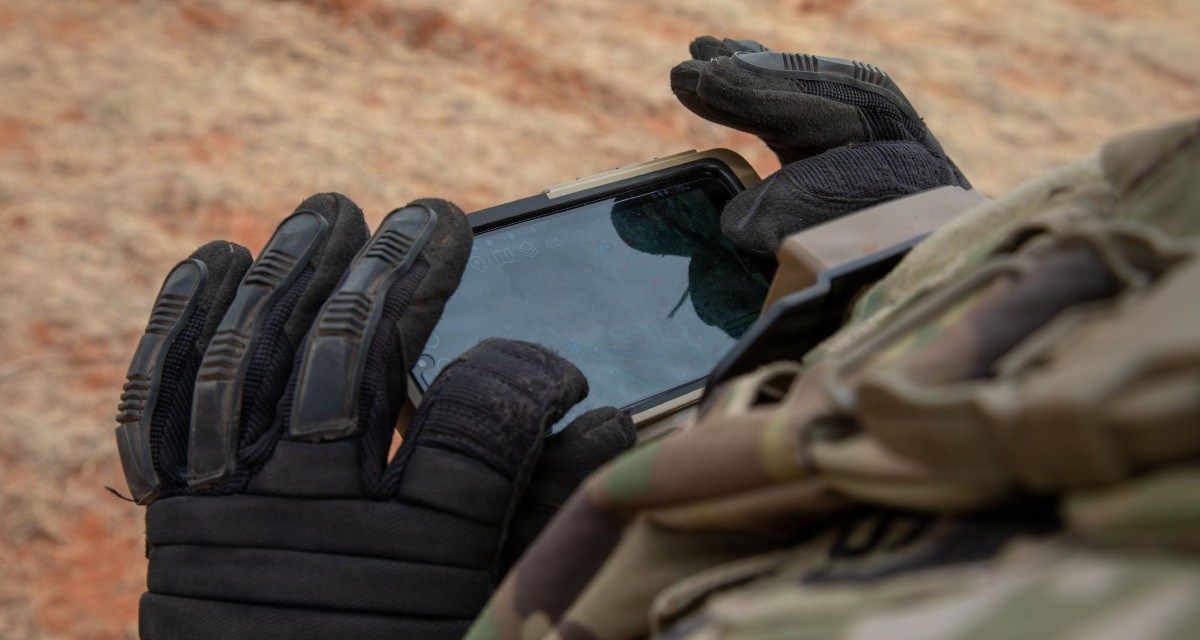
At the tactical edge, a platoon leader stands behind cover, staring at an ATAK screen that refuses to agree with itself. A drone feed shows an empty tree line, but the digital overlay pushed from higher headquarters marks the same area as a likely enemy position. The chat window is filling with updates. Higher is asking for a report. A fires element is waiting for clearance. Every input is high confidence. None of them align.
He has more information than any platoon leader in history—yet, he hesitates.
Not because he lacks awareness, but because he has too much of it. Acting now means choosing which version of the battlefield is real. Waiting means risking the initiative. The system has not removed uncertainty. It has multiplied it.
In that moment, the problem is no longer seeing the fight. It is deciding what to do with what is seen.
This is not an argument against building more connected and capable systems. The ability to see, sense, and share information across the battlefield is essential to modern warfare. The problem is not visibility itself, but the assumption that visibility alone automatically produces faster decisions at the point of contact.
The Assumption: Information Equals Decision Advantage
The Department of Defense is investing billions of dollars to render the battlefield transparent to its forces, eliminate uncertainty, and accelerate decision-making at every level of war. Through initiatives like joint all-domain command and control, the goal is to connect every sensor to every shooter, compress decision timelines, and provide commanders with unprecedented situational awareness.
The underlying assumption is intuitive and rarely questioned. More information leads to better decisions. Better decisions, made faster, lead to victory.
At the strategic level, this logic is compelling. Advances in artificial intelligence, sensor fusion, and real-time data sharing promise to outpace adversaries by shrinking the time between detection and action. A platoon leader with access to multiple drone feeds, satellite imagery, and predictive analytics should, in theory, possess a decisive advantage.
This effort is not misguided, nor is it unnecessary. Greater visibility, faster data flow, and improved integration are essential to modern warfare. But the assumption remains incomplete.
It treats decision-making as a technical problem, as if speed and accuracy are functions of bandwidth and processing power alone. It assumes that if the system can deliver more data, the human at the point of friction will naturally convert that data into action.
We did not eliminate the fog of war. We digitized it.
Cognitive Fratricide
Cognitive fratricide is the collapse of disciplined initiative under the weight of absolute visibility. It occurs when systems flood commanders with more variables than they can process, turning decisive leaders into paralyzed validators.
At a certain point, adding more information stops improving decisions and starts slowing them down. Every additional feed, alert, and update introduces another variable that must be considered before acting. What was once a decision based on a few key factors becomes a continuous effort to reconcile competing inputs in real time.
The system is doing exactly what it was designed to do. It is collecting, processing, and distributing information, often generating recommendations at a speed no human can match. But the decision-maker is still human, and the human still carries the responsibility for the final call.
This is the critical gap. The machine operates at digital speed. The human operates at cognitive speed. The system accelerates the flow of information, but it does not accelerate the brain’s ability to resolve ambiguity under pressure.
As the number of inputs increases, the time required to make a decision increases with it. Not because leaders lack competence or courage, but because they are forced to account for more variables, more risks, and more second-order effects before acting.
In this environment, hesitation is not a failure. It is a predictable outcome of system design.
Leaders are no longer maneuvering against the enemy. They are managing the system.
Visibility Changes Behavior
The problem is not just the volume of information. It is the visibility that comes with it.
For the first time, higher headquarters is not waiting on reports, radio calls, or fragmentary updates to understand the fight. They are seeing it unfold in real time. Drone feeds, digital overlays, and shared platforms allow a battalion or brigade staff to observe the same engagement as the platoon leader on the ground.
The tactical edge is no longer isolated. It is connected, exposed, and continuously observed. This changes behavior.
Consider a platoon leader clearing a compound while a drone flies overhead, making the same real-time video feed visible at the company command post and the battalion tactical operations center. Every movement is tracked. Every pause is visible. Every decision is being watched in real time by leaders who are not physically present but are fully connected to the fight.
This is not a wholly new problem. At the height of the wars in Iraq and Afghanistan, the rapid expansion of drone coverage gave higher headquarters unprecedented visibility into subordinate units’ operations and raised concerns about “tactical generals” directing small units’ missions. But the scale and persistence of today’s systems represent a fundamental shift. Modern platforms do not just provide episodic visibility—they create continuous, overlapping awareness across echelons, dramatically expanding transparency and amplifying its psychological impact on decision-making.
In the case of the platoon leader with a drone overheard, it does not matter if the battalion commander exercises restraint and stays off the radio. The mere knowledge that the feed is live fundamentally alters the psychological environment.
In that moment, the platoon leader is no longer just fighting the enemy, but operating in front of an audience.
When leaders know that every decision is visible beyond their formations, the psychological cost of being wrong increases. Decisions are no longer confined to the moment or the mission. They are recorded, replayed, and interpreted by echelons removed from the friction of the fight.
Under these conditions, risk tolerance erodes.
Disciplined initiative depends on a leader’s willingness to act under uncertainty, guided by intent rather than permission. But when the same data is visible to higher headquarters in real time, the boundary between intent and oversight begins to collapse. The leader is no longer operating within a commander’s intent alone, but under continuous observation. This creates a subtle but powerful shift.
Instead of asking, “What does the situation require?” leaders begin to ask, “How will this decision be seen?”
Instead of acting on judgment, they begin to seek confirmation.
Instead of maneuvering decisively, they hesitate. They wait for alignment. They wait for validation. They wait for the system or higher to agree.
This is not a failure of leadership. It is a rational response to constant observation. The result is a force that is highly informed, highly connected, and increasingly cautious at the point of contact.
The battlefield has not just become transparent. It has become a stage. Leaders are no longer just making decisions. They are performing them.
From Information Advantage to Action Latency
The consequence of cognitive fratricide is delay. Action latency is the gap between recognizing a problem and acting on it. In theory, modern systems are designed to shrink that gap. Faster sensors, faster processing, and faster dissemination should enable faster decisions. In practice, the opposite can occur.
As information increases, so does the time required to interpret it, validate it, and reconcile competing inputs. Leaders are no longer deciding between a few clear options. They are navigating growing sets of possibilities, each supported by data, each carrying risk if ignored.
Instead of faster action, we get delayed action.
This delay is not measured in minutes. It is measured in moments. But in combat, moments are decisive.
A hesitation of seconds at the point of contact can determine whether a position is seized or lost; whether an enemy element escapes or is fixed; whether a formation maintains tempo or cedes the initiative.
Near-peer adversaries understand this. They do not need to destroy the network to gain an advantage. They only need to disrupt its clarity.
Electronic warfare, deception, and information saturation can introduce just enough ambiguity to force additional confirmation. The adversary’s objective is not to break the network. It is to turn a decisive warfighter into a paralyzed validator.
The system continues to function, the feeds remain active, and the data continues to flow, but the leader slows down. This is the asymmetry.
A force optimized for information dominance can become vulnerable to decision paralysis. The more it depends on integrated data to act, the more sensitive it becomes to disruption within that data.
Overmatch in information can produce an undermatch in action.
In large-scale combat operations, tempo is not a byproduct of technology. It is the product of decisions made under pressure. When those decisions are delayed, even slightly, tempo collapses.
And when tempo collapses, adversaries do not need to be faster. They only need to be first.
Doctrine vs. Reality
The Army’s doctrine is clear. It defines mission command as the exercise of authority and direction through disciplined initiative, guided by commander’s intent. It emphasizes decentralized execution, trust, and the acceptance of prudent risk. Leaders are expected to act in the absence of orders when the situation demands it.
This is not a suggestion. It is the foundation of how the Army expects to fight. But the systems we are buying and building tell a different story.
By designing architectures around persistent surveillance and real-time data sharing, we have also engineered conditions that can fundamentally undermine those required for mission command.
Disciplined initiative depends on trust and the freedom to act without constant validation. But in a system built for continuous visibility, the perceived cost of independent decision-making increases. Leaders begin to anticipate scrutiny instead of focusing solely on the problem in front of them.
Prudent risk becomes something to manage, not something to accept.
This is the contradiction. We train leaders to act decisively in uncertainty, but we field systems that reward confirmation over action. We emphasize decentralized execution, but we enable centralized visibility. We preach trust, but we build architectures that make constant oversight possible.
The result is not the removal of friction, but its relocation. Instead of existing between friendly forces and the enemy, friction now exists between the leader and the system. Between intent and oversight. Between action and approval.
This is not a failure of doctrine. Mission command remains sound. It is a failure of alignment.
We have built a digital architecture that conflicts with the very principles we expect leaders to follow in combat. Until that contradiction is addressed, no amount of training or leader development will fully resolve the hesitation we are seeing at the point of contact.
What Must Change
The problem is not the pursuit of better systems. It is how we deliberately integrate them into training and decision-making.
If cognitive fratricide is a product of system design, it will not be solved through motivation, messaging, or additional leader development. It requires deliberate changes to how we train, distribute information, and evaluate decision-making under pressure.
First, we must train under conditions of controlled degradation.
Leaders cannot become dependent on perfect information in training and then be expected to act decisively without it in combat. We must intentionally remove or disrupt digital systems during exercises. Turn off the feed. Inject conflicting data. Force decisions before clarity exists. Evaluate leaders on their ability to act despite uncertainty, not after it is resolved.
Second, we must impose information discipline across echelons.
Not every piece of data needs to reach the tactical edge. Higher headquarters must act as filters, not simply amplifiers. The default should not be maximum visibility for everyone. It should be purposeful distribution based on what enables action at each level. Some data must flow automatically to enable basic awareness and survival, while other feeds should be deliberately managed based on what supports effective decision-making at each echelon.
The challenge is not restricting visibility but distinguishing between information that enables action and information that creates friction. The goal is purposeful visibility aligned to decision-making at each level.
Third, we must redefine what constitutes a good decision.
There is risk in how training that rewards correctness over speed. While combat training centers often push leaders toward tempo and uncertainty, much of our broader training culture still reinforces precision over decisiveness. A delayed perfect decision is a failure in combat. A timely decision that is directionally correct preserves tempo and creates opportunity. Leaders must be evaluated on their ability to act quickly with incomplete information, not their ability to achieve certainty before acting.
Finally, we must protect decision space at the point of contact.
If mission command is to remain more than a definition in a doctrine publication, leaders must have the freedom to act without constant validation. This requires more than restraint from higher headquarters. It requires designing systems and practices that preserve autonomy even in a connected environment. Visibility should not default to control.
The future battlefield will not be won by the force that sees the most. It will be won by the force that can decide and act despite what it sees.
Sergeant 1st Class Jerae Perez is the station commander of the Bessemer Army Recruiting Station and serves as a 42T talent acquisition specialist in US Army Recruiting Command. He has over fourteen years of service focused on leadership development and the human side of talent acquisition. Sgt. 1st Class Perez holds a master of science in human resources and organizational development from the University of Louisville and is pursuing a doctor of education in leadership and learning in organizations at Vanderbilt University.
The views expressed are those of the author and do not reflect the official position of the United States Military Academy, Department of the Army, or Department of Defense.
Image credit: Pfc. Jacob Cruz, US Army