In mid-September, the commander of Ukraine’s 3rd Army Corps confirmed that his unit was in the midst of a major offensive in Donetsk Oblast: Operation Vivaldi. It was the first time the operation’s name was publicly acknowledged. But the operation had begun well before then—perhaps months earlier. And its foundations can be traced even farther back, as dynamics that began to take shape in 2024 would prove instrumental in enabling the operation.
So far, Ukrainian forces have recaptured as much as two hundred square kilometers of territory from occupying Russian forces. However, what’s most important is not what the operation has accomplished, but how. On a battlefield that had long since settled into a largely static pattern of attritional warfare, Ukraine managed to create opportunities for maneuver that had largely ceased to exist. It leveraged a combined arms approach incorporated not only infantry, armor, and artillery, but drones as well. And it effectively took Russian drone capacity almost entirely out of the fight at key moments to open windows of opportunity on the ground.
On this episode of the MWI Podcast, John Amble is joined by retired Australian Army Major General Mick Ryan. He shares his insights on how Ukrainian forces have accomplished what eluded them for much of the war and examines what the operation might tell us about the war’s future trajectory.
The MWI Podcast is produced through an endowment generously funded by the West Point Class of 1974. You can listen to this episode of the podcast below, and if you aren’t already subscribed, be sure to find it on Apple Podcasts, Stitcher, or your favorite podcast app so you don’t miss an episode. While you’re there, please take just a moment to leave the podcast a rating or give it a review!
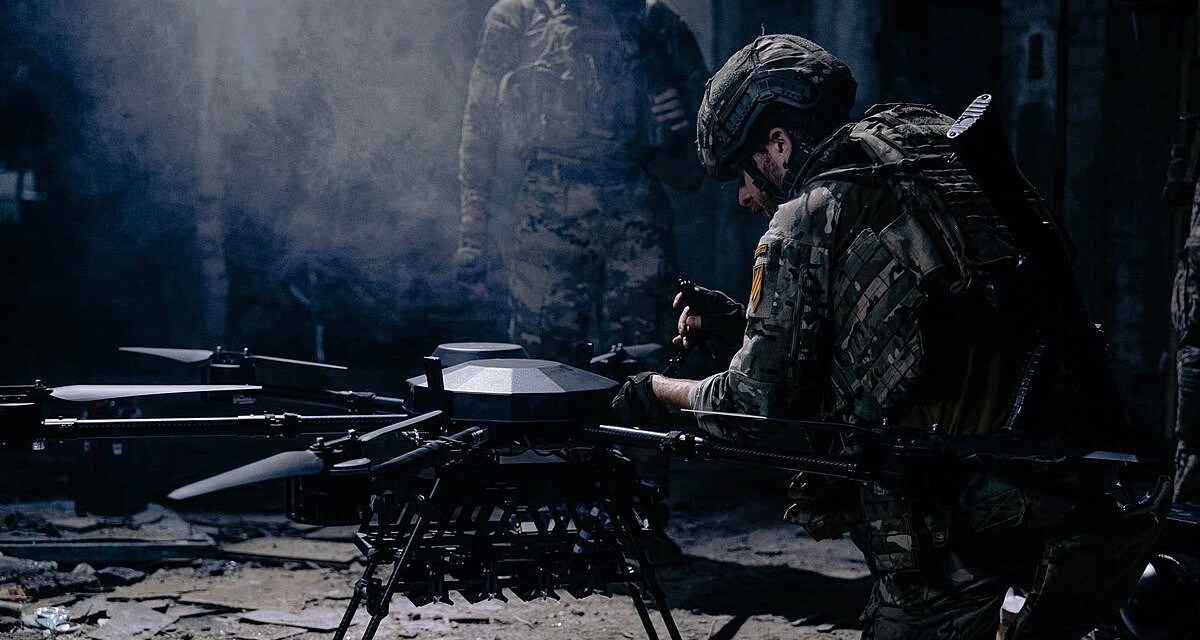
Image: Soldiers of the 3rd Assault Brigade unmanned systems battalion work on a bomber drone (credit: Ukrainian General Staff)