
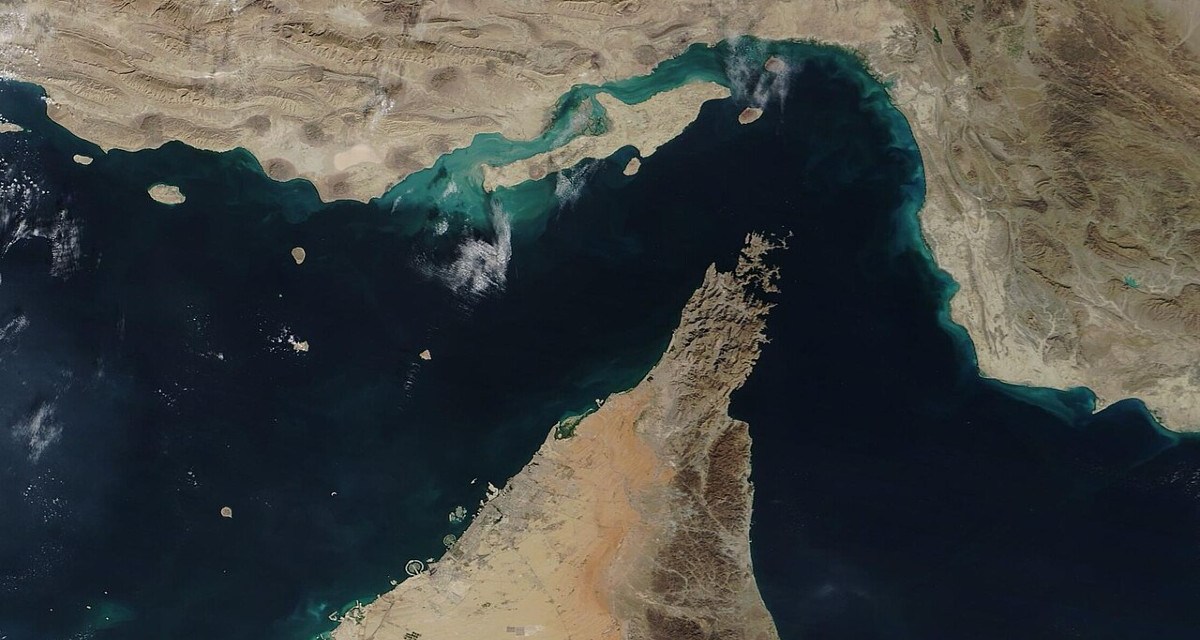
The cascading effects of disrupted maritime chokepoints are no longer the subject of simulations; they are an active crisis. As the US-Israeli military operation against Iran and Tehran’s regional military response continue, missile attacks, drone swarms, airstrikes, and maritime threats complicate commercial shipping across the region. The ongoing disruption in the Strait of Hormuz affects about 20 percent of global petroleum and 20 percent of liquid natural gas transits. It is also the subject of decades of wargaming for just this occurrence. But a lesser-known chemical also is being halted: 41 percent of global sulfur is exported. While the United States produces significant sulfur domestically, the near-total disruption of shipping through the Strait of Hormuz, which accounts for approximately 50 percent of global seaborne sulfur trade flows, has compounded an already tight market. US sulfur prices have increased 165 percent year-over-year to over $650 per metric ton; and now the price has surged by 25 percent just since the Iran war began. This makes domestic procurement fiercely competitive, while also threatening the import of specific ultra-high-purity grades required for advanced manufacturing. It is squeezing one of the most consequential inputs to modern industrial power.
Supply disruptions matter because the United States consumes about 90 percent of sulfur as sulfuric acid, and sulfuric acid enables production that sustains not only economic function, but also modern warfighting. This is because it is needed for everything from the copper in the American electrical grid to the semiconductors in precision-guided munitions. The effects of the current disruption at Hormuz, therefore, do not stop at the gas pump.
For military planners and strategists, the looming loss of sulfur is a prelogistical crisis. Prelogistics is a “left of boom” problem centered on the upstream material and chemical foundations that determine whether logistics can function to provide needed war matériel to sustain military readiness. In peacetime, dependencies like sulfur were easy to miss. Understanding this prelogistical dimension is essential because it forces planners to look beyond stockpiles and shipping, and instead ask a more fundamental question: Do we have the basic industrial and chemical inputs required to regenerate combat power in a protracted conflict?
Sulfuric Acid and the Hidden Material Base of Warfighting
Chemicals like sulfuric acid sit upstream of copper extraction, battery-material processing, and semiconductor fabrication, meaning they can determine whether the US military can maintain industrial base production of electrical and digital systems needed to sustain the fight as munitions are expended and combat losses mount. It is one of those unglamorous industrial inputs that operators and planners ignore until a crisis hits, prices spike, and replacement capacity becomes nonexistent.
Copper is the clearest example of why this is a warfighting problem right now. Sulfuric acid is central to the hydrometallurgical processes of leaching and solvent extraction/electrowinning (SX/EW) that turn low-grade ores into high-purity cathodes. This is not a niche method; SX-EW accounts for 16 percent of total world refined copper production. That industrial detail has strategic ramifications as copper is a designated strategic material embedded in the transformers, motors, and communications hardware that enable bases to operate and defense factories to function. The current sulfur shock is becoming a copper problem, and that copper problem risks quickly becoming a readiness and resilience problem. As just one example, based on our internal Payne Institute analysis of defense budget documents, Defense Security Cooperation Agency reports, industry information, and other open sources, it will take over thirty thousand kilograms of copper just to replace the two major US radars destroyed in Bahrain and Qatar, not to mention needing thousands of kilograms of additional copper to fix or replace other damaged US communication equipment, sensors, and radars in Jordan, Kuwait, Saudi Arabia, and the UAE.
The same prelogistical logic applies to nickel and cobalt. Both are exposed to sulfuric-acid-intensive processing, like the high-pressure acid leaching method used to extract them from laterite ores. These materials are critical for the high-temperature alloys in jet engines and, more importantly, for the lithium-ion batteries that power various drones and tactical-level electronics. The industrial chemistry vulnerability appears far upstream, but it dictates how fast things can be built and scaled under the pressure of an ongoing war.
Semiconductors push this reality even further. Ultra-high-purity sulfuric acid is indispensable for cleaning and etching the silicon wafers needed to make the most advanced microchips, directly impacting everything from F-35 avionics to the guidance system in any interceptor or missile. The disruption in sulfur supply is more than a mining issue; it is an active threat to the US military’s entire digital and computing architecture. But simply understanding these dependencies is not enough, because the structure of the sulfur market is an intractable problem.
Why the Defense Industrial Base Cannot Surge
The central problem confronting US war planners today is not merely that sulfur matters, but that its supply chain is fundamentally broken from a defense perspective. Sulfur is overwhelmingly a byproduct of processing sour natural gas and crude oil, not a commodity that can be scaled independently in a defense emergency. Furthermore, while a significant portion of sulfuric acid is involuntarily produced as a byproduct of smelting sulfide ores, such as copper and zinc, this secondary source is rigid and entirely insufficient to cover a massive wartime surge. This means supply responds to hydrocarbon production and baseline smelting operations, not to urgent military demand for copper or semiconductors. This is the byproduct trap, and it is the reason this prelogistical chokepoint is proving so dangerous: It sits upstream of war production, and it does not obey our demand signals. As sulfuric acid availability tightens, the consequences are unavoidable: Copper extraction slows, battery pipelines are strained, and semiconductor fabrication is impacted.
This has become a paralyzing, real-time problem for the defense industrial base. In theory, the United States government identifies a shortage and issues contracts. In practice, we are now seeing that those tools are utterly ineffective when the constraint is buried in industrial chemistry. A weapons producer is discovering it cannot will more sulfuric acid into existence as markets tighten, and policymakers are learning that a surge in budget authority does not translate into output when the essential reagent for metal extraction is itself constrained. The result is the reality we see today: a defense industrial base tethered to upstream conditions it cannot control and a US joint force discovering that its combat endurance is capped by the invisible industrial foundations needed to replenish it. This is why President Donald Trump’s order to the defense industrial base to “quadruple” production of certain exquisite munitions may not work: Firms and suppliers simply may not have access to enough of the chemicals and minerals needed to make them.
Planning Left of Boom
The strategic lesson of the conflict in the Middle East is not simply that sulfur matters. It is that modern war depends on upstream industrial conditions that, for too long, military planning treated as background noise. The time for thinking about logistics before the war starts is over; the consequences are here. The prelogistical chokepoints hidden inside civilian commodity chains are no longer theoretical vulnerabilities but active constraints on American combat power. The painful lesson is that critical constraints emerge precisely where the military is most disconnected from the commercial systems that are, in effect, industrial metabolic processes that make its power possible.
This reality demands a wider aperture in our war planning, effective immediately. Combatant commands and industrial base officials can no longer afford to think only in terms of stockpiles and surge contracts; they are now being forced to map the upstream dependencies that determine if a surge is even possible. Mapping the problem, however, is only the first step; the Department of Defense must operationalize this understanding by exploring strategic reserves of essential reagents, despite storage hazards, and actively funding research into alternative, nonsulfuric leaching technologies to bypass the byproduct trap entirely. The vital questions are no longer academic: Which materials are byproducts we cannot control? Which chemical inputs are failing to reach our factories? Which chokepoints are proving most decisive? These are not peripheral economic questions. They are the fundamental warfighting questions that are shaping the military readiness of US forces.
For years, the policy discussion around critical minerals focused on mines, refineries, and batteries. That focus is now proving to be fatally narrow. The Hormuz crisis is teaching Washington that the decisive vulnerability is often not limited availability of final products. A threat to US military readiness can come from obscure reagent that makes critical materials to be extracted—and weapons to be built—in the first place.
Morgan D. Bazilian is the director of the Payne Institute for Public Policy and professor at the Colorado School of Mines, with over thirty years of experience in global energy policy and investment. A former World Bank lead energy specialist and senior diplomat at the UN, he has held roles in the Irish government and advisory positions with the World Economic Forum and the International Energy Agency. A Fulbright fellow, he has published widely on energy security and international affairs.
Macdonald Amoah is an independent researcher with interests across critical mineral supply chains, advanced manufacturing gaps, the industrial base, and geopolitical risks in the mining sector.
Lt. Col. Jahara “Franky” Matisek (PhD) is a US Air Force command pilot, nonresident research fellow at the US Naval War College, and senior fellow at the Payne Institute for Public Policy, and a visiting scholar at Northwestern University. He is the most published active duty officer currently serving, with over 150 articles on industrial base issues, strategy, and warfare.
The views expressed are those of the authors and do not reflect the official position of the United States Military Academy, Department of the Army, or Department of Defense.